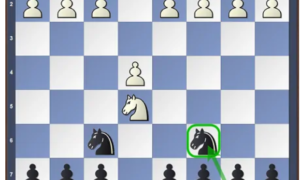
If you play against the fried liver attack then you must know how to stop a fried liver attack, it can be easily stopped if you just know to respond to white’s move d5.
Let me explain in the picture below.

This is the position where the black player has captured the pawn with the knight instead black should play the knight a5 move as shown in the above picture.
If you want to counter the fried liver attack or defend the fried liver attack then you should not take the d5 pawn instead you should play the move knight to a5 attacking the bishop.
This is the move that prevents a fried liver attack. Knight attacks the undefended bishop. Now white has to move or protect his bishop.
The best move for white in this position is the Bb5 check.

In this position black has two best moves, one is to block check with bishop d7 and the other which is more forcing is c6.
I recommend that you should play the c6 move instead of bishop d7 because the c6 move forces white’s bishop on the next move.

White captures the pawn and threatens to discover the check from his bishop. In this position, black must take back with the b pawn and not with the knight.

This is the position where we will watch some of the games from the black side in order to understand how to counter the fried liver attack.
Defending fried liver attack game 1:
This is the game played in 2011 in blitz format between Nigel Short and Garry Kasparov. Please flip the board to the black side for a better view.
Defending fried liver attack game 2:
Please flip the board to the black side for a better view.
Conclusion
Let’s conclude fried liver attack. If you are playing with white pieces and black allows you to play fried liver attack then you must sacrifice your knight on f7 and then win the game.
If you are defending the fried liver attack then you should not take the d5 pawn with the knight instead you will play knight a5 hitting the undefended bishop.
If you have any questions related to the fried liver attack, you can ask them on our questions page: https://thechessforum.com/questions/