Chess is like a battlefield, and just like in any battle, knowing how to immobilize your opponent’s forces can be a game-changer. Let’s learn about the pins in chess, why and how they occur in your chess games, and how you can benefit from them.
The pin in chess is a tactical move that can tie down and paralyze your adversary’s pieces.
In this article, we’ll break down the art of pinning in simple terms and explore how grandmasters have used this strategy to conquer their opponents.
What are pins in chess?
Imagine you have a magician on your chessboard. The magician has the power to freeze one of your opponent’s pieces on the chess board. This magical restraint is what we call a “pin” or pins in chess.
In simple words, when a piece is pinned, it can’t move without exposing a more valuable piece behind it.
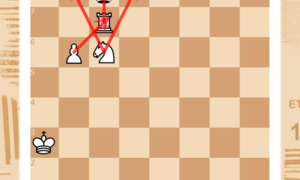
Here is a simple image of the pin, the highlighted knight on c6 is pinned and paralyzed at the moment and can’t move.

Opening: Ruy López, Old Steinitz Defense
Types of Pins in Chess
There are two main types of pins in chess.
- the absolute pin
- the relative pin
Let’s learn more about these two kinds of pins.
Absolute Pin
In an absolute pin, a piece cannot move because doing so would expose the king to check.
For example, if a bishop is in line with the opponent’s king, it cannot move because the king is hiding behind it.
Relative Pin
A relative pin occurs when moving a pinned piece would expose a more valuable piece, but it’s not the king. For instance, if a queen is in line with a rook, moving the rook would expose the queen to capture.
How to Use Pins in Chess Effectively
Now that we understand the basics, let’s see how you can use pins to your advantage:
Identify Vulnerable Pieces
Look for enemy pieces that are loosely guarded or have important pieces lined up behind them.
Create Absolute Pins
Place your pieces in positions that force your opponent to move a piece, exposing their king to check. Bishops and queens are excellent for creating absolute pins.
Exploit Relative Pins
Pin a piece that, if moved, would expose a more valuable piece. This can lead to gaining material or positional advantages.
5 Exemplary Chess Games of Pins
Here are 5 chess games regarding our tactical theme “The Pin”. Please watch these games carefully to learn these patterns.
Exploiting the Pin, Game: Schlechter vs Leonhardt 1912
Watch out move 42, when white sees a pin and exploits it and black resigns it.
Getting Extra Pawn with Pin, Game: Capablanca vs Alekhine 1927
At move 32 Capablanca won the pawn by seeing the pin, can you see it yourself? check out this game below.
Pinning with Checkmate Threat Game: Evans vs Bisguier 1958
This is a very interesting example of the pin because of the checkmate threat!
A Pin Wins the Rook Game: Ljubojevic vs Ivanchuk, 2019
You must practice the pin enough or at least when you can see a pin 2,3 moves before, Ljubojevic saw the pin and the won the game. Let’s watch this game below.
How to Pin and Win the Game: Smirin vs Grischuk, 2005
This game shows the power of the pin and how difficult is the suffering of the pin. In this game white player sees the opportunity few moves ahead and easily executes the pin, we can follow this example and we should apply the pin theme in our games. Let’s watch the game.
Conclusion
In conclusion, The pin is a tactical theme in chess, where you trap an opponent’s piece, making it stuck and restricting its movement.
This strategic move opens up chances for you to attack and gain an upper hand in the game. Learning how to recognize and use pins gives you a smart advantage and improves your overall chess strategy.
In the end, I would suggest that you should look for the pin in your next game and you should apply this theme.