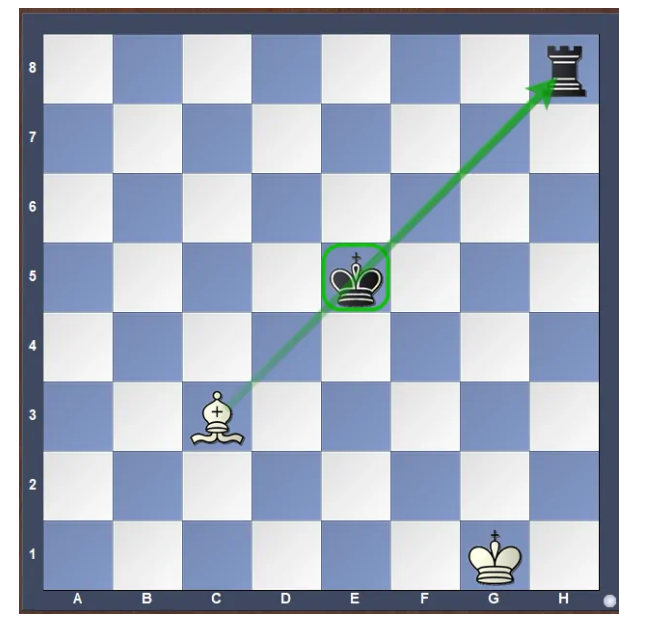
Skewers in chess are tactics where a more valuable piece is attacked and forced to move, revealing a less valuable piece behind it. It’s similar to a pin but works in the opposite direction.
The key to a successful skewer lies in exploiting the line of attack and putting pressure on the opponent’s pieces.
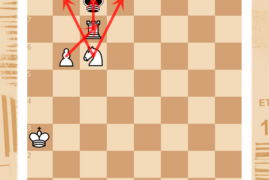
Here is the picture of the skewer in chess tactics.
How to Skewer in Chess
There are two things to do before understanding skewer in chess.
Primary Target
Identify the more valuable piece that you want to skewer. This could be a queen, rook, or any higher-ranking piece.
Secondary Target
Locate the less valuable piece positioned behind the primary target. This piece becomes vulnerable once the primary target moves.
Exemplary Chess Games of Skewers in Chess
Let’s look at the 5 exemplary chess games of skewers in chess and understand how they occur and when should we look at them.
White tricked black player, Skewer Game:1
The black player was happy in the starting that white lost his knight but the white player had a skewer at his disposal and executed the skewer and finally converted it into a won game. The game also shows how to play the endgame when you are exchanged up, let’s watch the game and keep an eye on move 8.
A skewer which won the queen, Game 2:
This game ended in a draw but we are watching this game because of the skewer, white delivered a skewer which forced black to give up his queen. Let’s watch this game.
Conclusion
In chess, skewers are powerful tactics where a more valuable piece is attacked, forcing it to move and revealing a less valuable piece behind it that can be captured.
Skewers can help players gain material advantage and control the game. Mastering skewers is important for improving chess skills and winning more games.