I have reviewed user KLH2015 and I found out that he is an absolute beginner, and he must study in order to improve his chess, in his last two games he blundered a queen, which is very serious mistake.
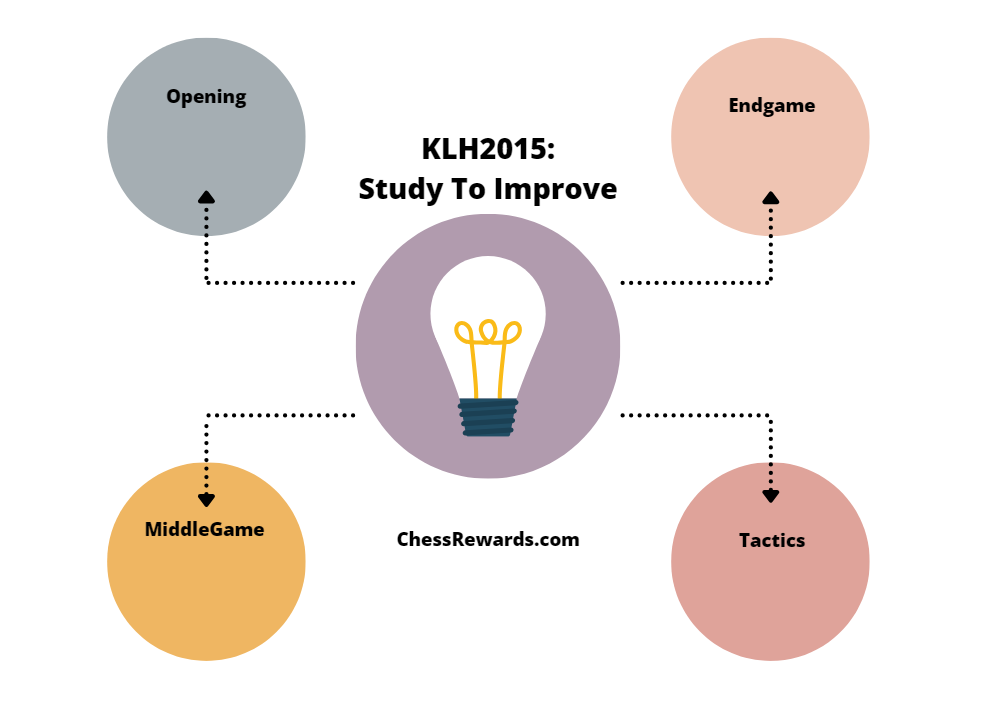
Before getting to my analysis and recommendation, let’s watch his one game.
Opening Suggestions
In the opening, you have to complete 3 tasks, one is control the center, second is to develop your chess pieces, third is castle and safe your king. Let’s talk about these three goals in details.
Goal: Learn the basics of strong openings to get a good start in every game.
Control the Center:
In the first few moves, use pawns to take control of the center. Try moves like e4 or d4 as White, and as Black, respond with something like e5 or d5. Stick to central moves instead of going after pawns or pieces on the edges.
Task: Play through a few games focusing only on placing pawns in the center.
Develop Your Pieces Quickly:
Bring your knights and bishops out early (before moving the queen), and try not to move the same piece twice in the opening. Moving one piece repeatedly wastes time and leaves other pieces inactive.
Task: Practice developing all four knights and bishops in your first 10 moves, aiming to get your pieces out without moving the queen or rooks .
Prioritize Castling Early:
Make it a habit to castle within the first 10 moves to protect your king and connect your rooks. Castling gives you a safer king position and helps you prepare for the middlegame.
Task: Practice castling by move 10 in your next few games, no matter what the opponent does.
Middlegame Suggestions
Goal: Improve your awareness of tactics and avoid simple mistakes.
Be Careful with Your Queen:
Try to keep your queen safe by not moving it too early. Use your queen as backup support, not as the main attacker until you have other pieces helping.
Task: Play games where you don’t move the queen until you’ve moved all your knights and bishops.
Learn Common Tactical Patterns:
Start with the basics, like forks (where one piece attacks two of your opponent’s pieces at once), pins, and skewers. Learning these patterns will help you spot threats and make stronger moves.
Task: Solve 5 puzzles a day that focus on forks, pins, and skewers. Many sites like Chess.com or Lichess have free tactical puzzles you can use.
Coordinate Your Pieces:
Avoid attacking with just the queen or one piece; get multiple pieces working together. This will make your attacks stronger and harder for your opponent to defend against.
Task: Practice using two or three pieces to attack together. Try exercises where you only move a piece if it’s supported by another piece.
Endgame Suggestions
Goal: Build the confidence to finish games and avoid accidental stalemates.
Learn Basic King and Pawn Endgames:
Practice getting your king active in the endgame, learning “opposition” (where you control key squares with your king), and basic pawn promotion. This will help you win close endgames.
Task: Practice king and pawn endgames for 5 minutes each day. Just work on moving your king to the center and promoting a pawn safely.
Master Simple Checkmates:
Knowing how to checkmate with a king and queen or a king and rook will give you confidence in winning positions and reduce the chance of accidental draws.
Task: Practice checkmating with king and queen vs. king and king and rook vs. king. These two checkmates are the most important ones to master early.
Avoid Stalemate Traps:
In winning positions, be careful with your checks and moves to avoid accidentally giving your opponent a draw by stalemate.
Task: Practice ending games without giving extra checks when you’re winning by a large amount.
Conclusion:
Stick to these daily tasks, and soon you’ll see improvement in your understanding and confidence across all phases of the game. If you still have any questions feel free to ask.