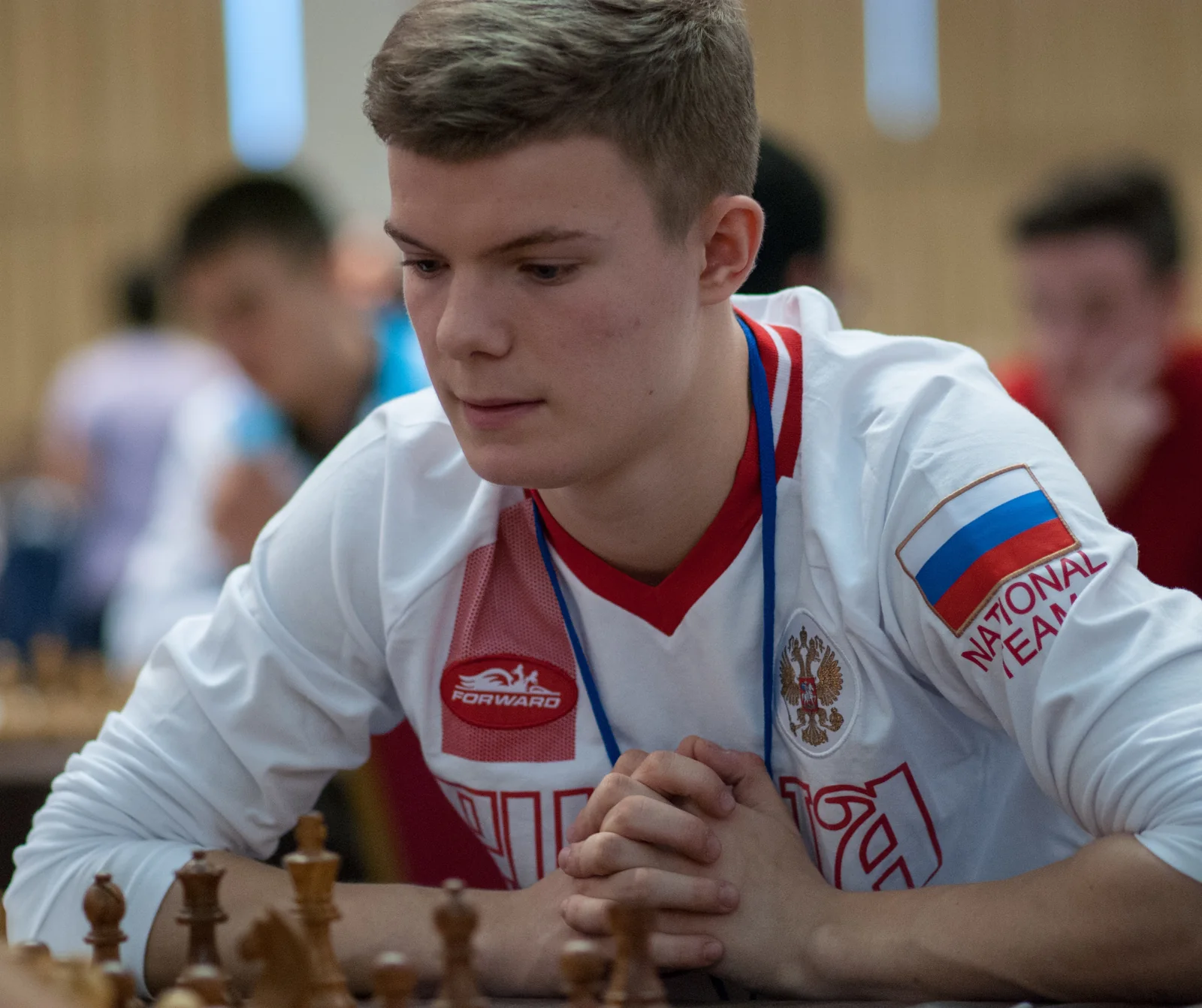
Grandmaster Pavel Eljanov scored a convincing victory with White against Kirill Alekseenko in Round 2 of the 2026/27 German Bundesliga. Playing for MSA Zugzwang against FC Bayern München, Eljanov steered the game into a classic Queen’s Indian Defense structure before unleashing a decisive central breakthrough.
Follow live tournaments and browse available replays on ChessMars.
Strategic Decisions in the Queen’s Indian Defense
The Queen’s Indian Defense often leads to quiet maneuvering, but White chose a sharper positional path. After the moves 1. d4 Nf6 2. c4 e6 3. Nf3 b6 4. g3 Ba6 5. b3 d5, Black challenged White’s pawn structure directly. However, Eljanov opted for 13. Bf4 and accepted doubled f-pawns after 13… Bxf4 14. gxf4.
This structural concession was deliberate because White gained firm control over the central e5-square. Consequently, Black found it difficult to activate minor pieces freely on the kingside. Players studying foundational strategy, as discussed in our guide on chess tips for beginners, often recognize how central outposts compensate for cosmetic pawn weaknesses.
The Queenside Clash and the Missed Defense
As the middlegame developed, Alekseenko attempted to generate counterplay with 17… c4 and pushed forward with 22… d4 and 23… d3. However, White maintained composure and eliminated the dangerous passed pawn on move 28 with 28. Rxd3.
Here Black committed the decisive mistake with 28… Qc8. This retreat abandoned control of the crucial d-file and allowed White’s attack to surge forward. Instead of this passive move, Black needed 28… Qa8. By challenging White’s queen directly, Black could force exchanges and relieve the pressure. Therefore, understanding defensive queen placement remains a vital lesson in opening repertoire guidelines.
Interactive Exercise: Find White’s Breakthrough
Position before move 29. White to move.
Show the candidate line and explanation
29. e6 Kh7 30. Qxf7 Rf8 31. Qh5+ Kg8 32. Kxg2 bxc5 33. Rd6 Qa8+ 34. Qd5 c4
White breaks through immediately with 29. e6!, threatening both 30. Qxf7+ and king attacks, dismantling Black's defenses before Black can regroup.
Finishing Technique and Tactical Deflection
Following the pawn advance 29. e6!, Black's kingside collapsed quickly under heavy tactical pressure. Although Black attempted to scramble with 34... Qc1+ and 35... Rh5, Eljanov found the lethal deflection 36. Ng5+!.
Because Black had to surrender the rook on g5, White won material cleanly while maintaining an overwhelming assault. Subsequently, White concluded the game with 39. Qh5+, forcing resignation.
Full Annotated Game Replay
Key Lessons for Tournament Players
This encounter highlights two essential principles for competitive players. First, dynamic central control frequently outweighs static structural weaknesses such as doubled pawns. Second, when defending under heavy pressure, seeking an active queen exchange often prevents catastrophic breakthroughs.