Understanding these chess strategies for beginners will give you a strong base to grow from and make every game more enjoyable.
Let’s dive into the top five chess strategies for beginners that will help you play more confidently and with purpose.
Why you must know strategies in chess?
Strategy in chess helps for creating a game plan, so you’re not just reacting to your opponent but anticipating their moves and working toward your own goals.
Understanding strategic basics gives you confidence as a player, builds your awareness of the board, and helps you see the game’s big picture.
Let’s look at five essential strategies that will help you play a stronger, smarter game.
1. The Importance of Control over the Center
If you’ve ever watched experienced players, you might have noticed they focus on controlling the center squares (specifically, e4, d4, e5, and d5) early on.
Think of the center as the “heart” of the board, if you control it, you have more options to move and attack, and one of the biggest benefits of controlling the center is to limit your opponent’s choices.
Now next question arises here how to control the center?
Here is the image of center with highlighted squares which helps you get more power.
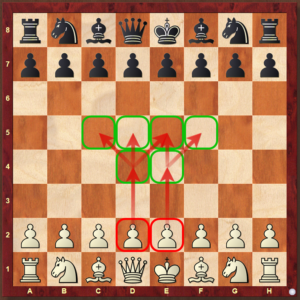
Controlling the center
Let me explain.
You must start by moving a pawn to e4 or d4 as white, and e5 or d5 as black. Then support those pawns with other pieces, especially your knights and bishops. Here is in example of white’s center.
My Suggestions:
Don’t push too many pawns out at once. It’s tempting, but overextending leaves gaps for your opponent to exploit. Stick with 1-2 center pawn moves at the start and bring in other pieces to back them up.
2. Developing Your Pieces Effectively
Piece development means getting your pieces (knights, bishops, and eventually your rooks) into active positions early on.
Developing pieces means you’ll have more attacking and defensive options as the game progresses. An undeveloped piece is one that can’t help you!
How will you develop your pieces? just bring out your knights first (preferably to f3 and c3 for white, or f6 and c6 for black), followed by your bishops to squares that influence the center, like c4 or f4, castle and then connect rook.
Here is an image of developed knights and bishops:
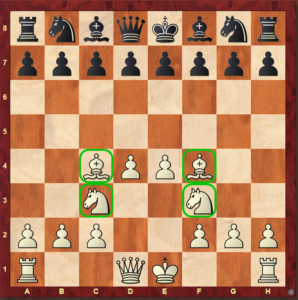
My Suggestions:
Move each piece just once in the opening unless absolutely necessary. Aim to place your pieces in active squares and avoid moving the same one repeatedly.
3. The Power of Pawn Structure
Once the grandmaster said “Pawns are soul of chess”.
What does your pawn structure do? Pawns support each other and provide “walls” for other pieces to hide behind, especially your king.
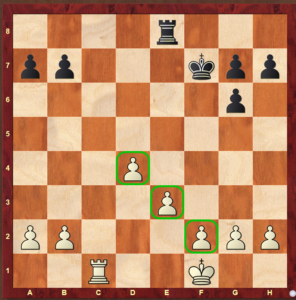
pawn structure – pawn chain
In above picture, you can see pawn chain, which means black can not attack on these pawns and they are protecting each other, this type of pawn structure is called pawn chain.
Your pawn structure determines how open or closed your position is, influences your pieces’ movement, and affects your king’s safety.
How to keep pawn structure intact and solid? Aim to keep your pawns in chains where they can support each other. Avoid creating isolated pawns or moving too many in the same line, as this can create weaknesses.
My Suggestions:
Play pawns carefully—once you move them, they can’t go back. Try to visualize the future of your pawn structure before committing to a move.
4. Using Your King’s Safety to Your Advantage
Castling is a great way to protect your king, as it moves him to the edge of the board and activates your rook, a valuable piece that’s often underutilized in the opening.
Why do you castle in chess? A protected king is harder to checkmate, allowing you to focus on developing and attacking without constantly worrying about your defense.
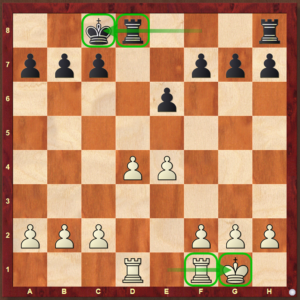
How to castle in chess? Castling involves moving the king two squares to the left or right, and placing the rook on the square next to it.
You can castle once per game on either side, provided the king and rook haven’t moved and there’s no piece or no check in between them.
My Suggestions:
Decide early which side to castle based on your opponent’s moves. If they’re attacking on one side, castle to the other for added safety. More info on castling can be found: https://chessrewards.com/how-to-castle-in-chess/
5. Recognizing the Value of Piece Coordination
Coordinating your pieces means positioning them so they support each other and create threats, making your moves harder to counter and increasing their overall impact on the board.
Good piece coordination can create powerful threats and minimize weaknesses. It ensures that each move is backed up by others, making it harder for your opponent to exploit isolated or unsupported pieces.
How will you coordinate your pieces? Aim to connect your rooks on open files, align your bishops and knights to control key squares, and avoid leaving any piece unsupported.
Rooks are especially powerful when they control open or semi-open files, while bishops can dominate long diagonals and knights are most effective near the center.
Conclusion
I hope these top 5 chess strategies for beginners will surely help you as you continue to practice, these strategies will help you build a solid foundation.
Focus on the basics, stay patient, and take each game as an opportunity to learn. With time and practice, you’ll find yourself becoming a more confident, strategic player.
Still have any questions? feel free to ask at chessrewards.com


![How to Win Chess in 4 Moves [Scholar’s Mate]](https://chessmars.com/blog/wp-content/uploads/2024/10/Qxf7-269x180.png)