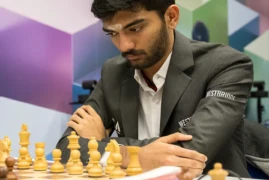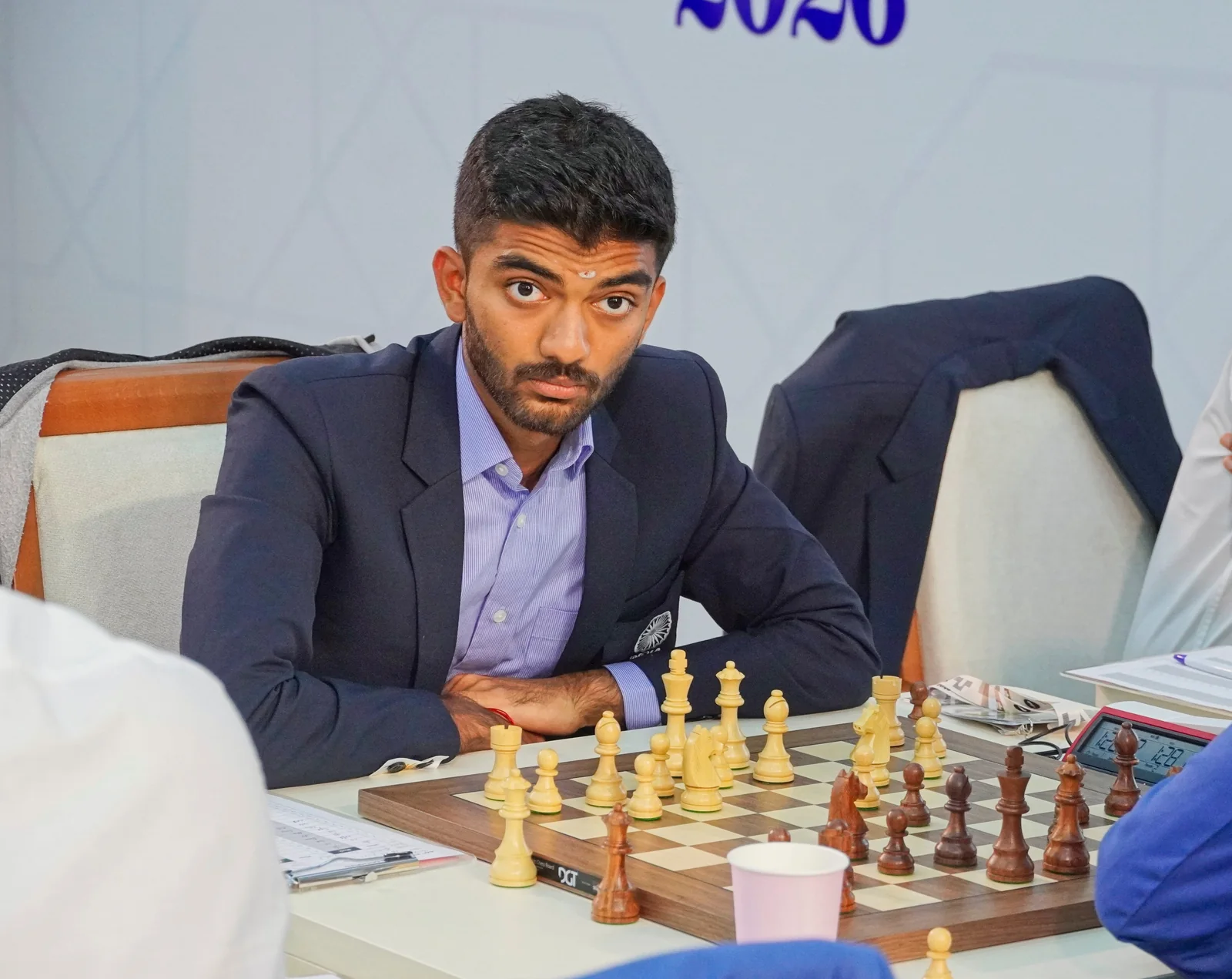
On November 24, 2026, Javokhir Sindarov pressed for 38 moves with White in Geneva before defending champion Gukesh Dommaraju held a threefold repetition draw in Game 1 of the 2026 FIDE World Chess Championship. Late in that rook endgame, Sindarov claimed a repetition one turn too early and saw the arbiter add two minutes to Gukesh’s low clock.
Two years earlier in Singapore, Gukesh had lost Game 1 as White against Ding Liren after overpressing in a French Defense. Similarly, Viswanathan Anand opened his 2010 title defense in Sofia with a Game 1 loss to Veselin Topalov before coming back to win that match too. Comparing these World Chess Championship Game 1 battles shows how clock choices and opening prep shape a match early.
Major events around the 2026 World Chess Championship opener
Both contenders entered Geneva at age 20, the youngest pairing in World Championship history, according to FIDE’s match preview. Sindarov climbed to world No. 4 at 2782 after winning the 2025 FIDE World Cup in Goa and finishing unbeaten on 10 out of 14 in the 2026 Candidates Tournament in Cyprus. Consequently, he became the first player from Uzbekistan to qualify for an undisputed world title match. By contrast, Gukesh came in rated 2710 and ranked 26th after a difficult stretch of tournaments in 2025 and 2026.
Ceremony, rules, and pre-match remarks
FIDE held the opening press conference and ceremony on November 22, 2026, at the Palais des Nations in Geneva, as reported in FIDE’s opening ceremony report. For the color draw, Gukesh opened a Swiss clock containing a dark chocolate knight. Meanwhile, Sindarov opened the second clock to find the white chocolate knight and take White for Game 1. ChessMars covered the full tournament schedule in our World Championship 2026 preview.
The 14 classical games run at the Fondation Martin Bodmer in Cologny near Geneva. Under FIDE’s match regulations, players get 120 minutes for the first 40 moves. Afterward, they receive 30 minutes for the rest of the game plus a 30-second increment starting on move 41. The rules forbid draw offers before Black’s 40th move, and each decisive win earns USD 200,000 from the USD 2.5 million prize pool.
Both players stated clear goals during the media sessions reported by FIDE and the Lichess championship preview. “I don’t think I am here to defend anything. I am here to win it all over again,” Gukesh said, calling Sindarov “super talented and energetic, or, in a single word, a genius!” Sindarov welcomed his first title match as well: “I know it will be very hard, it’s my first experience […] Many players want to play the Championship, I’m happy that today I fight for this.” FIDE Interim President Viswanathan Anand explained the match format’s pressure plainly: “A World Championship match is not like anything else in our sport. You sit across from the same opponent for three weeks with the world watching.”
2026 Game 1: Sindarov vs. Gukesh D and the move-36 draw claim
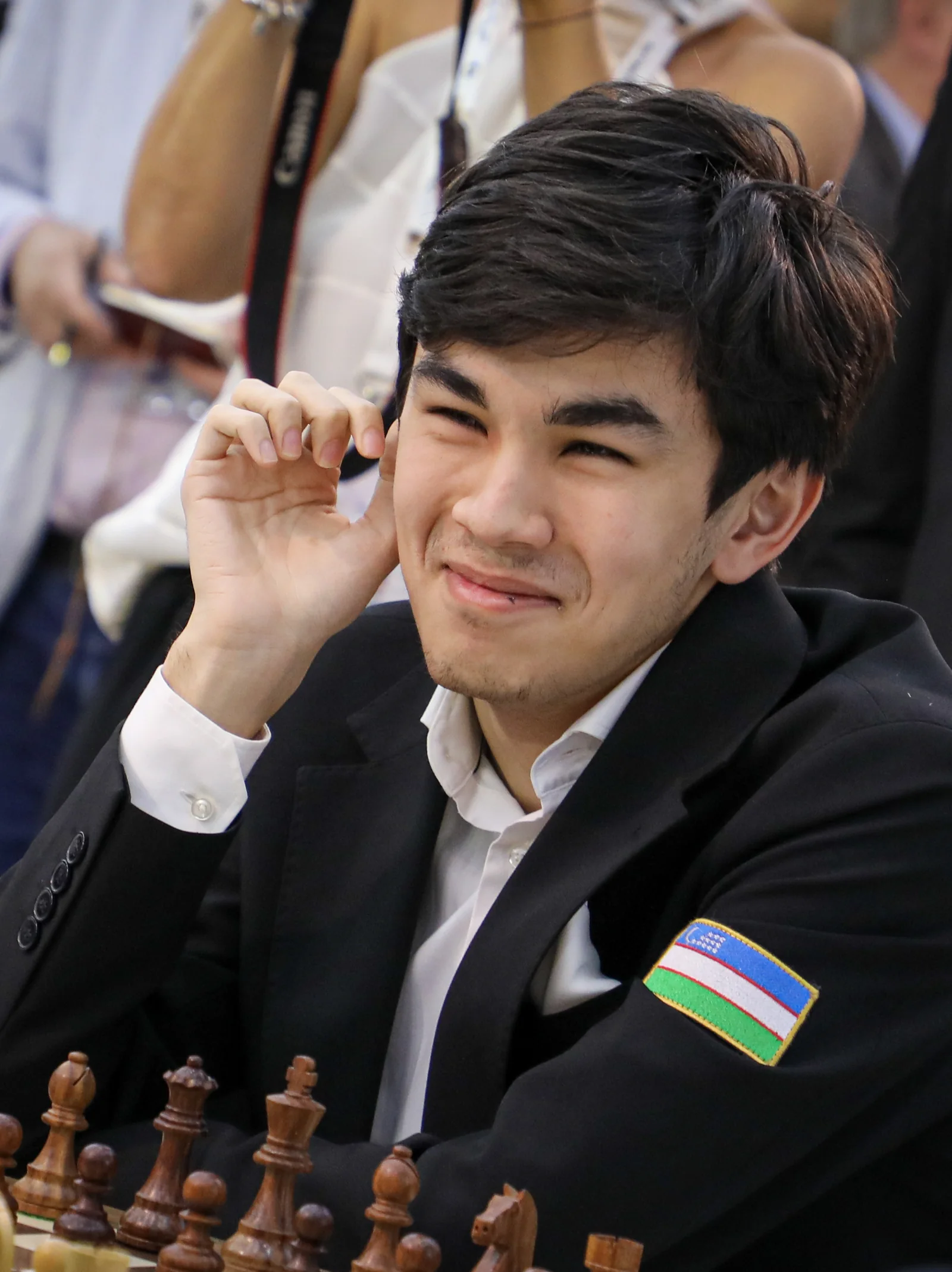
Sindarov opened with 1. e4, and Gukesh chose the Ruy Lopez Berlin Defense. The queens left the board on move 8, entering the queenless Berlin Wall structure. Although that endgame looked balanced, Gukesh spent more than 36 minutes on 17…Bb4 to fix his bishop on an active square before White could clamp down on the queenside. As a result, Black fell under 30 minutes for the next 23 moves while Sindarov held more than an hour.
White pushed on the kingside with 20. Nh5, 24. f4, and 26. f5, yet Gukesh answered cleanly. First, he captured 23…Nxe5, drove the h5 knight back with 24…g6, and centralized his rook on d8. Sindarov responded with 29. Nd3 to bring his passive knight into the game and force the f5 exchange. That sequence opened the board for 31. Rh5 and 33. Rg5+, which set up the repetition cycle. As noted in Chess.com’s Game 1 report, Sindarov claimed a threefold repetition after 36. Rh5, one cycle too early. Therefore, the arbiter awarded Gukesh two extra minutes, lifting his clock from 4:44 on move 35 to 6:40 on move 36. Two moves later, 38. Rh5 Kg8 completed the valid repetition and tied the match at 0.5 to 0.5.
Puzzle 1: Activating the passive knight in the Berlin endgame
Before move 29, Black’s rooks and knights press on White’s queenside while the e1 knight sits on the back rank. Find how White activates that piece and generates immediate counterplay.
Position before move 29. White to move.
Show the candidate line and explanation
29. Nd3 Bxf5 30. Rxf5+ Kg7 31. Rh5 Bc3 32. Bxh6+ Kg8 33. Rg5+ Kh7 34. Rh5
29. Nd3 activates the passive knight and clears the first rank while forcing 29...Bxf5 30. Rxf5+ Kg7 31. Rh5, maintaining equal counterplay against Black's active pieces.
Passive alternatives such as 29. Rc1 leave White's e1 knight stranded and let Black control the dark squares. By contrast, 29. Nd3 clears the d1 rook's path and forces the trade on f5, giving White active counterplay against g7 and h6.
2024 Game 1: How Ding Liren defeated Gukesh in Singapore
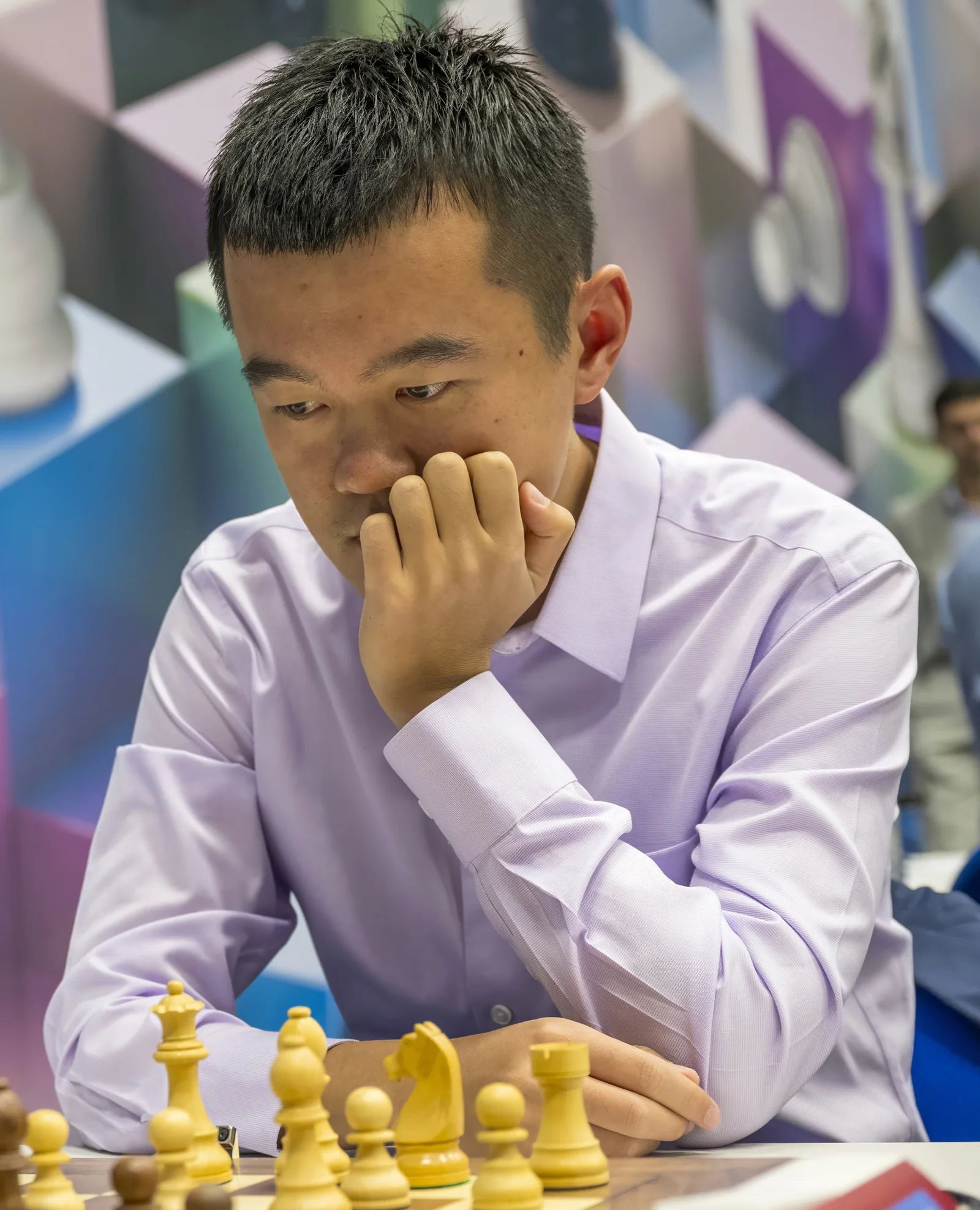
Two years earlier, on November 25, 2024, Gukesh had a harder Game 1 in Singapore against defending champion Ding Liren. According to The Week in Chess match archive, Ding surprised Gukesh with the French Defense (1...e6). Ding spent 20 minutes on 7...a5 and fell roughly 40 minutes behind after Gukesh quickly pushed 10. g4.
Even with that clock lead, Gukesh pushed too aggressively on both flanks. Ding anchored a knight on b2, then sacrificed the exchange with 25...Rxc3! to wreck White's queenside pawns. With only seconds remaining before move 40, Gukesh played 39. Bh3 and allowed Ding's queen into d1. Ding won in 42 moves, though Gukesh recovered over the remaining 13 rounds to win the match 7.5 to 6.5. For earlier sharp battles between this year's Geneva contenders, see our Gukesh vs. Sindarov tactical game study.
Puzzle 2: Converting Ding Liren's back-rank invasion
White has just played 39. Bh3 with seconds left on the clock, while Black's passed a3 pawn waits for support. Find the three-move tactical sequence that wins on the back rank.
Position before move 39... Black to move.
Show the candidate line and explanation
39...Qd1 40. Bd6 Qc2+ 41. Kg3 Qxa2 42. Bf1 Qc2 43. Bxd3 Bxd3 44. Qb6 Be4 45. Qf2
39...Qd1 invades along the back rank, setting up 40...Qc2+ and 41...Qxa2 to clear the path for Black's a3 pawn.
After 41...Qxa2 removes White's last queenside defender, Black's passed a3 pawn decides the endgame alongside the e4 bishop and d3 knight. Soon after, Gukesh resigned following 42. Be6+ Kh8.
2010 Game 1: Topalov punishes Anand's slip in Sofia
Sixteen years before Geneva, Indian champion Viswanathan Anand also dropped Game 1 before winning a world title match. On April 24, 2010, in Sofia, Veselin Topalov met Anand right after the champion endured European travel delays, as documented in The Week in Chess Game 1 report. Both players blitzed through deep Grunfeld Defense theory until Anand blundered with 23...Kf7.
Similar to Bobby Fischer's opening-game slip covered in our 1972 World Chess Championship overview, one missed tactical check ended the contest almost immediately. Topalov sacrificed his knight on f6 and drove Anand's king into the open, winning in 30 moves. Even so, Anand regrouped and won Game 12 to keep the championship 6.5 to 5.5.
Puzzle 3: Pressing the attack after 24. Nxf6
Topalov just sacrificed a knight on f6, and Anand recaptured with the king. Find the three-move sequence that brings White's rook into the attack and drives Black's king into the center.
Position before move 25. White to move.
Show the candidate line and explanation
25. Rh3 Rg8 26. Rh6+ Kf7 27. Rh7+ Rg7 28. Rxg7+ Kxg7 29. Qxg5+ Kf8 30. Qd8+ Qe8
25. Rh3 swings the rook into the attack along the h-file, following up with 26. Rh6+ and 27. Rh7+ to drive Black's king out of the kingside.
Playing 25. Rh3 swings the rook into the attack with gain of tempo and denies Black's king any shelter on the kingside. Once the second rook reaches c7 on move 28, White's heavy pieces decide the game cleanly.
What these three openers teach about match play
Comparing Geneva 2026 with Singapore 2024 and Sofia 2010 shows how differently champions respond to opening-day stress. In 2024, Gukesh held a large clock edge early, yet overreached with 21. f5 and fell into a fatal time scramble. In 2026, however, he accepted a 36-minute think on 17...Bb4 because securing that queenside blockade mattered more than keeping extra minutes. That patience allowed him to find 24...g6 and 28...Rgd8 under pressure.
Clock habits and rule checks matter just as much when positions sharpen. Anand walked into 24. Nxf6 because he moved rapidly from imperfect memory, while Sindarov lost two minutes on move 36 by claiming a repetition a turn early. Building disciplined calculation habits helps you stay steady in both situations, a skill we break down in our guide to improving chess calculation.
Download game 1 PGN · Download game 2 PGN · Download game 3 PGN