Every chess player eventually faces the same recurring dilemma over the board. You reach a critical middlegame position, the clock ticks downward, and dozens of possible moves demand your attention. You calculate several variations, but doubts creep in. Did you overlook a tactical resource? Is your selected plan strategically sound? Most importantly, how can you know that you selected the best move in chess?
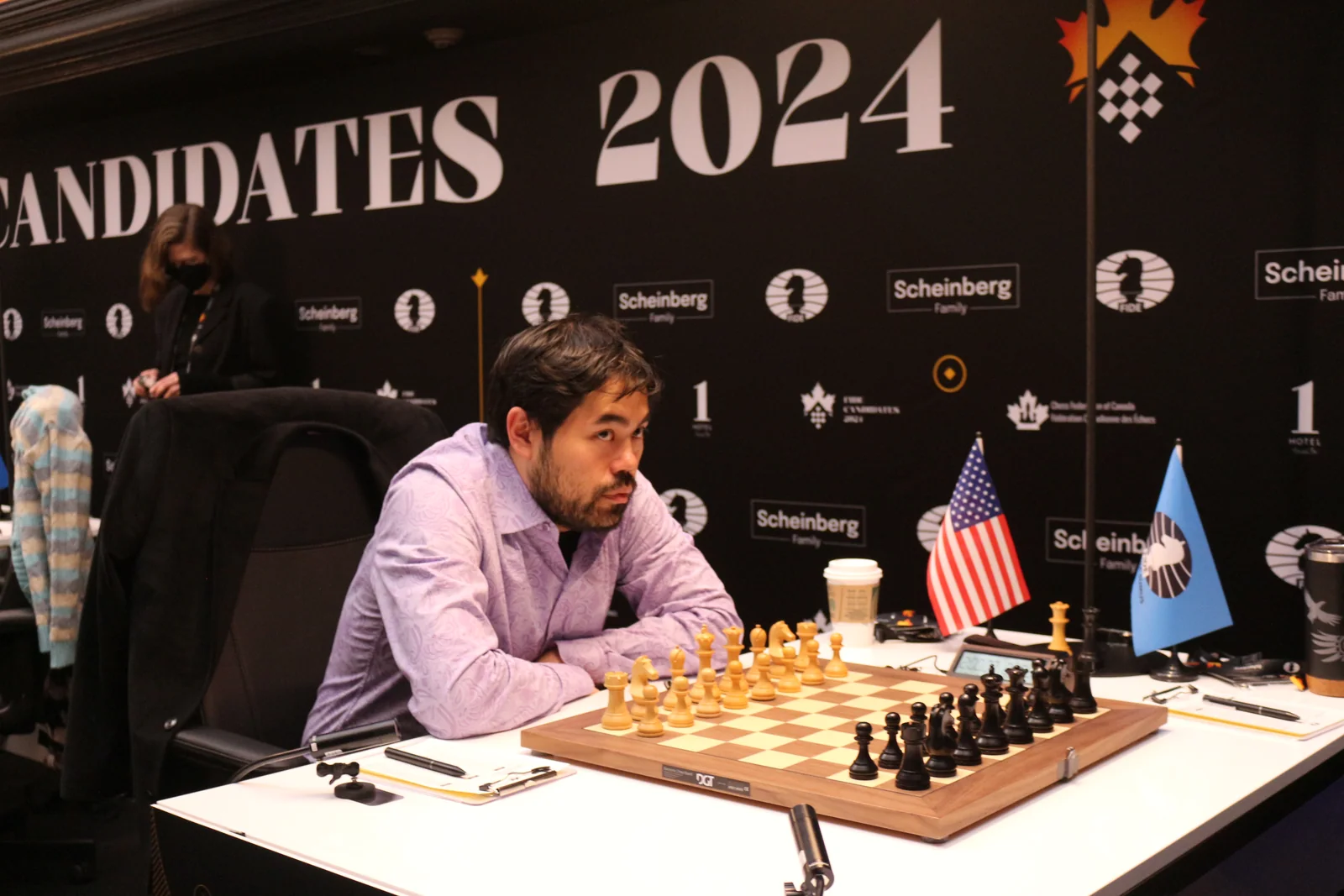
Grandmasters do not possess magical vision. Instead, they rely on a disciplined mental framework that filters out inferior candidates and organizes concrete calculation. When you learn how to structure your thoughts during a game, you stop guessing. In this comprehensive guide, we examine the exact decision-making process used by masters, supported by five iconic historical games and five interactive puzzles to sharpen your calculation.
The Core Challenge of Chess Decision-Making
Many amateur players believe that finding strong moves requires calculating ten plies deep into every branch. However, this assumption leads directly to mental exhaustion and severe time trouble. In reality, deep calculation is only necessary in sharp tactical positions. During quieter moments, positional understanding and piece coordination guide your choices.
In his landmark book Think Like a Grandmaster, Russian Grandmaster Alexander Kotov observed that amateurs often jump randomly between different moves. A player looks at one knight jump, notices an enemy response, panics, and switches to a pawn push without finishing the line. Consequently, the player wastes ten minutes and ends up choosing a move they spent only five seconds considering. If you frequently wonder why do I keep losing at chess, unstructured thinking is almost always the primary culprit.
The Danger of Confirmation Bias
Another common psychological trap is falling in love with your first idea. When you spot an attractive attacking move, your brain naturally searches for reasons why that move succeeds. Therefore, you calculate cooperative replies for your opponent while ignoring their defensive resources. Master players deliberately search for refutations against their own candidate moves before committing to a decision.
Former World Champion Emanuel Lasker summarized this principle in a timeless aphorism: when you see a good move, look for a better one. This disciplined habit separates casual club players from serious competitors. By questioning your immediate instincts, you uncover hidden resources for both sides.
Phase 1: Assessing the Board State
Before you begin calculating specific moves, you must understand the static features of the position. Grandmaster Jeremy Silman popularized this method as identifying imbalances. Without an accurate assessment of the board, your tactical calculations lack strategic direction.
Whenever it is your turn to move, spend fifteen to thirty seconds taking a mental snapshot of the position. Look for pawn weaknesses, open files, piece activity, and King safety. For example, if your opponent has an isolated Queen pawn, your strategic objective involves blockading that square and trading pieces into a favorable endgame.
Auditing Tactical Vulnerabilities
Every tactical combination stems from specific positional triggers. Therefore, you should constantly scan the board for tactical warning signs before considering any move. Specifically, look for undefended pieces, loose pawns, aligned pieces on ranks or diagonals, and trapped pieces.
Grandmaster John Nunn noted that loose pieces drop off, often abbreviated as LPDO. Whenever you notice an unprotected piece on either side of the board, tactical alarm bells should ring. In addition, examine whether your own pieces lack secure squares, because defensive vulnerabilities limit your attacking options.
Evaluating King Safety
King safety is the single most important imbalance in any chess position. A material advantage of several pawns means nothing if your King faces an unstoppable mating net. Consequently, your assessment must evaluate the defensive shelter around both Kings.
Check whether the pawn shield in front of the King remains intact or fractured. Furthermore, examine which open files or diagonals lead toward the King. If the enemy King is caught in the center, opening lines through central pawn breaks becomes an urgent priority.
Phase 2: Generating Candidate Moves
Once you understand the demands of the position, you must select two to four candidate moves. Candidate moves are the initial shortlist of plausible moves that warrant concrete calculation. Developing a broad list of candidates prevents tunnel vision.
Many intermediate players make the fatal mistake of calculating the first move that catches their eye. If that line seems acceptable, they play it immediately. However, the best move in chess is frequently a subtle quiet move or a counter-intuitive sacrifice that does not appear obvious at first glance.
The Forcing Moves Hierarchy: Checks, Captures, and Threats
To avoid missing decisive tactics, always examine forcing moves first. Forcing moves severely restrict your opponent’s available replies, making them easier and safer to calculate accurately. Chess coaches often refer to this priority as CCT: Checks, Captures, and Threats.
Begin by listing all available checks, even those that appear reckless or suicidal. Next, examine all direct captures of enemy pieces and pawns. Finally, search for direct threats against high-value pieces, mating squares, or weak pawns. Because forcing moves require immediate responses, they frequently unlock hidden tactical breakthroughs.
Broadening Your Candidate Horizon
In addition to forcing moves, identify one or two quiet positional candidates. For instance, consider improving your worst-placed piece, reinforcing a central outpost, or challenging an open file with a rook. Having both sharp and quiet options gives your calculation balanced perspective.
Grandmaster Mark Dvoretsky recommended writing down or visualizing a small menu of candidates before analyzing any single branch deeply. This practice ensures that you never overlook an important alternative before investing valuable clock time.
Phase 3: Deep Calculation and the Tree of Variations
After establishing your candidate shortlist, you must calculate each branch methodically. Kotov compared this calculation process to a tree consisting of a trunk and branching limbs. To calculate effectively, you must analyze one branch to its logical conclusion before switching to the next candidate.
If you jump between branches erratically, your mind becomes confused and prone to calculation fatigue. Therefore, commit to following a single candidate line until you reach a stable position where no further forcing moves exist. Only then should you evaluate the final position and move to your next candidate.
Finding the Intermediate Move (Zwischenzug)
A frequent error during tactical calculation is assuming that your opponent must play the most obvious recapture. In chess, unexpected intermediate moves (known by the German term Zwischenzug) often overturn seemingly decisive combinations.
Before concluding that a variation wins material, actively search for an in-between check or counter-threat for the defending side. Similarly, look for intermediate moves in your own variations. A well-timed check can completely disrupt your opponent’s defensive coordination.
Comparing Resulting End Positions
Once you finish calculating all candidate branches, compare their final evaluations side by side. Ask yourself straightforward comparative questions. Which candidate leaves your King safest? Does an alternative capture more material without permitting counterplay? Furthermore, can a simpler continuation steer the struggle directly into a winning endgame?
By comparing the end positions instead of the initial moves, the objectively superior choice becomes clear. This method of comparison provides emotional confidence over the board, because you know precisely why your chosen move outperforms the alternatives.
Phase 4: Prophylactic Thinking and Opponent Plans
Chess is a two-player contest where your opponent constantly formulates plans to thwart your ambitions. Prophylaxis is the art of anticipating and preventing your opponent’s ideas before they manifest on the board. Legendary master Aron Nimzowitsch called prophylaxis the cornerstone of positional chess.
Before playing any move, ask yourself the most important question in chess: What does my opponent want to do? If you can identify your opponent’s primary threat or intended plan, you can neutralize it before launching your own offensive operations.
Restricting Enemy Counterplay
Many promising attacks fail because the attacking player ignores the defender’s counter-chances on the opposite wing. Consequently, top grandmasters frequently spend a move consolidating their position before striking decisively. For example, Anatoly Karpov famously suffocated his opponents by eliminating all active counterplay before initiating pawn breaks.
When you restrict your opponent’s pieces to passive defensive squares, their position gradually collapses under pressure. Therefore, finding the best move often means finding a quiet prophylactic move that denies the enemy an active outpost or tactical break.
Overprotection and Fortifying Weak Points
Nimzowitsch introduced the concept of overprotecting critical strongpoints and central pawns. When an important pawn is defended multiple times, your pieces remain free to maneuver without being tied down to passive defense. Furthermore, overprotection discourages the opponent from even attempting a breakthrough in that sector.
In your own games, identify your most valuable central bastion. Defending it with an extra piece often releases your other forces for an assault on the flanks.
Phase 5: Positional Improvement and the Worst Piece Principle
In quiet positions where no direct tactics exist, finding the best move requires positional logic. When you do not know what to do, locate your least active piece and find a way to improve its placement. This guideline is known as the Worst Piece Principle.
A chess army functions like an interconnected team. If you attack with three pieces while a knight languishes uselessly on the edge of the board, your attack lacks sufficient firepower. By activating your passive pieces first, you build overwhelming pressure that eventually produces tactical opportunities.
Identifying Outposts and Open Files
Knights require stable outposts in the enemy camp, while rooks require open files to penetrate the second or seventh ranks. Therefore, when evaluating candidate moves in quiet positions, look for squares where your pieces exert maximum influence.
For example, maneuvering a knight from a passive square to a dominant central outpost often completely paralyzes the opponent’s pieces. Players learning how to reach a 1500 chess rating benefit immensely from focusing on piece placement instead of premature pawn attacks.
Phase 6: The Final Blunder Check
You have assessed the position, selected candidates, calculated forcing lines, and chosen your favorite move. However, you must never play that move immediately. Before physically touching the piece, perform a dedicated blunder check.
Take five to ten seconds to look at the board through your opponent’s eyes. Imagine that your chosen move has already been played on the board. Now ask yourself: Can my opponent deliver checkmate, capture an undefended piece, or create a devastating pin on their next turn?
Eliminating Fingerfehler and Tactical Blind Spots
Even world champions occasionally suffer from tactical blindness when they skip this final safeguard. A quick blunder check catches simple tactical oversights before they ruin hours of hard work. If your chosen move survives this rigorous audit, you can play it with full confidence.
Now, let us examine five master games that demonstrate these decision-making steps under actual tournament conditions. Each game features an annotated masterclass followed by an interactive puzzle to test your calculation.
Masterclass Game 1: The Clearance Breakthrough (Botvinnik vs. Capablanca, AVRO 1938)
In round eleven of the legendary 1938 AVRO tournament in the Netherlands, future World Champion Mikhail Botvinnik faced former World Champion José Raúl Capablanca. The game began as a Nimzo-Indian Defense, where Botvinnik accepted doubled c-pawns in exchange for active central control and the two bishops.
As the middlegame unfolded, Capablanca blockaded White’s queenside pawns and targeted the c4-square with his knight. However, Botvinnik methodically built up a central pawn roller with e4 and f4. By move 29, White had pushed his pawn to e6, creating severe structural tension around Black’s king.
On move 30, Botvinnik produced one of the most famous candidate move discoveries in chess history. Instead of choosing a routine developing move, he calculated a clearance and deflection sacrifice: 30.Ba3!! The bishop attacks the black queen, deflecting it away from the defense of e7 and f6. When Capablanca captured the bishop, Botvinnik followed up with the thunderous knight sacrifice 31.Nh5+! shattering Black’s king shelter.
Interactive Puzzle 1: Find Botvinnik’s Clearance Sacrifice
Step into Mikhail Botvinnik’s shoes at the AVRO tournament. Black’s king feels secure behind its pawn chain, but White possesses an astonishing tactical breakthrough. Find the best move to decisively break Capablanca’s defense.
Position before move 30. White to move.
Show the candidate line and explanation
30. Ba3 Qe8 31. Qc7+ Kh8 32. Be7 Kg7 33. Bd8+ Kf8 34. Bxf6 Qxe6 35. Bg5 a5
Botvinnik deflects the defending black queen with 30.Ba3! Decoying the queen clears the diagonal and removes defensive control over e7 and f6. If Black takes with 30...Qxa3, White strikes with 31.Nh5+! gxh5 32.Qg5+ winning quickly.
Full Game Notation and Key Takeaways
Study the complete game below to observe how Botvinnik prepared this tactical explosion through relentless central play and piece coordination.
Masterclass Game 2: The Counter-Intuitive Queen Sacrifice (Byrne vs. Fischer, New York 1956)
In 1956, a thirteen-year-old Bobby Fischer stunned the international chess community during the Rosenwald Memorial tournament in New York. Facing International Master Donald Byrne with the black pieces in what became known as the Game of the Century, Fischer demonstrated an uncanny ability to find non-obvious candidate moves.
Byrne neglected his king's safety by hunting pawns in the opening with his queen. Consequently, Fischer rapidly mobilized his pieces and seized the initiative along the central files. On move 17, Byrne played 17.Kf1, expecting Black to retreat his threatened queen or defend passively.
Instead of playing a routine defensive move, Fischer uncorked the breathtaking queen sacrifice 17...Be6!! When Byrne accepted the sacrifice with 18.Bxb6, Fischer launched a lethal discovered check windmill with 18...Bxc4+ 19.Kg1 Ne2+ 20.Kf1 Nxd4+! Black systematically harvested White's army while hunting Byrne's king across the back ranks.
Interactive Puzzle 2: Find Fischer's Immortal Queen Offer
Put your candidate move generation to the ultimate test. White has just attacked your queen on b6 with 17.Bc5. Conventional logic tells you to save the queen, but a deeper tactical truth exists on the board. Can you find Fischer's winning blow?
Position before move 17... Black to move.
Show the candidate line and explanation
17...Be6 18. Qxc3 Qxc5 19. dxc5 Bxc3 20. Bxe6 Rxe6 21. g3 Re7 22. a3 Rc7 23. Kg2
Fischer unpins the queen by offering it with 17...Be6! If White accepts with 18.Bxb6, Black wins material after 18...Bxc4+ 19.Kg1 Ne2+ 20.Kf1 Nxd4+ followed by a deadly windmill attack.
Full Game Notation and Instructive Analysis
Replay the full game below to appreciate how early development and rapid mobilization create the preconditions for brilliant tactical strikes.
Masterclass Game 3: Deep Calculation and the King Hunt (Kasparov vs. Topalov, Wijk aan Zee 1999)
Often hailed as Kasparov's Immortal, this clash from the 1999 Hoogovens tournament represents the pinnacle of concrete calculation in modern chess. Facing the fearsome Bulgarian Grandmaster Veselin Topalov in a Pirc Defense, Garry Kasparov initiated one of the deepest king hunts ever recorded.
After sharp opening maneuvers, Topalov pushed his d-pawn to d4, seeking counterplay against White's center. However, Kasparov had calculated a stunning rook sacrifice fifteen plies ahead. On move 24, Kasparov played 24.Rxd4!! ripping open Black's defensive barrier.
When Topalov captured with 24...cxd4, Kasparov followed up with the second rook sacrifice 25.Re7+!! forcing the black king to march all the way from b8 to the deadly a4-square. Through an extraordinary display of candidate move calculation, Kasparov checked Black's king across the entire board while simultaneously parrying all back-rank threats.
Interactive Puzzle 3: Kasparov's King Hunt Sacrifice
Imagine sitting across from Veselin Topalov at Wijk aan Zee. Black has just advanced his pawn to d4, threatening your center. Find the explosive candidate move that initiates one of the greatest attacking masterpieces in history.
Position before move 24. White to move.
Show the candidate line and explanation
24. Rxd4 Kb6 25. b4 Qxf4 26. Rxf4 Nxd5 27. Rxf7 cxb4 28. axb4 Nxb4 29. Nb3 Bd5
Kasparov launches his legendary king hunt with the rook sacrifice 24.Rxd4! White dismantles Black's defensive pawn structure and rips open lines toward the exposed king on a7. If Black accepts with 24...cxd4, 25.Re7+!! forces the king into the open board.
Full Game Notation and Instructive Moments
Follow the entire sequence below to see how Kasparov calculated each defensive reply with surgical precision.
Masterclass Game 4: World Championship Pressure (Carlsen vs. Karjakin, New York 2016)
In the final rapid tiebreak game of the 2016 World Chess Championship in New York, Magnus Carlsen needed a draw or win to retain his title against Sergey Karjakin. The game was played under rapid time controls, where players had only twenty-five minutes plus a ten-second increment.
Despite the ticking clock, Carlsen methodically built up pressure on the kingside against Karjakin's Sicilian Defense. By move 49, White had established dominant rooks along the c-file and fifth rank, while Karjakin's queen and rook attempted desperately to generate counterplay against White's king.
With Black threatening perpetual check, Carlsen calculated the position with laser accuracy. On move 50, Carlsen played the unforgettable queen sacrifice 50.Qh6+!! The move exploited geometric mating patterns on both sides of the black king. Whether Karjakin captured with his pawn or his king, checkmate was unavoidable on the very next ply.
Interactive Puzzle 4: Carlsen's World Title Queen Sacrifice
Experience the tension of a World Championship tiebreak. Black's queen on f2 and rook on a2 create dangerous counter-threats. Find Carlsen's decisive candidate move that seals the championship match.
Position before move 50. White to move.
Show the candidate line and explanation
50. Qh6+ Kxh6 51. Rh8#
Carlsen plays the stunning candidate move 50.Qh6+! This beautiful queen sacrifice forces mate in two moves. If 50...Kxh6, White mates with 51.Rh8#. If 50...gxh6, White mates with 51.Rxf7#. Karjakin resigned immediately.
Full Game Notation and Strategic Context
Examine the full game below to observe how Carlsen maintained composure under rapid time controls and steered the game toward a decisive tactical climax.
Masterclass Game 5: Development and Line Opening (Morphy vs. Duke of Brunswick & Count Isouard, Paris 1858)
Played in an opera box during a performance of The Barber of Seville in Paris, Paul Morphy's masterpiece against the Duke of Brunswick and Count Isouard (universally celebrated as the Opera Game) remains the most famous instructional game in chess history. It provides a clear lesson on the relationship between rapid piece development and finding the best move.
Black violated several fundamental opening principles by making unnecessary pawn moves and moving the same pieces multiple times. Consequently, Morphy mobilized all of his forces with rapid tempo. Understanding what makes a chess opening effective begins with realizing that every tempo spent developing pieces prepares decisive tactical combinations.
On move 16, Morphy capped off his visual masterpiece with the iconic queen sacrifice 16.Qb8+!! By deflecting Black's knight away from the defense of the d8-square, Morphy delivered checkmate with his lone remaining rook on d8.
Interactive Puzzle 5: Morphy's Opera House Mate
Test your pattern recognition in chess history's most celebrated tactical finale. Black's king remains paralyzed in the center of the board. Find the sparkling deflection sacrifice that delivers checkmate on the next move.
Position before move 16. White to move.
Show the candidate line and explanation
16. Qb8+ Nxb8 17. Rd8#
Morphy concludes the Opera Game with the elegant queen deflection 16.Qb8+! The black knight is overloaded, compelled to abandon its defense of d8 by playing 16...Nxb8, allowing 17.Rd8# checkmate.
Full Game Notation and Key Principles
Examine the complete game below to observe how Morphy opened lines and sacrificed material to exploit Black's lagging development.
Five Practical Habits to Find Better Moves in Your Games
Understanding theoretical decision-making frameworks is valuable, but executing them under tournament conditions requires deliberate practice. Incorporate these five practical habits into your training routine to consistently discover the best move over the board.
1. Establish a Consistent Pre-Move Checklist
During competitive games, emotions frequently interfere with rational calculation. Therefore, create a strict habit of executing a three-step mental routine on every single turn. First, identify your opponent's direct threats and tactical ideas. Second, generate three candidate moves, prioritizing checks, captures, and threats. Third, perform a dedicated blunder check before physically moving your chosen piece.
When this sequence becomes second nature, you eliminate careless blunders. Furthermore, you will make decisions with greater calm and composure even in complicated middlegames.
2. Manage Clock Time Based on Position Volatility
Time management directly influences your move quality. Spending five minutes on an obvious opening recapture leaves you with too little time when the critical middlegame crisis arrives. Therefore, classify positions into simple and volatile categories.
In stable positions with few forcing moves, make practical decisions within one or two minutes. Conversely, when tactical tension peaks or king safety is challenged, invest the necessary time to calculate variations deeply. Allocating time according to position volatility ensures that your deepest thinking occurs when it matters most.
3. Maintain a Personal Blunder Notebook
Every chess player possesses unique recurring weaknesses. Some players consistently miss backward knight moves, while others overlook long diagonal pins. To correct your blind spots, record every critical mistake from your games in a dedicated blunder journal.
Reviewing your past blunders once a week trains your subconscious mind to recognize those patterns before they recur over the board. Over time, your calculation accuracy will increase significantly.
4. Analyze Your Games Without an Engine First
Relying immediately on computer evaluation after a game stunts your analytical growth. When an engine tells you that a move is a blunder, you learn what the computer saw, but you fail to understand why your human decision-making process failed.
Instead, spend thirty minutes analyzing your completed game manually. Write down the candidate moves you considered, where your calculations went wrong, and what defensive resources you missed. Afterwards, turn on the engine to verify your findings and check tactical variations.
5. Practice Calculation and Visualization Daily
Calculation is a mental muscle that atrophies without regular exercise. Dedicate twenty minutes each day to solving challenging tactical puzzles from master games. Instead of guessing the first move, force yourself to calculate the entire variation to the end before checking the solution.
This deliberate practice strengthens your board visualization and increases your candidate move horizon. Consequently, finding strong moves in your own games will feel natural and effortless.
Summary of the Decision-Making Framework
To conclude this masterclass, keep this practical summary in mind whenever you sit down to play:
- Assess the position statically by evaluating King safety, pawn structure, and piece activity.
- Audit tactical vulnerabilities by scanning for undefended pieces and aligned targets.
- Formulate a shortlist of two to four candidate moves, prioritizing checks, captures, and threats.
- Calculate forcing variations deeply and systematically along single branches before comparing options.
- Search actively for intermediate moves (Zwischenzüge) for both sides during your calculations.
- Ask what your opponent plans to do and restrict their active counterplay with prophylactic moves.
- Improve your worst-placed piece whenever no direct tactical breakthroughs exist.
- Execute a final five-second blunder check before committing your hand to the piece.
By applying this disciplined framework over the board, you will approach every position with clarity and confidence. The best move in chess is rarely a mystery; it is the logical reward of structured thinking and careful verification.
Download game 1 PGN · Download game 2 PGN · Download game 3 PGN · Download game 4 PGN · Download game 5 PGN

[…] Black deflections like 33…Rf1+ show the value of checking every forcing candidate move before executing a defensive plan. Readers who want to improve their calculation habits can review our guide on how to find the best move in chess. […]