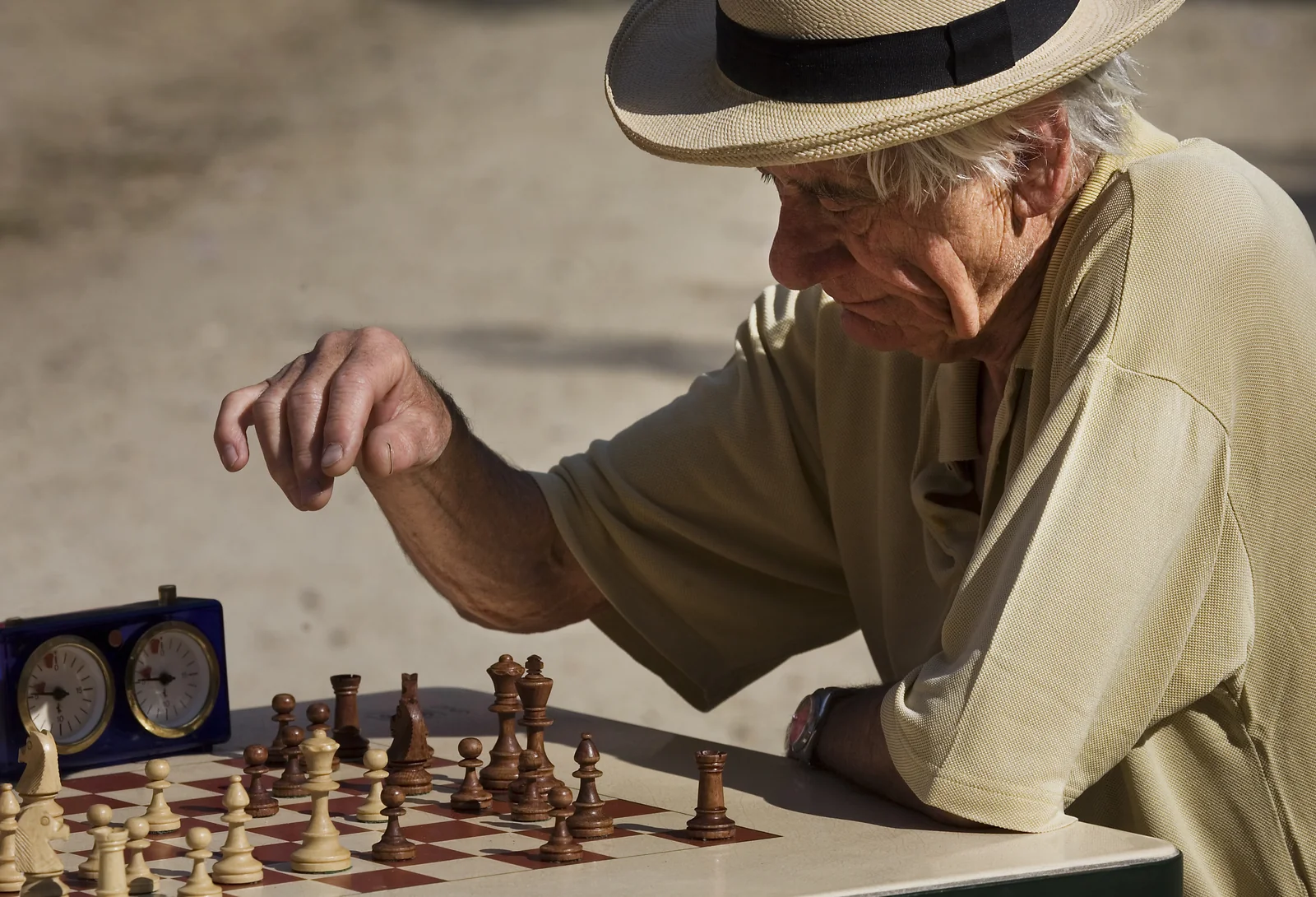
Every chess player encounters periods where winning a game feels impossible. You sit down for an evening session, drop a piece in the opening, lose on time in an equal rook endgame, walk into a basic knight fork, and watch your rating plunge by fifty or one hundred points. You tell yourself that bad luck caused the slump. Yet chess contains zero hidden information and no dice rolls. When you keep losing at chess, the losses point directly to repeatable patterns in how you calculate, how you manage your clock, and how you evaluate threats.
A losing streak is rarely an accident. Instead, it acts as a mirror that exposes systemic technical defects in your thinking process. Players who plateau or slide backward often repeat the exact same errors across dozens of games without realizing it. Understanding why you keep losing requires examining the specific failure points that occur between your brain and the board.
In this guide, we analyze the five primary causes of persistent chess losses using five historic master games and five instructive puzzles. Whether you are struggling to break past 1000 Elo or trying to stabilize at 1800, these diagnostic lessons and recovery routines will help you stop rating hemorrhages and build a durable competitive foundation. If you also struggle with tactical blunders, reading our guide on how to stop blundering pieces in chess will provide immediate companion habits.
1. Tactical blindness and hope chess
The single most common reason players keep losing at chess is tactical blindness caused by hope chess. Coach Dan Heisman coined the phrase hope chess to describe a destructive habit: a player chooses a move because it creates an attractive threat, without verifying what the opponent will do in response. You see an aggressive queen move, hope your opponent misses the threat, and play it immediately. Two seconds later, your opponent makes an obvious counter-attack that wins your queen or mates your king.
Tactical blindness occurs because human attention naturally fixates on our own goals. When you spend two minutes calculating how your knight can jump into enemy territory, your brain treats that active plan as reality. You stop looking at what the opponent can do to punish you. In amateur chess, over seventy percent of all decisive games are decided not by deep positional masterpieces, but by one-move or two-move tactical oversights where one side leaves a piece undefended or walks into an immediate threat.
This psychological blind spot is not limited to beginners. Even classical world champions can fall victim to tactical blindness when fatigue clouds their awareness of the opponent’s direct responses.
Case study: Deep Fritz 10 vs. Vladimir Kramnik (2006)
In the second game of the 2006 Man vs. Machine match in Bonn, Classical World Champion Vladimir Kramnik demonstrated how catastrophic tactical blindness can be. Playing Black against the computer program Deep Fritz 10, Kramnik navigated a complicated Queen’s Gambit Accepted into a balanced queen and knight endgame with passed pawns. The position was dynamically equal, and Kramnik was playing for a draw with solid drawing prospects.
On move 34, Kramnik played 34…Qe3??. He was calculating deep pawn endgame variations after an anticipated queen exchange, convinced that his passed a-pawn would guarantee counterplay. However, Kramnik completely overlooked that White’s knight on f8 and queen on e4 formed an immediate mating battery. Deep Fritz instantly played 35.Qh7# mate. The game was reported worldwide by The Week in Chess 630, stunning commentators who could barely believe a reigning world champion missed mate in one.
Kramnik’s blunder illustrates the core lesson of hope chess: calculation depth means nothing if you fail to check the simplest candidate replies. If a world champion can blunder mate in one by calculating complex future lines instead of verifying immediate threats, any amateur player can do the same.
Instructive puzzle: spotting the immediate threat
Test your alertness in the exact position where Kramnik suffered his famous oversight. White has an immediate knockout on the board.
Position before move 35. White to move.
Show the candidate line and explanation
35. Qh7#
White exploits Black's fatal tactical blindness with 35.Qh7# mate, as the knight on f8 guards the escape square and supports the queen. Even classical world champions lose when failing to check immediate threats.
The diagnostic fix: the three-second safety check
To eliminate hope chess, you must establish a non-negotiable mental habit before every move: the three-second safety check. Whenever you decide on a move, take your hand off the mouse or keep your hands off the piece. Ask yourself three specific questions from your opponent's perspective:
- If I make this move, does my opponent have any direct checks?
- Does my move leave any piece or square undefended?
- What is my opponent's strongest direct reply, capture, or attack?
Spending three seconds checking your opponent's forcing responses will eliminate more than half of all the losses on your record. Until this habit becomes automatic, your rating will remain vulnerable to sudden collapses.
2. King neglect and opening greed
A second major reason players lose repeatedly is falling behind in development to chase pawns or launch premature attacks. In the opening, your top priorities are controlling the center, developing your minor pieces to active squares, and tucking your king away safely through castling. Many improving players violate these principles because they treat pawns like prize money, snatching side pawns while their king remains stranded on e1 or e8.
Every pawn grab in the opening costs time. A single tempo in chess often represents the difference between a thriving attack and sudden checkmate. When your king sits in the center, open files and diagonals act as highways for your opponent's rooks, queens, and bishops. Even a small development lead allows an active player to sacrifice material to smash open the center and finish the game before you can castle.
No game in chess history illustrates the penalty of king neglect and opening greed more clearly than Paul Morphy's masterpiece at the Paris Opera House.
Case study: Paul Morphy vs. Duke of Brunswick and Count Isouard (1858)
Played during an intermission of the opera Norma in Paris, this encounter pitted American master Paul Morphy against two noble amateurs consulting together. Black opened with Philidor's Defense (1.e4 e5 2.Nf3 d6 3.d4 Bg4). Morphy immediately traded pawns and developed his queen to b3, putting double pressure on b7 and f7.
Rather than developing their kingside pieces to castle, Black played 7...Qe7, blocking their own dark-squared bishop. Over the next six moves, Black grabbed space with pawn thrusts like 8...c6 and 9...b5, moving pawns while their kingside knights and rooks remained frozen on their home squares. Morphy reacted with ruthless energy. He sacrificed a knight on b5 to blow open lines toward Black's king, pinned Black's pieces on the d-file, and castled queenside with check. Black never castled, and Morphy finished the game with a legendary queen sacrifice on b8, delivering checkmate on move 17. The complete historical context is preserved on Wikipedia's Opera Game record.
Notice how every move Morphy made either developed a piece, increased pressure on a pinned defender, or forced Black to defend. Black had seven pieces still sitting on their original squares when checkmate landed. That is the exact mathematical consequence of opening greed.
Instructive puzzle: Morphy's deflection breakthrough
Find the finishing combination that Morphy used to break Black's resistance and deliver checkmate.
Position before move 16. White to move.
Show the candidate line and explanation
16. Qb8+ Nxb8 17. Rd8#
White deflects Black's sole defending knight with 16.Qb8+! Nxb8, clearing the d8 square for 17.Rd8# mate.
The diagnostic fix: the rule of three before operations
If you find yourself frequently mated in the opening or defending horrible pins on the e-file and d-file, enforce the rule of three: do not initiate pawn pushes, piece trades, or attacking sallies until you have developed at least three minor pieces and castled your king. Unless your opponent presents an immediate forced tactical win, king safety must take priority over material accumulation. For players starting out, reviewing how to get better at chess for beginners offers a structured foundation for proper opening development.
3. Dynamic piece activity versus passive defense
Many chess players lose not because they drop pieces in one move, but because they defend passively. When an opponent attacks a piece or creates a threat, the instinctive amateur response is to retreat that piece backward or place another piece in front of it as a shield. Over several moves, this defensive mindset compresses your army into a cramped corner of the board.
In chess, pieces derive their value from their mobility and the number of active squares they control. A rook trapped behind pawns is worth less than a bishop that controls a long open diagonal. When you defend passively, you give your opponent time to advance pawns, claim central space, and organize a decisive assault. The antidote to passive defense is dynamic piece activity: seeking active counter-threats that disrupt your opponent's coordination.
The danger of slow, passive play against dynamic coordination is demonstrated by Bobby Fischer's most famous early victory.
Case study: Donald Byrne vs. Bobby Fischer (1956)
In the 1956 Rosenwald Memorial Tournament in New York, 13-year-old Bobby Fischer faced International Master Donald Byrne. Byrne played White in a Grunfeld Defense setup. White attempted to gain space and tempo by moving his pieces repeatedly: 8.e4, 9.Rd1, 10.Qc5, and 11.Bg5. While Byrne chased Black's pieces around the board, his own king remained uncastled on e1.
Fischer did not retreat into a passive shell. Instead, he mobilized every single piece with tempo: 11...Na4!, 12...Nxc3, 13...Nxe4!, and 16...Rfe8+. When Byrne played 17.Kf1, expecting Black to save his attacked queen, Fischer stunned the chess world with 17...Be6!!. Fischer sacrificed his queen because his active minor pieces and rooks dominated every key square. Byrne took the queen with 18.Bxb6, and Fischer executed a classic windmill tactic with discovered checks, winning back decisive material and delivering checkmate on move 41. Hans Kmoch famously dubbed this the Game of the Century, and its historical documentation is detailed on Wikipedia's Game of the Century record.
Byrne lost because he treated dynamic piece coordination as secondary to static positional threats. Fischer showed that active pieces that coordinate harmoniously will overcome raw material advantages almost every time.
Instructive puzzle: Fischer's queen sacrifice
Test your tactical vision in Fischer's legendary position. Black has an overwhelming resource that ignores White's threat against the queen.
Position before move 17... Black to move.
Show the candidate line and explanation
17...Be6 18. Qxc3 Qxc5 19. dxc5 Bxc3 20. Bxe6 Rxe6 21. g3 Re7 22. a3 Rc7 23. Kg2
Black ignores the queen threat and plays 17...Be6!, punishing White's uncoordinated pieces and vulnerable king. If White takes the queen with 18.Bxb6, Black unleashes the devastating windmill starting with 18...Bxc4+.
The diagnostic fix: look for counter-threats before retreating
When an opponent attacks one of your pieces, do not automatically pull it backward. Instead, force yourself to search for candidate counter-attacks. First, consider whether you can counter-attack an enemy piece of equal or greater value. Look also for an in-between check (an intermediate move, or zwischenzug) that disrupts the opponent's timing. Finally, evaluate whether an active line break exposes your opponent's king.
Active defense does not mean reckless aggression. It means refusing to surrender piece mobility without a fight. Whenever you are forced to make a purely defensive retreat, make sure it prepares an immediate reactivation plan on the next turn.
4. Bad piece coordination and self-inflicted piece paralysis
Have you ever played a game where you made zero tactical blunders, reached move thirty, and suddenly found that your position was completely unplayable? You had no targets to attack, your rooks had no open files, your minor pieces were tangled up, and your opponent slowly squeezed you off the board. This common experience is caused by bad piece coordination and self-inflicted piece paralysis.
In chess strategy, having pieces on the board does not help you if those pieces cannot move. A bishop trapped behind friendly pawns of its own color is called a bad bishop, or in extreme cases, a tall pawn. A knight pushed to the rim has few squares and cannot participate in central battles. When you place your pawns on squares that strangle your own pieces, you effectively fight with fewer soldiers than your opponent.
Former World Champion Jose Raul Capablanca was the ultimate master of exploiting paralyzed enemy pieces, as demonstrated in his historic clash with William Winter.
Case study: William Winter vs. Jose Raul Capablanca (1919)
At the 1919 Hastings Victory Tournament, British master William Winter played White against the Cuban grandmaster Jose Raul Capablanca in a Four Knights Game. Early in the game, Winter pinned Black's knight with 8.Bg5 and retreated the bishop to h4 when challenged. After queens and knights were traded on f6, White's dark-squared bishop ended up on g3.
Capablanca recognized a profound structural flaw in White's camp: White's pawns were fixed on e4, f3, and f2. Capablanca played 15...f6!, cementing White's bishop into a permanent prison behind its own pawns. The bishop on g3 had zero forward mobility. Capablanca then activated his king to e6 and systematically opened the queenside with 21...c6, 22...b5, and the decisive pawn break 23...c4!. Because White's bishop was completely out of play on the kingside, Capablanca effectively played the remainder of the game up a piece on the queenside, winning easily on move 29.
Capablanca did not win this game with a flashy queen sacrifice or a twenty-move tactical sequence. He won because Winter allowed one of his pieces to become completely paralyzed, transforming the rest of the game into an uneven struggle.
Instructive puzzle: opening the active front
Find the thematic pawn break that Capablanca used to shatter White's queenside structure while White's bishop remained buried on g3.
Position before move 23... Black to move.
Show the candidate line and explanation
23...c4 24. axb5 cxb3 25. cxb3 Rxb5 26. Ra4 Rxb3 27. d4 exd4 28. Rxd4 Bb4 29. f4
Capablanca capitalizes on White's entombed bishop on g3 by opening the queenside with 23...c4! 24.axb5 cxb3 25.cxb3 Rxb5. With White's bishop sidelined, Black dominates the open files and wins pawns.
The diagnostic fix: run a piece audit every five moves
To avoid suffocating your own army, conduct a piece audit every five moves during a game. Scan each of your pieces and count how many legal, safe squares it can access:
- If a bishop has no open diagonals, you must adjust your pawn structure or prepare a pawn break to liberate it.
- If a knight is stuck on the edge of the board, route it toward a central outpost or an active anchor square.
- If your rooks are disconnected, connect them by developing your queen and moving your minor pieces off the back rank.
Before you push a pawn, always ask: which of my pieces does this pawn push lock out, and which piece does it free? Pawns cannot move backward. Every pawn push permanently alters the mobility of your minor pieces.
5. Tilt, fatigue, and psychological overconfidence
Not every chess loss stems from lack of chess knowledge. Often, you know exactly how to play, but your emotional state prevents you from applying that knowledge. In competitive gaming, this condition is known as tilt: an emotional spiral where frustration from a previous loss causes you to play rashly, calculate carelessly, and lose even faster in subsequent games.
Tilt usually starts with a painful defeat. You lose a won endgame, or you miss an obvious tactic in a time scramble. Frustrated and eager to reclaim your lost rating points, you immediately click the play button for another game. You play faster, you skip your blunder checks, you launch speculative attacks without calculating the consequences, and you lose again. Within an hour, a minor two-point rating drop turns into a devastating five-game losing streak.
Cognitive science confirms that emotional frustration and physical fatigue degrade chess performance significantly. High-level calculation requires substantial working memory. When you are angry or exhausted, your brain relies on superficial pattern matching rather than concrete calculation. Even Garry Kasparov, one of the fiercest competitors in human history, fell victim to psychological tilt against Deep Blue in 1997.
Case study: Deep Blue vs. Garry Kasparov (1997)
Going into the sixth and final game of the historic 1997 rematch in New York, the score was tied 2.5 to 2.5. Kasparov was visibly exhausted, emotionally drained, and frustrated by the machine's relentless resilience in previous games. Rather than playing one of his trusted opening weapons, such as the Sicilian Defense or King's Indian Defense, Kasparov opted for the Caro-Kann Defense (1.e4 c6 2.d4 d5 3.Nc3 dxe4 4.Nxe4 Nd7 5.Ng5 Ngf6 6.Bd3 e6 7.N1f3 h6?).
Move 7...h6 was a known inaccuracy in high-level theory. It invited the standard thematic piece sacrifice 8.Nxe6! fxe6 9.Bg6+ Ke7. Kasparov was familiar with this sacrifice, but in his fatigued and rattled state, he gambled that the computer would not dare enter the complications without a clear win. Deep Blue took the knight sacrifice instantly. Kasparov's king was dragged into the center of the board, his pieces were completely disorganized, and his position collapsed in just 19 moves. The match concluded in defeat for the human world champion, documented at length in The Week in Chess 131 and Wikipedia's Deep Blue match record.
Kasparov did not lose Game 6 because Deep Blue was an invincible monster. He lost because psychological frustration led him to abandon his disciplined preparation and play a careless opening move that he would never have permitted under normal emotional conditions.
Instructive puzzle: punishing opening overconfidence
Spot the crushing knight sacrifice that Deep Blue used to shatter Black's kingside and punish Kasparov's opening inaccuracy.
Position before move 8. White to move.
Show the candidate line and explanation
8. Nxe6 fxe6 9. Bg6+ Ke7 10. Bf4 Qa5+ 11. c3 Kd8 12. O-O Be7 13. Bg3 Rf8
White shatters Black's king defense with the thematic knight sacrifice 8.Nxe6! fxe6 9.Bg6+ Ke7 10.Bf4. Black's king is stranded in the center, and Black's pieces remain completely undeveloped.
The diagnostic fix: the two-loss rule
The single most effective tool to defeat tilt is the two-loss rule. Make a firm agreement with yourself before starting any chess session: if you lose two games in a row, you must close your chess application and step away from the screen for at least thirty minutes.
During those thirty minutes, do not analyze your losses immediately while emotions are high. Drink water, take a walk, or step away from the chessboard completely. When you return with a calm mind, analyze both games without an engine first. Identify the exact moment where your calculation failed, record the blunder in a notebook, and only then decide whether you have the mental clarity to play another game.
A four-step training routine to break losing streaks
Overcoming repeated chess losses requires replacing emotional reactions with a systematic training routine. If you want to transform losing streaks into steady rating growth, commit to the following four-step framework over your next fifty games.
Step 1: Track blunders by category in a notebook
Keep a physical or digital blunder log for every serious game you play. When you review your losses, categorize each critical mistake under one of four labels:
- Tactical oversight: Left a piece undefended or failed to see a direct fork, pin, or checkmate.
- Opening deviation: Fell behind in development or neglected king safety before castling.
- Passive positioning: Retreated pieces unnecessarily and allowed opponent complete board control.
- Time trouble rush: Played poorly calculated moves with under two minutes on the clock.
After reviewing twenty games, review your tally. If eighty percent of your losses fall under tactical oversights, studying complex endgame theory will not raise your rating. Your training time must focus on pattern recognition and basic tactical drills.
Step 2: Solve puzzles for accuracy instead of speed
Many players train tactics by doing puzzle rushes or solving sixty-second puzzle sprints. While speed drills can be entertaining, they train your brain to guess the first appealing move. When you play a rated tournament or rapid game, that guessing habit turns directly into hope chess.
Instead, switch to deliberate tactical training. Set a timer for three to five minutes per puzzle. Do not make the first move on the board until you have calculated the entire variation, including your opponent's best defensive replies, to the very end. If your chosen line fails to an opponent resource, restart your calculation. Training for accuracy builds the mental endurance required to spot defensive tricks in real games.
Step 3: Play longer time controls
Blitz and bullet chess are fantastic tests of established intuition, but they are terrible environments for learning new habits. When you have three minutes on your clock, you do not have time to run a three-second blunder check, audit piece mobility, or evaluate candidate defensive moves. Playing exclusively fast time controls reinforces bad habits because speed masks poor calculation.
Shift at least seventy percent of your competitive games to 15+10 rapid or 30-minute classical time controls. Having sufficient time on your clock gives your brain permission to think methodically, spot opponent threats, and execute strategic plans without panic.
Step 4: Use candidate moves during critical positions
Grandmaster Alexander Kotov popularized the concept of candidate moves in his classic work Think Like a Grandmaster. When you face an important decision or complex tactical position, do not latch onto the first move that catches your eye. Instead, force yourself to identify two or three plausible candidate moves before you begin deep calculation.
List Move A, Move B, and Move C in your mind. Calculate each line cleanly, evaluate the resulting positions, and select the move that leaves your pieces active and your king secure. This structured habit prevents you from tunnel-visioning on flawed attacking ideas and drastically reduces unexpected tactical blunders.
The master checklist before you release your piece
To summarize this guide into an actionable board routine, memorize this four-point mental checklist. Run through these four questions before you finalize any move in your games:
- Opponent threats: What did my opponent's last move accomplish, and what are they threatening to do on their next turn?
- Loose pieces: Are any of my pieces or pawns completely undefended, and does my planned move leave anything hanging?
- King security: Is my king safe from checks, pins, or sacrificial attacks, and will my king remain secure after this move?
- Piece activity: Does my move improve the mobility of my pieces, or does it surrender control of the board to my opponent?
Losing games is a natural, inevitable part of chess progression. Every grandmaster and world champion lost thousands of games on their journey to mastery. The difference between players who remain stuck in losing streaks and those who steadily climb the rating ladder is how they respond to defeat. By identifying the root causes behind your losses, respecting your opponent's threats, and maintaining psychological discipline, you will turn painful defeats into stepping stones toward lasting chess strength.
Download game 1 PGN · Download game 2 PGN · Download game 3 PGN · Download game 4 PGN · Download game 5 PGN

[…] rating points in bunches. If you recently experienced frustrating slumps, our companion analysis on why do I keep losing at chess breaks down the broader tactical and psychological causes behind losing […]
[…] and ends up choosing a move they spent only five seconds considering. If you frequently wonder why do I keep losing at chess, unstructured thinking is almost always the primary […]