Every ambitious chess player confronts the same basic question during their training journey: how many chess games should you play to improve? Online platforms make it effortless to start a new match with a single tap. Consequently, thousands of players log tens of thousands of blitz and bullet games every year. Yet many of these same players find themselves trapped at the exact same rating plateau for seasons on end.
Playing chess is essential, but sheer volume does not guarantee progress. In fact, excessive low-effort games often cement bad thinking habits and tactical oversights. True improvement depends on the quality of your attention, the depth of your post-game autopsies, and the balance between playing and studying. In this master training guide, we examine the optimal game volumes for each skill level, dissect the training value of different time controls, and study five historic games that illustrate the analytical discipline required to reach mastery.
The volume paradox: Why playing more can stall your rating
The belief that raw game volume drives chess strength is widespread. Players often assume that if a grandmaster played 20,000 games, playing 20,000 games will produce equal competence. Cognitive science tells a different story. In his groundbreaking research on deliberate practice, psychologist K. Anders Ericsson demonstrated that expert performance stems from focused problem-solving with immediate feedback, not mindless repetition.
When you play ten three-minute blitz games in a row, your brain operates almost entirely on subconscious intuition. You repeat familiar opening moves, rely on surface-level heuristics, and react impulsively to your opponent’s threats. If you blunder a rook on move twenty, you feel a brief flash of frustration, close the board, and immediately queue for another opponent. Because you never investigated why you missed the threat, your brain stores no new defensive pattern. You are simply exercising existing habits, good or bad.
Chunking theory and durable pattern storage
Herbert Simon and Fernand Gobet studied how chess masters store knowledge through chunking theory. Masters hold tens of thousands of structured piece configurations in long-term memory. However, these complex patterns enter memory only when the brain engages in deep calculation and rigorous post-mortem review. A player who finishes three classical games each week and thoroughly analyzes every critical turn builds durable cognitive chunks. In contrast, a player who blitzes fifty games a day without analysis remains on a treadmill.
The danger of autopilot chess
Autopilot chess occurs when you move pieces without calculating concrete candidate moves. In speed games, time pressure forces you to choose the first reasonable idea that comes to mind. Over months of rapid play, this superficial decision-making becomes your default reflex. When you eventually sit down for a serious classical encounter, you struggle to calculate three moves ahead because your brain expects instant resolution.
To reverse this habit, you must treat your games as experimental laboratories. Every game you play should test a specific opening plan, calculation technique, or endgame concept. If a game does not receive an honest review afterward, its training value drops close to zero. Therefore, reducing your total game count while increasing your analytical rigor is often the fastest way to break a persistent plateau.
The three time-control tiers and their real training value
Not all chess games offer equal educational returns. Understanding how different time controls affect your thinking process allows you to structure your weekly schedule effectively.
1. Bullet and blitz: Tactical reflex testing under fire
Bullet (one to two minutes per side) and blitz (three to five minutes) are undeniably popular. They offer quick dopamine hits and rapid exposure to diverse openings. However, their educational value for improving players is sharply limited. Speed chess tests what you already know; it rarely teaches you something new.
In blitz, you do not have sufficient clock time to calculate long variations or compare subtle pawn structures. You must rely on immediate tactical reflexes. If you are an experienced master, blitz can help you test opening repertoires against common sidelines. For developing players rated below 2000, however, excessive blitz promotes careless piece safety and speculative attacks that fail against disciplined defense. You should treat blitz as occasional sparring instead of the foundation of your training.
2. Rapid chess: The practical sweet spot for adult improvers
Rapid time controls, particularly 15+10 (fifteen minutes with a ten-second increment) and 30+0, represent the most efficient training format for busy adults. A fifteen-minute game provides enough clock time to calculate candidate moves at critical junctures. Meanwhile, the ten-second increment guarantees that you can finish the endgame using sound technique without devolving into a frantic piece scramble.
Because a rapid game concludes within forty-five minutes, you can easily pair it with a thirty-minute post-mortem review in a single evening session. This combination fits smoothly into realistic working schedules while preserving the cognitive depth needed for authentic skill building.
3. Classical chess: The gold standard for deep calculation
Classical chess (60+30, 90+30, or longer) remains the premier arena for chess mastery. When you have sixty to ninety minutes on your clock, your brain undergoes genuine intellectual exertion. You must construct multi-move plans, anticipate your opponent’s subtle positional resources, and verify complex tactical combinations to the very end.
Grandmasters develop their deep strategic vision in classical games. When you play at slow time controls, you discover ideas that never surface in speed games. Even playing just one serious classical game per week, whether in a local chess club or an online classical league, will elevate your calculation stamina and board maturity faster than hundreds of fast internet games.
Game 1: Mikhail Botvinnik vs. Jose Raul Capablanca (AVRO 1938)
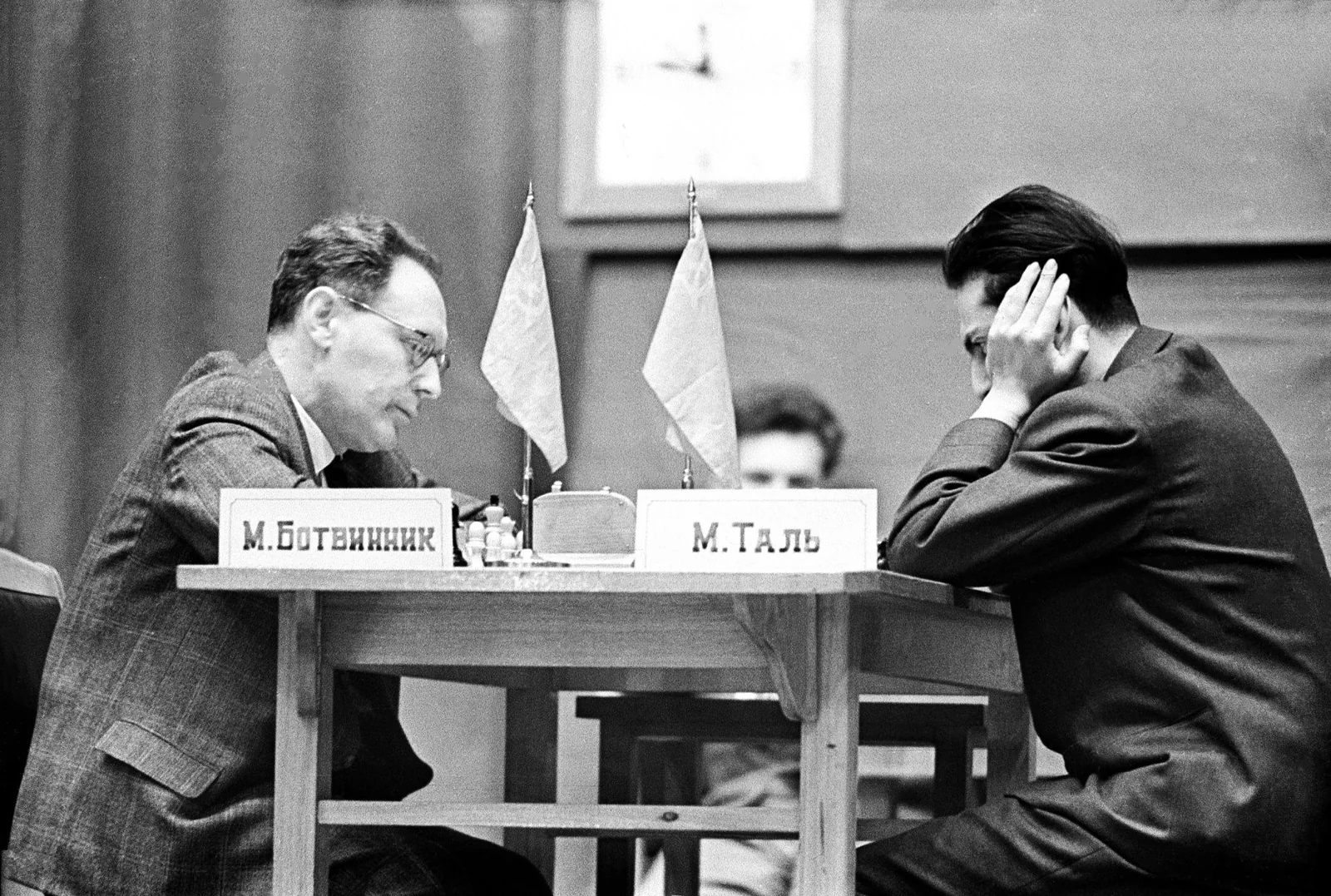
Mikhail Botvinnik, the patriarch of the Soviet chess school, pioneered the scientific approach to chess training. Botvinnik rarely played casual games. Instead, he prepared with great rigor for specific tournaments, kept disciplined notebooks documenting his errors, and analyzed every finished game down to the tablebase truth. His famous encounter against former world champion Jose Raul Capablanca at the AVRO tournament in 1938 stands as a monument to deliberate preparation and long-term planning.
In this classic battle, Botvinnik demonstrated how deep strategic patience creates the conditions for explosive tactical breakthroughs. Observe how White patiently constructed an imposing central pawn roller before launching a stunning double-piece sacrifice that dismantled Black’s king defense.
Annotated turning points in Botvinnik vs. Capablanca
Botvinnik adopted the Nimzo-Indian Defense with White, steering the game into a complex pawn structure where White possessed the bishop pair and doubled c-pawns. Without rushing forward prematurely, Botvinnik spent twenty moves organizing his forces. He restricted Black’s queenside counterplay and mobilized his central pawn majority with e3-e4 and f3-f4.
By move 29, Capablanca had centralized his queen on e7, attempting to blockade the passed white e-pawn. Here Botvinnik unveiled his deep calculation with 30.Ba3! This subtle deflection bishop sacrifice stripped the black queen of its control over the critical e8 square. When Capablanca captured the bishop with 30…Qxa3, Botvinnik delivered the decisive blow: 31.Nh5+! The knight sacrifice shattered Black’s kingside pawn shield and cleared the path for the white queen to infiltrate.
Instructive puzzle from Game 1
Test your tactical vision in the critical position before Botvinnik’s decisive knight sacrifice. Find the winning continuation that forces Capablanca’s king into a fatal defensive bind.
Position before move 31. White to move.
Show the candidate line and explanation
31. Nh5+ gxh5 32. Qg5+ Kf8 33. Qxf6+ Kg8 34. e7 Qc1+ 35. Kf2 Qb2+ 36. Kg3 Qxc3+
White breaks Black's defense by sacrificing the knight on h5 to shatter the pawn shield and escort the passed e-pawn to promotion.
Notice how Botvinnik calculated the entire king hunt through to move 41. He did not guess or rely on intuition. He knew that after the knight sacrifice on h5, White's passed e-pawn would decisively distract Black's queen while White's king found complete safety on h5. This level of concrete precision is the direct fruit of deliberate, slow analysis.
The 40/30/30 rule: A balanced weekly training formula
To eliminate guesswork from your chess routine, adopt the 40/30/30 rule. This formula divides your weekly chess hours into three balanced compartments that prevent burnout while maximizing retention:
- 40% Serious Play: Dedicate this time exclusively to rapid or classical games where you record your moves and calculate every turn with full concentration. Avoid playing when tired or distracted.
- 30% Post-Mortem Analysis: Review every game you played during the week without an engine first. Identify the critical turning points, catalog your recurring mistakes, and annotate your thoughts.
- 30% Structured Study: Solve thematic tactical exercises, review master game collections, and study fundamental endgame techniques to broaden your theoretical understanding.
Consider how this formula works for a player with ten hours of weekly training time. Four hours are spent playing four serious 15+10 rapid games or two classical games. Three hours are spent conducting thorough post-mortems on those exact games. The remaining three hours are divided between tactical calculation drills and endgame studies. This structured approach ensures that every hour of play directly feeds your learning loop.
How many games should you play by rating level?
Your optimal game volume also depends on your current playing strength. Different stages of chess development require different training priorities:
- Beginners (Rating 800 to 1200): Play four to six rapid games (15+10) per week. At this stage, tactical blunders decide nearly every contest. Spend forty percent of your time solving basic tactical motifs such as forks, pins, and skewers so that you stop hanging pieces.
- Intermediate Improvers (Rating 1200 to 1800): Play two to four serious rapid games and one slow classical game per week. Focus heavily on candidate moves and opening fundamentals. Analyzing your losses at this stage will reveal whether your mistakes stem from tactical blindness, poor time management, or passive opening play. For deeper guidance on diagnosing these flaws, consult our guide on how to stop making mistakes in chess.
- Advanced Competitors (Rating 1800 to 2200+): Play one or two classical tournament games per week, supplemented by focused opening preparation and complex endgame analysis. At this level, games are decided by subtle positional advantages and long calculation trees. High game volume without intense analytical depth yields diminishing returns.
Game 2: Paul Morphy vs. Duke of Brunswick and Count Isouard (Paris 1858)
Many players play hundreds of games without understanding why their attacks stall. They move the same piece multiple times in the opening, grab poisoned pawns, and leave their king stranded in the center. There is no better antidote to this careless habit than the famous Opera Game played by American genius Paul Morphy in 1858.
Morphy did not need dozens of games to prove his superiority. In just seventeen brisk moves, he demonstrated the eternal principles of rapid development, open lines, and energetic piece coordination. Every developing player should study this masterwork to understand why tempo and piece activity matter far more than static material.
Developmental lessons from the Opera Game
Notice how Morphy developed a fresh piece on virtually every single move. While his noble opponents wasted precious tempi moving their queen and pawns, Morphy mobilized his minor pieces, castled queenside, and seized control of the open d-file with his rooks.
When Black tried to hold the queenside together with 9...b5, Morphy did not hesitate. He sacrificed a knight on b5 with 10.Nxb5! to blow open the lines against the uncastled black monarch. By move 15, all of White's pieces were actively participating in the assault, while Black's kingside rook and bishop remained completely entombed on their starting squares.
Instructive puzzle from Game 2
Morphy concluded the game with one of the most celebrated checkmate combinations in chess history. Can you find the decisive queen sacrifice that forces checkmate on the following move?
Position before move 16. White to move.
Show the candidate line and explanation
16. Qb8+ Nxb8 17. Rd8#
White deflects the black knight from guarding d8 with a queen sacrifice, delivering checkmate on the next move.
Morphy's queen sacrifice with 16.Qb8+! removed the black knight from guarding d8, allowing 17.Rd8# to deliver a picturesque checkmate. If you frequently find yourself losing games while holding extra pawns, study Morphy's games to absorb the true value of rapid piece mobilization.
The post-mortem protocol: How to analyze your games without an engine
Playing a chess game and skipping the post-mortem analysis is like working through a complex math exam and throwing away the solution sheet without checking your errors. If you want every game to boost your rating, implement a disciplined four-step post-mortem protocol before turning on a computer engine.
Step 1: The immediate unassisted review
Immediately after finishing a game, resist the temptation to click the computer evaluation button. Instead, open a blank analysis board or set up the physical pieces. Walk through the game move by move while your memory is fresh. Write down your candid thoughts:
- What was your general plan between moves ten and twenty?
- Which opponent moves caught you by surprise during the game?
- Where did you feel uncomfortable, indecisive, or short on time?
- Which alternative candidate moves did you consider but reject during your calculation?
Recording these honest impressions forces your brain to engage in metacognition, the practice of examining your own thinking process. For a complete blueprint on structuring this habit, read our detailed grandmaster guide on how to analyze your chess games.
Step 2: Identifying the critical turning points
Every chess game contains one to three decisive moments where the evaluation swings dramatically. It might be an inaccurate pawn push that creates a permanent weakness, an overlooked tactical shot, or an unnecessary exchange of active pieces. Identify these moments yourself before checking the evaluation graph. Guess where the balance shifted and calculate what you should have played instead.
Step 3: Verifying tactics with the engine
Only after you have formed your own independent conclusions should you turn on a chess engine. Use the engine as an objective fact-checker instead of an all-knowing coach. Check whether your tactical calculations were sound and verify whether your alternative candidate moves were legally viable. If the engine points out a tactical blind spot, do not simply glance at the top line. Play through the variation on the board until you understand the underlying geometric motif.
Step 4: Updating your personal blunder journal
Maintain a simple digital document or physical notebook titled your Blunder Journal. Log every serious error into one of five distinct categories: opening misconceptions, tactical oversights, positional errors, time-trouble mistakes, or endgame blunders. Over fifty games, patterns will emerge with striking clarity. You may discover that sixty percent of your losses stem from rushed moves in complex tactical positions, giving you an exact target for your next training cycle.
Game 3: Richard Reti vs. Savielly Tartakower (Vienna 1910)
Developing sharp tactical alertness does not require playing a hundred blitz games every evening. In fact, blitz games often encourage players to overlook basic double checks and discovered attacks because they move too quickly. The brilliant miniature played between Richard Reti and Savielly Tartakower in Vienna in 1910 proves how devastating tactical geometry can be when a player calculates accurately.
This legendary game lasted only eleven moves, yet it contains one of the most instructive double-check checkmate patterns ever recorded in tournament play. Study how Reti exploited Tartakower's uncastled king and premature queen sortie.
The mechanics of the double check
Tartakower played the Caro-Kann Defense and ventured an aggressive central thrust with 5...e5, hoping to challenge White's center. However, this early pawn break opened central lines before Black had developed his kingside minor pieces. Reti swiftly castled queenside with 8.O-O-O!, placing his rook on the open d-file directly opposite Black's centralized queen.
When Tartakower captured the knight on e4, he believed his queen was safely defending the position. Reti instantly shattered this illusion with a breathtaking queen sacrifice on d8. The move dragged Black's king onto the open file, setting up a double check that left Black with zero defensive resources.
Instructive puzzle from Game 3
Examine the position after Black's eighth move. Find Reti's brilliant queen sacrifice and the decisive mating continuation.
Position before move 9. White to move.
Show the candidate line and explanation
9. Qd8+ Kxd8 10. Bg5+ Kc7 11. Bd8#
White sacrifices the queen to force the black king onto d8, creating a deadly double check with the bishop and rook that leads immediately to checkmate.
After 9.Qd8+! Kxd8, White unleashed 10.Bg5+! This double check from both the bishop on g5 and the rook on d1 rendered Black's queen completely useless. Because both pieces gave check simultaneously, Black could neither block the check nor capture the attacking bishop. The king had to move to c7, allowing 11.Bd8# to seal a flawless checkmate. Solving tactical puzzles like this every day trains your visual pattern recognition far more effectively than playing mindless speed games.
Game 4: Edward Lasker vs. Sir George Thomas (London 1912)
A common complaint among players who play too many blitz games is that their calculation remains shallow. They see one move ahead, perhaps two, but struggle to calculate forcing variations that extend five or six moves deep. To overcome this limitation, you must practice visualizing forced sequences where every move comes with check or captures.
Edward Lasker's famous masterpiece against Sir George Thomas in London in 1912 serves as the ultimate lesson in calculating deep forcing variations. In this historic encounter, Lasker sacrificed his queen to initiate an extraordinary king hunt that marched Black's monarch all the way across the board from g8 to g1.
Visualizing the legendary king hunt
Lasker recognized that Black's kingside was vulnerable due to the lack of pawn protection around g8. Instead of settling for quiet positional pressure, Lasker calculated a forced sequence of checks where Black had only one legal reply on every single turn. This is the essence of concrete calculation: eliminating your opponent's options until their moves become entirely predictable.
On move 11, Lasker launched the combination with 11.Qxh7+!! Kxh7 12.Nxf6+ Kh6 13.Neg4+ Kg5 14.h4+ Kf4 15.g3+ Kf3 16.Be2+ Kg2 17.Rh2+ Kg1 18.Kd2#. Every single white move was delivered with check, giving Black no opportunity to organize a defense. For players looking to sharpen their calculation technique, our comprehensive guide on how to calculate variations in chess provides step-by-step methods to master these forcing lines.
Instructive puzzle from Game 4
Can you find Lasker's initial queen sacrifice that forced Sir George Thomas's king onto the open board?
Position before move 11. White to move.
Show the candidate line and explanation
11. Qxh7+ Kxh7 12. Nxf6+ Kh6 13. Neg4+ Kg5 14. f4+ Kh4 15. g3+ Kh3 16. Bf1+ Bg2
White launches a historic king hunt by sacrificing the queen with check, uncovering a double check that drags the enemy king into the open.
Notice the geometrical harmony between White's knights, bishop, and rooks. By calculating each move with check, Lasker ensured that Black could never counterattack. Practicing this kind of deep, disciplined calculation during your slow games will transform your tactical confidence under tournament conditions.
The psychology of blitz addiction: Tilt, fatigue, and the stop-loss rule
One of the most destructive habits in modern online chess is tilt-queuing. You lose a tough game due to a heartbreaking endgame blunder. Instead of stepping away to examine what went wrong, you feel an urgent need to win back your lost rating points immediately. You hit the rematch button or queue for a new opponent while your mind is still agitated.
Predictably, you play the next game with impaired patience. You make another careless mistake, lose again, and become even more frustrated. Within ninety minutes, you have played fifteen chaotic games, dropped a hundred rating points, and reinforced terrible habits. This phenomenon is known as tilt, and it is the primary reason why high-volume speed chess frequently destroys rating progress.
Implementing a strict stop-loss rule
Every successful investor and professional athlete uses risk management rules to protect their performance. Chess players must adopt the same discipline. Establish a strict stop-loss rule for your online play:
- The Two-Loss Rule: If you lose two consecutive games in any single session, immediately close the playing application. Step away from the screen, drink a glass of water, or take a short walk.
- Mandatory Cooldown: Do not play another rated game for at least two hours after hitting your stop-loss limit. Use that time to review your mistakes objectively or read a chess book.
- Scheduled Playing Sessions: Decide before you log in exactly how many games you will play. If you plan to play two 15+10 games, play those two games and stop, regardless of whether you won, drew, or lost.
By enforcing a stop-loss rule, you eliminate the emotional downward spirals that ruin your rating. Furthermore, you protect your calculation stamina, ensuring that every game you play receives your highest level of mental energy. To master your emotional control at the board, review our detailed guide on how to think during a chess game.
Game 5: Adolf Anderssen vs. Lionel Kieseritzky (London 1851)
Our fifth instructive encounter is widely regarded as the most famous chess game ever played: the Immortal Game between Adolf Anderssen and Lionel Kieseritzky, contested in London in 1851. Anderssen was the greatest attacking master of the romantic era, celebrated for his willingness to sacrifice material for dynamic piece activity and king safety.
In this breathtaking battle, Anderssen sacrificed a bishop, both rooks, and finally his queen to achieve checkmate with his remaining minor pieces. This game demonstrates that the purpose of calculating variations is not merely to accumulate material, but to coordinate your pieces toward the ultimate objective of checkmate.
Dynamic compensation versus static greed
Kieseritzky, playing Black, succumbed to the classic error of capturing material while neglecting his king's safety. He captured White's bishop on b5, hunted pawns with his queen, and grabbed both of Anderssen's rooks on the a1 and g1 squares. However, while Black's queen was busy snatching rooks in the corners, Anderssen mobilized all his minor pieces into commanding central outposts.
By move 20, Anderssen had constructed a lethal mating net around Black's king on d8. Despite being down two full rooks and a bishop, White's pieces exerted total dominance over the dark squares. Anderssen concluded the masterpiece with a spectacular queen sacrifice that forced an elegant bishop mate.
Instructive puzzle from Game 5
Find Anderssen's final queen sacrifice that crowned the Immortal Game with an unforgettable checkmate.
Position before move 22. White to move.
Show the candidate line and explanation
22. Qf6+ Nxf6 23. Be7#
White offers the queen on f6 to deflect Black's defending knight and deliver checkmate with the dark-squared bishop.
Anderssen's 22.Qf6+! deflected Black's knight away from defending e7, allowing 23.Be7# to deliver checkmate. This iconic game teaches us that piece coordination and dynamic activity always outweigh static material. Studying historic masterpieces like the Immortal Game expands your imagination and teaches you to look for energetic counterplay in your own encounters.
Sample weekly schedules for steady rating improvement
To help you put these principles into immediate practice, here are three realistic weekly schedules tailored to different lifestyles. Select the schedule that matches your available time and commit to it for eight weeks:
Five-hour weekly plan for busy adult improvers
- Monday (1 hour): Play one 15+10 rapid game (30 minutes). Spend the remaining 30 minutes conducting an unassisted review and logging errors in your Blunder Journal.
- Wednesday (1 hour): Solve 20 tactical exercises focused on candidate moves and calculation accuracy.
- Friday (1 hour): Play one 15+10 rapid game (30 minutes) and complete its immediate post-mortem review (30 minutes).
- Saturday (1 hour): Study one annotated master game from a classic collection, playing through the moves on a physical board.
- Sunday (1 hour): Review your weekly blunder log and practice fundamental endgame positions (such as Lucena and Philidor rook endgames).
Ten-hour routine for dedicated club competitors
- Tuesday (2 hours): Play one 30+0 classical game. Conduct a 45-minute unassisted post-mortem, followed by a targeted engine verification.
- Thursday (2 hours): Spend one hour on deep tactical puzzle solving (calculating lines fully before making the first move) and one hour on opening pawn structures.
- Saturday (3 hours): Play one long classical game (60+30) online or at your local chess club. Record every move and note your thoughts during the game.
- Sunday (3 hours): Dedicate 90 minutes to analyzing Saturday's classical game with your opponent or study partner. Spend the remaining 90 minutes reviewing master games and testing your endgame technique.
Intensive fifteen-hour schedule for tournament players
- Daily (45 minutes): Morning tactical warmup consisting of 15 puzzles solved with strict calculation discipline.
- Midweek (3 sessions of 2 hours): Two serious rapid or classical games paired with comprehensive post-mortems, plus targeted opening preparation against specific master lines.
- Weekend (6 hours): Participate in official rated tournament events or classical leagues, followed by thorough analysis sessions and physical exercise to maintain stamina.
For additional strategies on accelerating your rating climb from intermediate to expert strength, explore our complete roadmap on how to improve your chess rating.
Conclusion: Quality over quantity
Improving at chess is not a race to accumulate the largest number of games on your online profile. It is a journey of disciplined problem-solving, honest self-examination, and deliberate practice. When you trade hundreds of mindless blitz games for a handful of deeply calculated rapid or classical encounters, you give your mind the space it needs to absorb genuine chess mastery.
Treat every game you play as a genuine learning opportunity. Calculate your candidate moves with care, analyze your mistakes without fear, and maintain a consistent balance between playing and studying. Over time, this deliberate approach will dismantle your rating barriers and transform you into a formidable, confident chess competitor.
Download game 1 PGN · Download game 2 PGN · Download game 3 PGN · Download game 4 PGN · Download game 5 PGN