The mechanics of chess ratings and the plateau problem
Chess rating systems quantify your competitive probability against other players. According to the official regulations codified in the FIDE Handbook, a rating difference of two hundred points reflects an expected score of roughly seventy-five percent for the higher-rated competitor. Most players interpret their rating as an assessment of intrinsic intelligence or theoretical recall. However, historical data documented across modern chess rating systems demonstrates that rating measures consistency under time pressure. If your calculation lapses once every forty moves, your rating ceiling remains capped regardless of how many opening lines you memorize.
Many club players hit stubborn plateaus because they rely entirely on volume. Playing ten blitz games an afternoon without post-game reflection merely entrenches existing tactical oversights. When you play fast time controls repeatedly, your brain defaults to rapid intuition rather than systematic calculation. As a result, bad habits become permanent reflexes. To break through a rating plateau, you must diagnose the specific leaks that characterize your current bracket. Each rating milestone requires a distinct shift in mental habits, calculation depth, and positional awareness.
A balanced training regimen divides effort between three core activities: concrete tactical problem-solving, structured game analysis, and classical practice games. You can read our detailed guide on how to think during a chess game to learn the structured thought process required at the board. The following roadmap breaks down the journey from 1000 to 2000 into five distinct stages. Each stage highlights the exact failure mode common to that rating band, the master principle that cures it, a complete annotated historical game, and a training puzzle.
Tier 1 (1000 to 1200): Eliminating one-move blunders and mastering piece activity
Players rated between 1000 and 1200 lose the vast majority of their contests due to simple one-move blunders. At this level, games rarely turn on subtle positional maneuvers or deep endgame conversions. Instead, games turn on hanging pieces, uncoordinated minor pieces, and forgotten defenders. Grandmaster John Nunn famously summarized this phenomenon with the acronym LPDO: loose pieces drop off. Whenever a piece stands on an open square without friendly pawn support, it becomes vulnerable to tactical forks, pins, and skewers.
Establishing a disciplined blunder check
To cross the 1200 threshold, your first priority is establishing a disciplined pre-move safety check. Before committing your hand to a move, examine what your piece was previously defending. Furthermore, identify every check, capture, and direct threat available to your opponent. Our systematic overview on what to look for before every chess move provides a practical mental checklist for this exact phase of play. Rapid development represents the second pillar of this tier. Novice players frequently push flank pawns or move their queen out on move two in search of cheap tricks. When your opponent violates opening principles, your goal is simple: open the center and strike before their king reaches shelter.
The famous 1851 encounter between Adolf Anderssen and Lionel Kieseritzky illustrates the tremendous power of piece activity over material greed. Kieseritzky grabbed pawns and rooks on the queenside, but his pieces remained completely stranded away from his king. Anderssen sacrificed his rooks and queen to demonstrate that coordinated active pieces overwhelm an uncoordinated army.
Annotated Master Game: Anderssen vs. Kieseritzky (1851)
Anderssen conducted the kingside assault with flawless energy. Notice how Black captured White’s rooks on the queenside, yet none of Black’s minor pieces could return to defend the d8-square. Anderssen recognized that king safety and active piece coordination superseded nominal piece values. Test your own tactical alertness on the decisive finish from this historic encounter below.
Instructive Exercise: The Immortal finish
Position before move 22. White to move.
Show the candidate line and explanation
22. Qf6+ Nxf6 23. Be7#
White finishes the attack by sacrificing the queen with 22. Qf6+, drawing the knight away from guarding e7 to deliver checkmate with 23. Be7#.
Tier 2 (1200 to 1400): Board vision, basic tactical patterns, and opening economy
Once you stop hanging pieces outright, you enter the competitive 1200 to 1400 bracket. At this stage, your opponents will punish passive play and capitalize on basic tactical motifs. Players in this tier often struggle with board vision. They focus on their own sector of the board while remaining blind to long-range bishop diagonals or backward knight retreats. Tactical training becomes your primary engine of progress here.
Building an accurate tactical pattern library
According to structured training guidelines published by Chess.com, solving tactical exercises with deliberate accuracy yields far higher rating gains than speed-solving. When practicing tactics, do not guess the first tempting check. Calculate the opponent's strongest defense to the end of the variation before executing your first move on the screen. Spaced repetition of fundamental tactical themes, such as pins, skewers, deflections, and back-rank weaknesses, builds an instinctive pattern library in your memory.
Opening discipline is equally vital between 1200 and 1400. Many players waste months memorizing thirty moves of sharp Sicilian lines that never appear on their boards. Instead, construct a compact repertoire based on classical development and solid pawn centers. Paul Morphy's celebrated Opera Game from 1858 remains the ultimate demonstration of opening economy. Morphy developed a new piece on virtually every single turn, pinned Black's defenders, and opened lines directly toward the enemy monarch.
Annotated Master Game: Morphy vs. Duke of Brunswick and Count Isouard (1858)
Morphy's play in the Opera Game provides a clear blueprint for punishing neglected development. Black spent multiple tempos moving the queen and defending awkward pins. Meanwhile, White brought both rooks, both bishops, and a knight into maximum activity. The final deflection sacrifice remains one of the cleanest mating attacks in chess history. Solve the decisive combination in the exercise below.
Instructive Exercise: Morphy's Queen deflection
Position before move 16. White to move.
Show the candidate line and explanation
16. Qb8+ Nxb8 17. Rd8#
White sacrifices the queen with Qb8+ to deflect the knight from defending d8, delivering checkmate with Rd8#.
Tier 3 (1400 to 1600): Calculation discipline and the candidate moves method
Crossing from 1400 to 1600 requires overcoming hope chess. A player engaged in hope chess chooses a move because it creates a threat, hoping the opponent will fail to see it. If the opponent finds the correct reply, the attack fizzles out and leaves behind structural weaknesses. To reach 1600, you must assume that your opponent will find the most stubborn defensive resource on every single move.
The candidate moves discipline
This psychological transition demands structured calculation discipline. In his landmark book Think Like a Grandmaster, Alexander Kotov outlined the candidate moves method. Before calculating any specific variation, scan the position and list two to four candidate moves. These moves should include all forcing options: checks, captures, and pawn breaks. For an in-depth breakdown of tree calculation and visualization techniques, review our practical guide on how to calculate variations in chess.
Calculating forcing moves ensures that you do not overlook dynamic tactical possibilities. Edward Lasker's famous victory over Sir George Thomas in London in 1912 demonstrates what happens when you calculate every forcing response to its absolute conclusion. Lasker visualized an unbroken sequence of checks that dragged the black monarch across the entire board from g8 to g1.
Annotated Master Game: Edward Lasker vs. Sir George Thomas (1912)
Lasker's king hunt succeeded because every single move in the combination was a forcing check. Because Black had no time to organize counterplay or interpose pieces, the white assault unfolded with mathematical certainty. In your own games, look for forcing checks and double attacks whenever the enemy king lacks pawn shelter. Test your ability to identify the initial tactical trigger in the puzzle below.
Instructive Exercise: Lasker's forcing combination
Position before move 11. White to move.
Show the candidate line and explanation
11. Qxh7+ Kxh7 12. Nxf6+ Kh6 13. Neg4+ Kg5 14. f4+ Kh4 15. g3+ Kh3 16. Bf1+ Bg2
White starts a historic king hunt with the queen sacrifice 11. Qxh7+, followed by double check 12. Nxf6+ to drive the black king across the board into a mating net.
Tier 4 (1600 to 1800): Positional strategy, pawn structures, and prophylaxis
Between 1600 and 1800, straightforward tactical shots become less frequent because opponents maintain basic piece safety. Progress in this tier depends on understanding positional strategy. You can no longer rely solely on direct attacks; you must learn how to create imbalances and exploit structural defects. Every pawn move permanently alters the landscape of the board because pawns cannot move backward. When a pawn advances, it leaves behind weak squares that your opponent's knights can occupy.
Mastering pawn levers and prophylactic defense
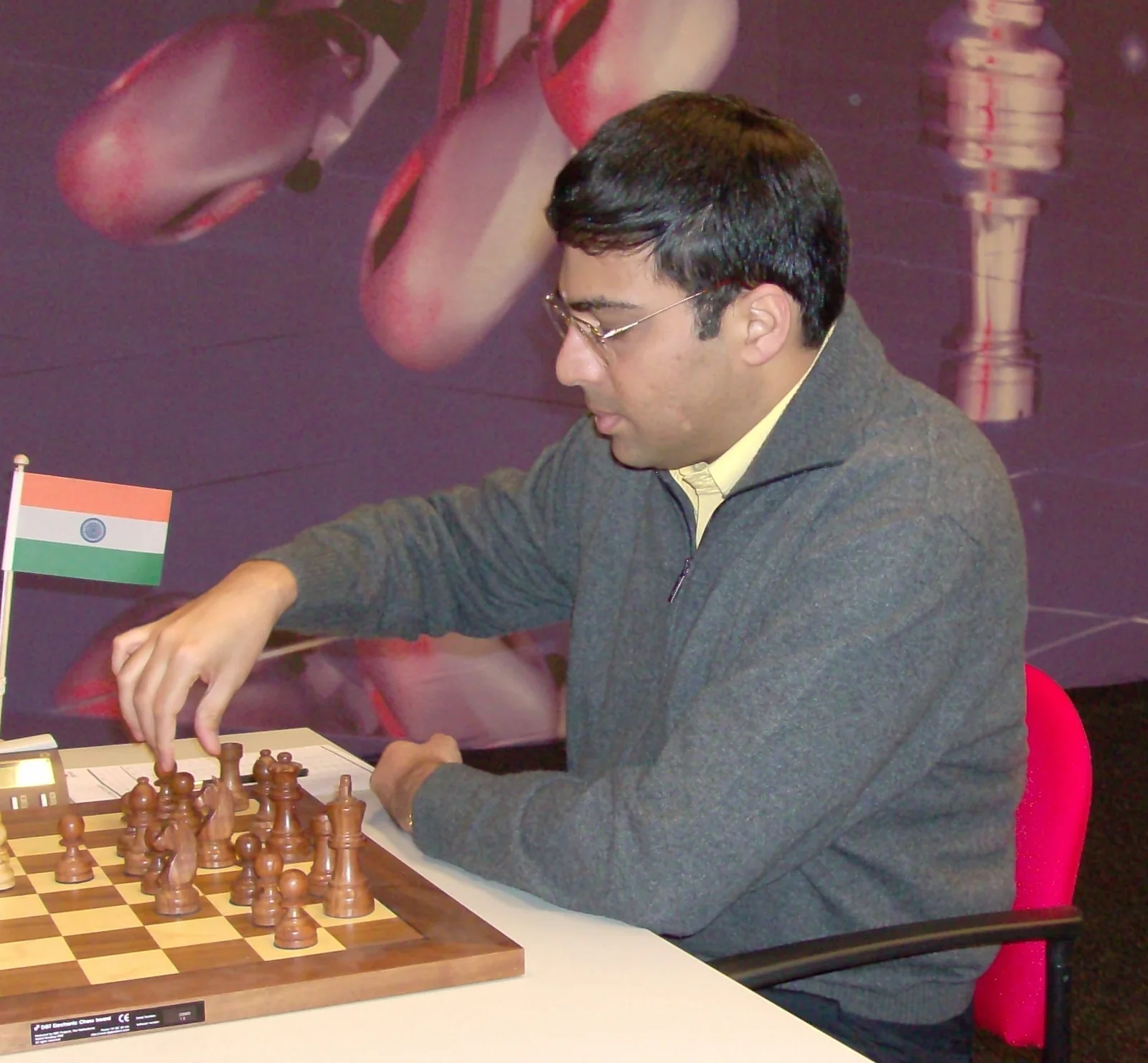
Prophylaxis is the defining skill that elevates a 1600 player toward 1800. Prophylactic thinking means asking yourself: What is my opponent planning to do on their next turn? If your opponent wants to open a file with a pawn break or anchor a knight on an outpost, you must take preventive measures before launching your own offensive. Former World Champion Tigran Petrosian excelled at defusing enemy plans moves before they materialized, creating a sense of paralysis in his opponents.
Jose Raul Capablanca provided one of the greatest positional lessons in history in his 1919 game against William Winter at Hastings. Winter allowed his dark-squared bishop to become entombed behind his own fixed pawn chain on f6 and e5. Capablanca recognized that Black was effectively playing a full piece down. White calmly closed the center, shifted operations to the opposite wing, and broke through with complete positional control.
Annotated Master Game: Capablanca vs. Winter (1919)
Capablanca's treatment of the closed position teaches an essential strategic lesson. Rather than rushing into premature tactical complications, Capablanca methodically restricted Black's pieces. Once Black's dark-squared bishop was entirely paralyzed, White activated both rooks along the open h-file and centralized his king. Practice finding Capablanca's tactical conversion in the exercise below.
Instructive Exercise: Capablanca's tactical breakthrough
Position before move 29. White to move.
Show the candidate line and explanation
29. Rxg5+ Kd4 30. Be5+ Kc5 31. Bxb8+ Kb4 32. cxd3 cxd3 33. Bf4 Kxb3 34. axb5 Bh6
White delivers 29. Rxg5+ to push the black king forward, then uses 30. Be5+ Kc5 to set up a skewer and capture the rook on b8 with 31. Bxb8+.
Tier 5 (1800 to 2000): Endgame mastery, board harmony, and total coordination
To break into the expert category above 1800 and reach the coveted 2000 benchmark, you must master the endgame and achieve total piece harmony. Many club players study openings for hours while neglecting the final phase of the game. However, games between 1800-rated players frequently transition into equal or slightly unbalanced endgames. If your technique is deficient, you will squander hard-earned middlegame advantages and convert winning positions into draws.
Endgame foundations and piece harmony
Endgame study provides immediate rating dividends. You must become completely fluent in core theoretical positions: the Lucena position, the Philidor rook defense, opposition in king-and-pawn endings, and the rule of the active king. In endgames, the king transforms from a vulnerable liability into your most potent offensive piece. Activating your king early in the endgame often outweighs a nominal half-pawn disadvantage.
Furthermore, reaching 2000 requires synthesizing tactical calculation with profound piece coordination. Akiba Rubinstein was renowned as both an endgame technician and a tactical genius. His 1907 masterpiece against Gersz Rotlewi in Lodz demonstrates complete board harmony. Rubinstein coordinated his two bishops, both rooks, and a centralized queen along crisscrossing lines of fire, culminating in an astonishing multi-piece sacrifice.
Annotated Master Game: Rotlewi vs. Rubinstein (1907)
Rubinstein's immortal game represents the summit of classical piece coordination. Notice how every black piece contributed to the assault on White's castled king. When Rotlewi attempted to parry the threat with g3, Rubinstein answered with a series of thunderous sacrifices that shattered White's defensive perimeter. Test your tactical mastery on Rubinstein's primary combination below.
Instructive Exercise: Rubinstein's double-diagonal blast
Position before move 22... Black to move.
Show the candidate line and explanation
22...Rxc3 23. Bxb7 Rxg3 24. Rac1 Rh3 25. Rc2 Nxh2 26. Qxh2 Rxh2+ 27. Rxh2 Qg4 28. Bf3
Black unleashes a thunderous combination with 22... Rxc3!, removing the defender of the e4-bishop and opening lines for the devastating battery on the long diagonals.
Building an effective daily and weekly chess training routine
Sustainable rating growth requires an intentional weekly schedule rather than sporadic cramming sessions. You cannot improve your chess rating by playing blitz until midnight while exhausted. Instead, structure your weekly training around proven deliberate practice principles. A balanced forty-hour monthly training plan distributes effort across four distinct categories.
The weekly four-pillar training plan
First, dedicate thirty percent of your training time to daily tactical exercises. Solve five to ten complex puzzles each morning, calculating all defensive variations before making a move. Quality and depth of calculation matter far more than speed. Second, allocate thirty percent of your time to playing serious classical or rapid games with adequate time increments, such as fifteen minutes with ten seconds added per move. Fast blitz games without increments reinforce superficial play, whereas longer time controls force you to calculate deeply.
Third, devote thirty percent of your schedule to analyzing your own games. Never jump directly into the engine evaluation after a game concludes. Review our comprehensive system on how to stop making mistakes in chess to master post-game reflection. Sit with a board or digital interface and annotate your own moves first. Identify where you hesitated, where you misjudged the pawn structure, and where you evaluated a position incorrectly. Once you complete your own written assessment, turn on the engine to verify your tactical calculations.
Finally, invest the remaining ten percent of your training time in master game collections and endgame manuals. Replaying annotated games by world champions like Capablanca, Fischer, Karpov, and Kasparov instills deep positional intuition. You begin to recognize typical pawn structures, thematic breaks, and standard defensive formations automatically.
Time control selection and psychological endurance
Choosing the correct time control is fundamental to steady rating progression. Rapid time controls give your brain the necessary clock time to evaluate multiple candidate moves and check for opponent counter-threats. In addition, cultivate psychological endurance by developing a strict tilt-management rule. If you lose two rated games in a single session, step away from the board immediately. Playing while frustrated inevitably leads to reckless tactical gambles and severe rating hemorrhages.
Maintaining a dedicated physical chess notebook is another practice that accelerates progress. Record your opening dilemmas, your most painful tactical oversights, and the key endgame positions you failed to convert. Reviewing this personalized error log once a month ensures that you do not repeat the exact same mistakes in future tournament rounds.
Rating milestone summary and diagnostic checklist
When tracking your progress, use this diagnostic framework to isolate and repair the primary weakness in your game. Each rating bracket has a distinct barrier that must be cleared before the next plateau:
Diagnostic checklist by rating bracket
- 1000 to 1200: Primary leak is hanging pieces. Solution: execute an uncompromising blunder check on every move and develop your pieces rapidly toward the center.
- 1200 to 1400: Primary leak is tactical vulnerability. Solution: practice daily tactical puzzles with spaced repetition and narrow your opening repertoire to classical development.
- 1400 to 1600: Primary leak is superficial calculation. Solution: adopt the candidate moves method and calculate forced variations to a quiet position.
- 1600 to 1800: Primary leak is positional passivity. Solution: evaluate pawn structures, eliminate bad pieces, and incorporate prophylactic thinking before every plan.
- 1800 to 2000+: Primary leak is imprecise endgame technique. Solution: master fundamental theoretical endgames, maintain active king placement, and maximize piece coordination across the entire board.
Long-term growth habits
Improving your chess rating is a steady marathon of deliberate habit formation. Progress in chess is rarely linear; you may experience temporary rating dips while integrating new opening systems or calculation disciplines into your play. However, as long as you adhere to systematic blunder checks, regular tactical workouts, and thorough game analysis, your rating will steadily rise toward your ultimate goal.
By replacing casual blitz sessions with disciplined calculation, rigorous game review, and classical master study, your rating will steadily reflect your genuine growth as a chess player.
Download game 1 PGN · Download game 2 PGN · Download game 3 PGN · Download game 4 PGN · Download game 5 PGN