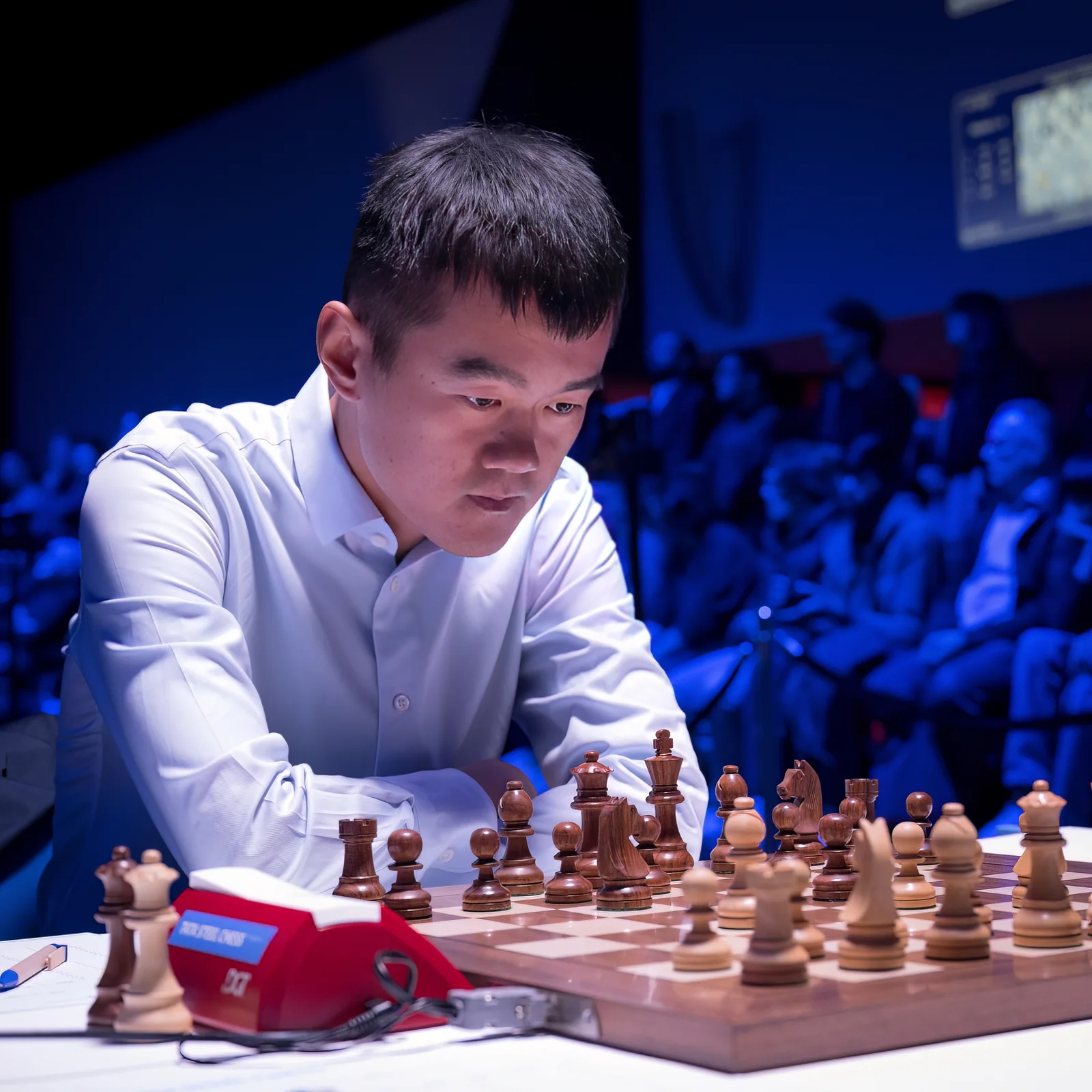
The mental discipline behind every master move
Most chess games between improving players end because of preventable blunders. A player looks at the board, spots an attractive piece jump, and plays it immediately. Only after releasing the wood does the panic set in. The opponent captures an undefended piece, delivers a fork, or launches a mating net. This familiar regret stems from a broken decision sequence.
In 1946, Dutch psychologist and chess master Adrian de Groot published his classic investigation into cognitive research in chess. De Groot showed that grandmasters do not calculate dozens of moves deeper than ordinary club players. Instead, grandmasters look at the board and immediately notice the candidate moves that fit the position. Their advantage lies in structured thought. They evaluate candidate paths methodically, check forcing replies, and verify board safety before touching a piece.
Tactical blunder checks prevent thrown endgames. Similarly, active prophylaxis stops you from walking into tactical pins while uncovering counterplay before your opponent sets it in motion. When you improve your inner thought process, your rating climbs. If you want to refine your pre-move routine, review our practical guide on what to look for before every chess move.
Grandmasters achieve consistency because they treat each turn as a systematic investigation. They examine forcing moves, compare piece activity, and respect defensive resources. Therefore, learning how to think at the board transforms your understanding of the game. The following principles explain the mental steps behind master play.
The four-step sequence for every turn
A reliable thought process needs an orderly sequence. Without structure, your mind wanders across sixteen pieces and sixty-four squares without reaching a conclusion. You can structure your move choices by applying four disciplined steps on every single turn.
First, evaluate your opponent’s latest move. Ask yourself why your opponent chose that square. Did their piece vacate a square? Did their pawn leave behind a hole? Does their move create an immediate threat against your king, your queen, or an undefended minor piece? Skipping this prophylactic check causes the majority of club-level defeats.
Second, take inventory of the board imbalances. Wilhelm Steinitz taught that a successful plan must arise from static board features. Check king safety for both sides. Count the material balance. Examine pawn structures, open files, and outposts. Identify which pieces are active and which are trapped behind friendly pawns.
Third, generate two to four candidate moves. In his celebrated 1971 work Think Like a Grandmaster, Russian grandmaster Alexander Kotov described the tree of calculation. Kotov urged players to list potential candidate moves before calculating any single variation deeply. Selecting good candidates prevents tunnel vision.
Fourth, calculate candidate lines and execute the final safety check. Verify checks, captures, and threats for both players. Once you settle on your move, pause for three seconds. Ask yourself whether your chosen square is attacked, or if you left an important defender hanging. For a detailed breakdown on finding candidate choices, read our guide on how to find the best move in chess.
Practicing this sequence trains your intuition. Initially, working through these four steps requires conscious effort and takes several minutes per move. However, with repeated tournament practice, the sequence operates within seconds. Your brain learns to filter out blunders automatically, leaving you free to focus on strategic execution.
Principle 1: Prophylaxis and preventing counterplay
Prophylaxis means anticipating your opponent’s intentions and stopping them before they start. Weak players calculate only their own attacking ideas. Strong players constantly ask what the opponent wants to accomplish. By neutralizing enemy threats early, you strangle counterplay and leave your opponent with passive pieces.
Former world champions Tigran Petrosian and Anatoly Karpov built legendary careers on prophylactic thinking. However, prophylaxis is equally lethal in the hands of attacking titans. In Game 16 of the 1985 World Championship match in Moscow, Garry Kasparov demonstrated prophylactic genius against Anatoly Karpov. Playing the black pieces in a sharp Sicilian Defense, Kasparov seized control of the dark squares and planted an unshakeable knight on d3. Every time Karpov tried to organize counterplay, Kasparov shut it down with surgical precision.
Kasparov’s octopus knight in action
Karpov opened with 1. e4, and Kasparov steered the contest into a sharp Paulsen Sicilian. White attempted to cramp Black with the moves c4 and Nb5. However, Kasparov reacted dynamically by sacrificing a pawn with 8…d5. This central pawn break opened lines for Black’s bishop pair and cleared an ideal highway toward the white queenside.
The complete moves of this contest are recorded in the Karpov vs. Kasparov 1985 Game 16 archive. Notice how Kasparov handled the knight on d3. Many club players would have rushed forward prematurely. Instead, Kasparov played 21…g5 and 27…Bg6, preventing White from challenging the center. By controlling Karpov’s minor pieces, Kasparov turned the d3 square into an outpost that paralyzed White’s entire army.
Kasparov’s mental discipline in this encounter shows the power of asking what White wants. Karpov repeatedly searched for piece coordination along the queenside. Consequently, Kasparov neutralized White’s knight on a3 and bishop on g2 before embarking on his direct assault. When you anticipate your opponent’s defensive maneuvers, your attack meets zero resistance.
When Karpov sought desperate relief on move 37 by exchanging on d3, Kasparov calculated a direct invasion on the first rank. Test your tactical eye in this decisive moment from the game below.
Position before move 37... Black to move.
Show the candidate line and explanation
37...Rc1 38. Rxe3 Rxd1+ 39. Bf1 Rxe3 40. Kg2 Rxb3 41. Bb5 Rbxb1 42. Kf3 Rb3+ 43. Ke4
Kasparov invades the back rank with 37...Rc1, overloading White rooks and forcing decisive material concessions.
Principle 2: Static evaluation and pawn structures
Tactics decide individual encounters, but pawn structures dictate where those tactics occur. Before you calculate concrete variations, evaluate the skeleton of the board. Pawns cannot move backward. Every pawn push creates permanent weaknesses and opens diagonal avenues. When you understand pawn structures, finding the correct plan feels natural.
Jose Raul Capablanca, the third World Champion, was renowned for his clear positional logic. In his encounter against William Winter at Hastings in 1919, Capablanca offered an unforgettable lesson in static piece restriction. Winter allowed his dark-squared bishop to become trapped behind his own pawns on the kingside. Recognizing this static defect, Capablanca simply locked the kingside and conducted the remainder of the battle with an extra piece on the opposite wing.
How Capablanca entombed Black's bishop
The opening began as a Four Knights Game, where Black quickly misjudged the kingside pawn structure. After Capablanca played 8. Bg5, Winter reacted aggressively with 8...h6, 9...c5, and 10...g5. While these pawn thrusts temporarily chased White's pieces, they left permanent positional scars across Black's kingside.
You can follow the full score in the Capablanca vs. Winter 1919 game record. After Capablanca played 10. Nd5 and Black responded with 10...g5 and 15...f6, Winter's dark-squared bishop on d6 was entombed behind the c7, c5, e5, and f6 pawns. Capablanca did not rush. He calmly switched play to the queenside, opened lines with 24. d4, and eliminated Black's active defenders. If you struggle with unforced errors during conversions, explore our companion advice on how to stop blundering pieces in chess.
Capablanca's thought process illustrates how positional evaluation simplifies calculation. Instead of looking for tactical tricks, Capablanca evaluated the board statically. Because Black's bishop on d6 could never escape, White effectively played with an extra piece on the queenside. Therefore, Capablanca only needed to open lines on the side where he possessed local numerical superiority.
On move 28, Capablanca converted his positional bind into decisive material. Solve the exercise below to see the finish.
Position before move 28. White to move.
Show the candidate line and explanation
28. Bxb8 Rxb8
Capablanca cashes in his tactical advantage with 28. Bxb8, eliminating the active rook and consolidating the win.
Principle 3: The calculation tree and candidate moves
Many chess enthusiasts believe that calculating well requires visualizing fifteen moves into the future. That belief is incorrect. Good calculation is wide at the first branch and narrow down the trunk. When you identify all plausible candidate moves before calculating variations, you avoid missing obvious defensive resources or quiet winning moves.
Alexander Alekhine was a master of candidate move selection. In his famous encounter against Richard Reti at Baden-Baden in 1925, Alekhine produced one of the most celebrated tactical battles in tournament history. Reti fianchettoed both bishops and sought to control the center from a distance. Alekhine responded with deep piece coordination, setting up a combination that stretched across the entire board.
The tactical geometry of Alekhine's attack
Reti adopted a hypermodern opening setup, allowing Black to establish a broad pawn center while preparing to strike it with c4 and d3. Alekhine accepted the spatial challenge, developing his pieces actively and guarding every central point. When Reti launched queenside pawn advances with a4 and b5, Alekhine perceived that White's king position had become sensitive along the long dark diagonal.
The complete moves are preserved in the Reti vs. Alekhine 1925 game archive. Look closely at Alekhine's rook sacrifice on move 26...Re3. White could not take the rook because 27. fxe3 Qxg3+ led to swift checkmate. Alekhine did not look only at standard captures. He examined quiet pawn breaks, backward knight moves, and discovered checks to overwhelm White's defenses.
Notice how Alekhine calculated the variations. He did not guess. He examined White's most testing replies and ensured every tactical sequence resolved cleanly. When Reti fought resourcefully, Alekhine's candidate moves found the exact geometry required to win material. By surveying the entire board, Alekhine connected his rooks and knights into an unstoppable net.
After White escaped immediate mate with 31. Kh2, Alekhine found the winning tactical maneuver with his knight. Try your hand at finding Alekhine's candidate move in the puzzle below.
Position before move 31... Black to move.
Show the candidate line and explanation
31...Ne4
Black activates the knight with 31...Ne4, targeting both the d2 rook and f2 pawn while tying down White pieces.
Principle 4: Dynamic energy versus material balance
Material is a fundamental element in chess, but dynamic energy often overrides pure piece count. An extra rook or bishop is worthless if your king is caught in the center or your pieces cannot participate in defense. When calculating sharp positions, you must measure the initiative: who controls the open files, who attacks more weaknesses, and who creates more threats per move.
Mikhail Tal, the eighth World Champion, exemplified this dynamic philosophy. In Game 10 of the 1965 Candidates Semifinal in Bled against Bent Larsen, Tal faced a sharp Sicilian Richter-Rauzer. Rather than playing safe positional moves, Tal unleashed an intuitive piece sacrifice on move 16, crashing through Black's center and tying down Larsen's defenders.
Unleashing the intuitive piece sacrifice
The struggle began with opposite-side castling, a classic hallmark of Sicilian battles. Tal castled queenside and immediately mobilized his kingside pawns with g4 and h4. Larsen countered on the queenside, pushing b5 and b4 to evict White's knight. At the critical crossroad on move 16, Tal refused to retreat his attacked knight to e2. Instead, he hurled it into the center on d5.
Every move of this clash can be reviewed in the Tal vs. Larsen 1965 match record. Tal's sacrifice 16. Nd5 was not a forced mate in five moves. Instead, Tal realized that opening the e-file and isolating Black's king would create unstoppable practical pressure. Black's king never found safety, and White's initiative rolled forward effortlessly.
Tal understood that defensive resources become exceptionally difficult to find under time pressure. When calculating a sacrifice, do not demand absolute mathematical perfection unless the position is forced. If your pieces flood into the enemy territory and the opponent has zero counterplay, the dynamic initiative often carries you to victory.
On move 21, Tal found the concrete tactical blow that broke Black's defensive coordination. Test your tactical ability in the exercise below.
Position before move 21. White to move.
Show the candidate line and explanation
21. Rxe7 Ne5
Tal strikes with 21. Rxe7, removing the primary defender on e7 and leaving Black pieces pinned and helpless.
Principle 5: Classical clarity and converting the advantage
Converting a strategic advantage into a full point is one of the hardest challenges in chess. Many players establish an advantageous position, only to loosen their grip through hasty play. Strong technique requires patience. You must improve your worst-placed piece, restrict the opponent's counterplay, and strike only when your army reaches maximum coordination.
Bobby Fischer's victory over Boris Spassky in Game 6 of the 1972 World Championship in Reykjavik remains a supreme standard of classical play. Opening with 1. c4, Fischer steered the game into a Queen's Gambit Declined Tartakower system. Fischer established control over the hanging pawns on c5 and d5, systematically neutralized Black's rooks, and expanded on the kingside with surgical timing.
Fischer's pressure against the hanging pawns
Spassky opted for the Tartakower Defense, placing pawns on c5 and d5 to maintain central space. However, Fischer immediately targeted these hanging pawns with piece pressure. By pinning Black's pieces and trading knights on e6, Fischer softened Black's kingside shelter. Then, with 20. e4 and 21. f4, Fischer seized total control over the center.
Review every phase of this masterpiece in the Fischer vs. Spassky 1972 Game 6 database. Notice how Fischer prepared the kingside breakthrough with 26. f5. He did not rush into unclear complications. He doubled his rooks along the f-file, advanced his passed e-pawn to e6, and constricted Black's pieces until Spassky had no constructive moves remaining.
Fischer's thought process during the conversion phase was flawless. He prevented Spassky from activating his knights, preserved his bishop on the ideal c4 diagonal, and calculated the timing of his pawn advances precisely. When you convert an advantage, resist the urge to deliver immediate checkmate. Instead, extinguish all opponent counterplay until the winning blow appears naturally.
On move 38, Fischer concluded the struggle with a decisive tactical exchange. Solve the puzzle below to see Fischer's final blow.
Position before move 38. White to move.
Show the candidate line and explanation
38. Rxf6 gxf6 39. Rxf6 Kg8 40. Rxh6 c4 41. Bxc4 Rxc4 42. bxc4 Rg7 43. Qd5 Re7
Fischer shatters the defense with 38. Rxf6 gxf6 39. Rxf6, stripping the king of shelter and exposing the back rank.
Practical clock management and psychological control
Even the most sophisticated calculation method fails if you run out of time on your clock. Effective game management requires balancing deep thought with practical speed. In standard tournament time controls, spend your minutes where decisions matter most.
Identify critical moments during the game. A critical moment occurs when the pawn structure changes, when a piece sacrifice is offered, or when you enter an endgame transition. In those moments, invest five to ten minutes calculating variations thoroughly. Conversely, when your opponent makes an obvious recapture or when you play standard opening book moves, execute your move quickly to bank time for the complications ahead.
Maintaining emotional composure at the board
Emotional stability is equally significant. When you make an inaccurate move, avoid dwelling on your error while the clock is running. Accept the new reality on the board. Reset your focus, look at the position with fresh eyes, and find the most stubborn defensive resource available. To continue developing your overall game strategy, explore our comprehensive collection of 14 proven methods to get better at chess.
Develop this disciplined thought process during your daily training. Before every move, check your opponent's threats, evaluate board imbalances, choose candidate options, and verify tactical safety. Over time, these deliberate mental habits become automatic instincts, helping you play with confidence and composure in every game.
Download game 1 PGN · Download game 2 PGN · Download game 3 PGN · Download game 4 PGN · Download game 5 PGN

[…] looking to sharpen their decision-making can review techniques in how to think during a chess game and refine their calculation process with how to improve chess […]
[…] structured game analysis, and classical practice games. You can read our detailed guide on how to think during a chess game to learn the structured thought process required at the board. The following roadmap breaks down […]
[…] defensive resource can ruin forty moves of patient positional labor. In our earlier guide on how to think during a chess game, we examined the balance between positional evaluation and move calculation. This guide focuses on […]
[…] stability; without it, opposing counterstrikes will exploit weak squares. Second, disciplined candidate move evaluation prevents hasty piece captures when an intermediate check or mating threat exists, as shown in […]