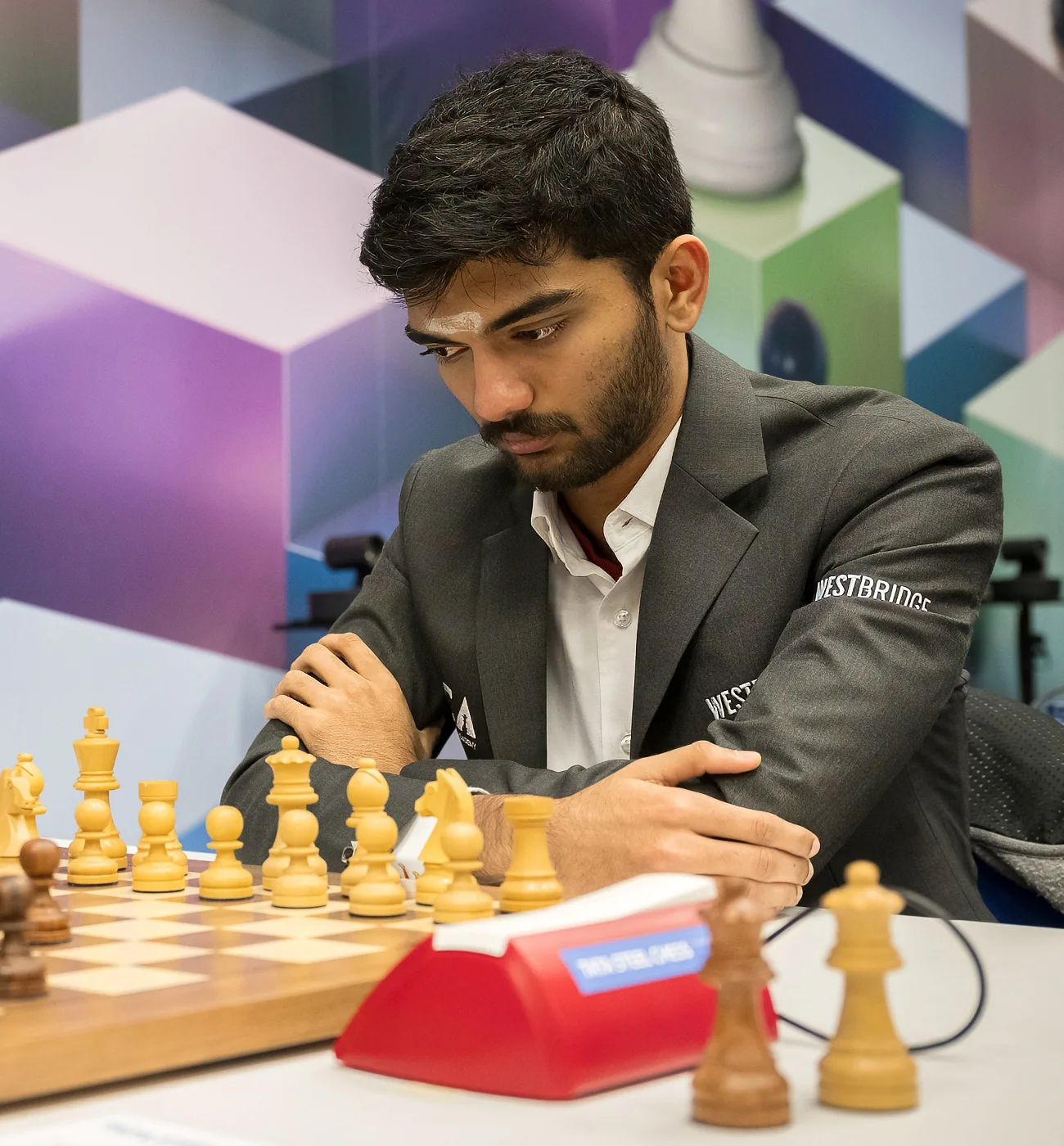
The 2026 World Chess Championship in Geneva marks an unprecedented milestone in modern chess history. Specifically, on November 24, 2026, defending champion GM Gukesh D faces Uzbek challenger GM Javokhir Sindarov in a 14-game classical title bout, as reported by the European Chess Union. In fact, both competitors are just 20 years old, representing the youngest championship pairing ever witnessed. As highlighted in the official Lichess championship preview, their opening ceremony concluded on November 23 in Geneva, setting the stage for a dramatic classical clash.
Interestingly, Sindarov enters this world title match holding a surprising 5-2 overall head-to-head advantage over Gukesh across classical, rapid, and blitz encounters, according to tournament records at FIDE. Although Gukesh climbed into the world top five through phenomenal classical consistency, Sindarov has repeatedly proven to be his most dangerous peer. Master game archives from The Week in Chess show that their sharp tactical duels consistently produce fireworks. In this comprehensive lesson, we analyze three critical games from their rivalry, examine their tactical decisions, and solve three master-level puzzles from their battles.
Game 1: Sindarov’s kingside storm at Sharjah Masters 2022
Their classical battle at the 2022 Sharjah Masters demonstrated Sindarov’s aggressive tactical clarity. First, facing Gukesh’s Moscow Variation in the Sicilian Defense, Sindarov castled swiftly and launched a central strike with 10. d4. Consequently, when the center locked after 12. d5, White immediately initiated kingside pawn breaks to open attacking corridors.
Next, White demonstrated supreme confidence with 16. f3!, deliberately sacrificing a pawn on e4 to pry open the f-file. Because Black’s pieces struggled to find harmonious squares, Sindarov planted his knight on the decisive f5 outpost with 23. Nf5+. This dynamic knight placement paralyzed Black’s defense and provoked fatal weaknesses around the black monarch.
Tactical puzzle 1: Sindarov’s rook breakthrough
Position before move 27. White to move.
Show the candidate line and explanation
27. Rf5 Nh6 28. Qxh6+ Kg8 29. Rg5+ Qxg5 30. Qxg5+ Rg7 31. Qxe5 Rd8 32. Qf4 Rxg2+
Sindarov lifts his rook with 27. Rf5! attacking the knight and threatening Rh5#. Black cannot defend without decisive material loss.
Ultimately, Sindarov found the crushing move 27. Rf5!, threatening immediate mate on h5. Because the pinned black knight on f7 had no retreat, Gukesh had to make heavy material concessions, which sealed White's victory after move 32.
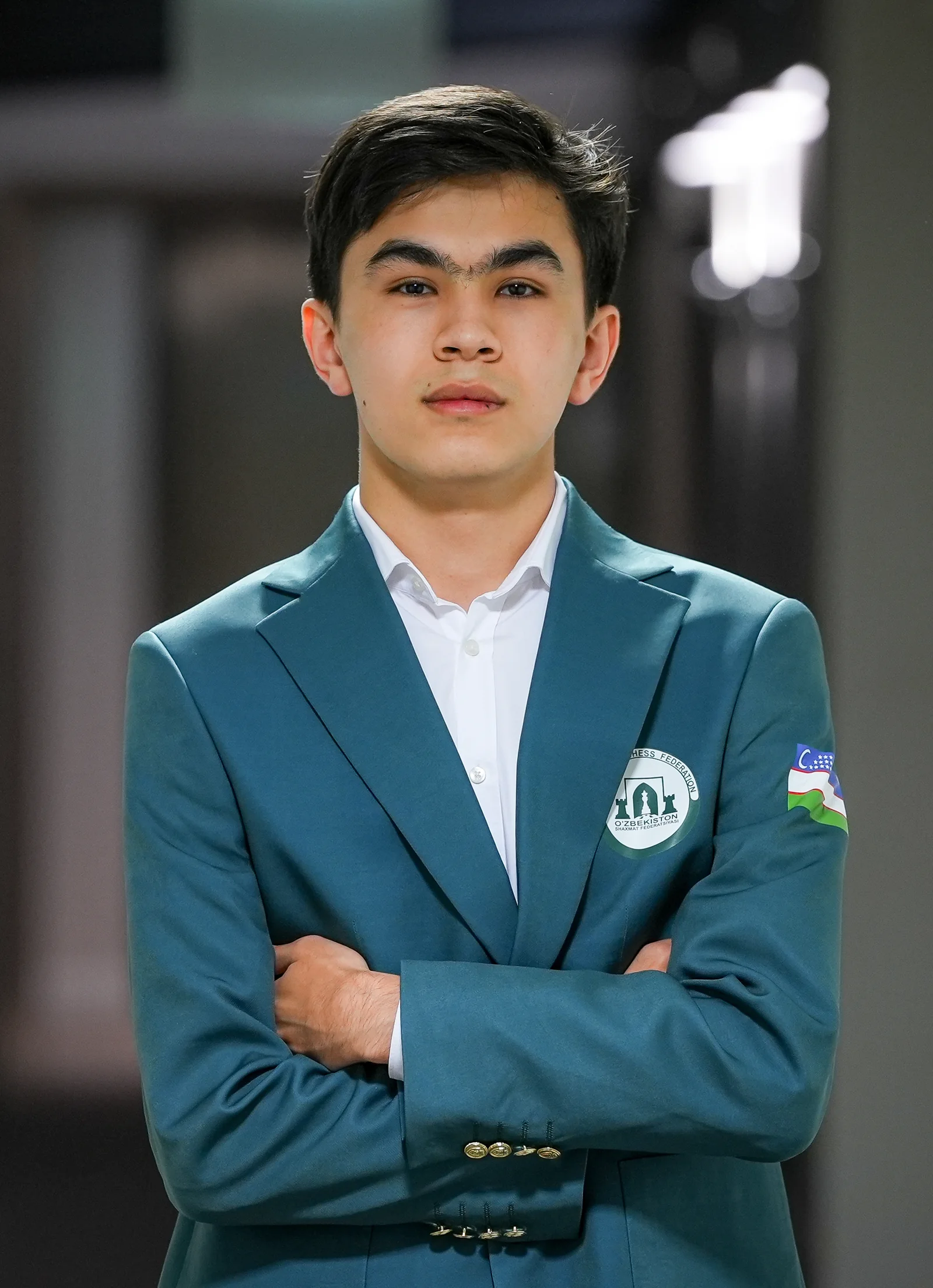
Game 2: Sindarov's teenage triumph at the Moscow Open
Similarly, four years prior to their Sharjah encounter, the two prodigies met as International Masters in the final round of the 2018 Moscow Open. Initially, Gukesh chose a King's Indian Attack setup with White, but Sindarov countered energetically with an early queenside pawn expansion. Specifically, Black advanced his b-pawn to b4 and created strong pressure along the open c-file.
Consequently, Sindarov seized full control of the dark squares by driving his c-pawn to c3 on move 18. Furthermore, when White attempted to maintain central stability, Black unleashed the tactical combination 26... Nxd4! followed by 27... Bc5!. Therefore, this geometric pin completely dismantled White's coordination.
Tactical puzzle 2: Exploiting the fatal pin
Position before move 27... Black to move.
Show the candidate line and explanation
27...Bc5 28. Nhf3
Sindarov pins the white rook on d4 against White's queen with 27... Bc5!, establishing an unyielding bind along the a7-g1 diagonal.
Clearly, Black's move 27... Bc5! took absolute advantage of the pinned rook on d4. Because White's queen stood directly behind the rook on e3, Gukesh could not untangle his pieces, allowing Sindarov to roll his passed pawns forward to victory.
Game 3: Gukesh's tactical resilience at Warsaw 2026
However, despite previous setbacks against Sindarov, Gukesh proved his championship mettle during the 2026 Grand Chess Tour in Warsaw. Meeting Sindarov's early queen check setup with sharp tactical precision, Gukesh recognized an immediate opportunity to punish White's loose piece coordination on the queenside.
By executing 10... Bxc3+! and 11... Qxc3+, Gukesh won a central pawn while simultaneously shattering White's pawn structure. Furthermore, Black defended accurately against White's kingside counter-threats with 26... Rf6. In the resulting endgame, Gukesh marched his king into the center with 42... Kd4, demonstrating exemplary endgame technique.
Tactical puzzle 3: Punishing loose piece placement
Position before move 10... Black to move.
Show the candidate line and explanation
10...Bxc3+ 11. bxc3 Qxc3+ 12. Nd2 O-O 13. O-O Nc6 14. Rc1 Qb2 15. Rc2 Qd4 16. Nf3
Gukesh snatches initiative and structure with 10... Bxc3+! 11. bxc3 Qxc3+, winning a central pawn and forcing White's knight to a defensive post on d2.
Specifically, Gukesh's precise 10... Bxc3+! stripped White of castling convenience and captured the c3 pawn with tempo. Consequently, Black gained a decisive strategic edge that paved the way for his first official rapid victory over Sindarov.
Strategic comparison: How their styles collide in Geneva
To improve your tournament results, studying the contrasting philosophies of elite prodigies offers invaluable training lessons. For example, Gukesh excels in concrete, exhaustive calculation and deep positional prophylaxis. If you wish to improve chess calculation, observe how Gukesh visualizes defensive resources several plies in advance.
Conversely, Sindarov thrives in sharp, dynamic imbalances and fearless initiative. When analyzing your chess games, you will notice that Sindarov consistently prioritizes active piece play over static material safety. Furthermore, learning how to find the best move under intense time pressure will be the defining battleground of their 14-game Geneva match.
Key training takeaways for competitive players
Ambitious players can draw three essential training principles from these master encounters:
- Punish structural concessions immediately: When an opponent leaves key pawns unprotected, search for forcing tactical checks to disrupt their piece coordination.
- Exploit absolute pins along diagonals: Pinning major pieces against the enemy queen creates insurmountable tactical paralysis.
- Activate the king boldly in simplified endgames: In technical endings, an aggressive central king often outweighs minor material advantages.
Download game 1 PGN · Download game 2 PGN · Download game 3 PGN


[…] Even with that clock lead, Gukesh pushed too aggressively on both flanks. Ding anchored a knight on b2, then sacrificed the exchange with 25…Rxc3! to wreck White's queenside pawns. With only seconds remaining before move 40, Gukesh played 39. Bh3 and allowed Ding's queen into d1. Ding won in 42 moves, though Gukesh recovered over the remaining 13 rounds to win the match 7.5 to 6.5. For earlier sharp battles between this year's Geneva contenders, see our Gukesh vs. Sindarov tactical game study. […]
[…] a look at positions these two have actually played, Chess Mars has a playable study of three earlier Gukesh–Sindarov games. Pick one game and see how each player responds when the position demands a concrete […]