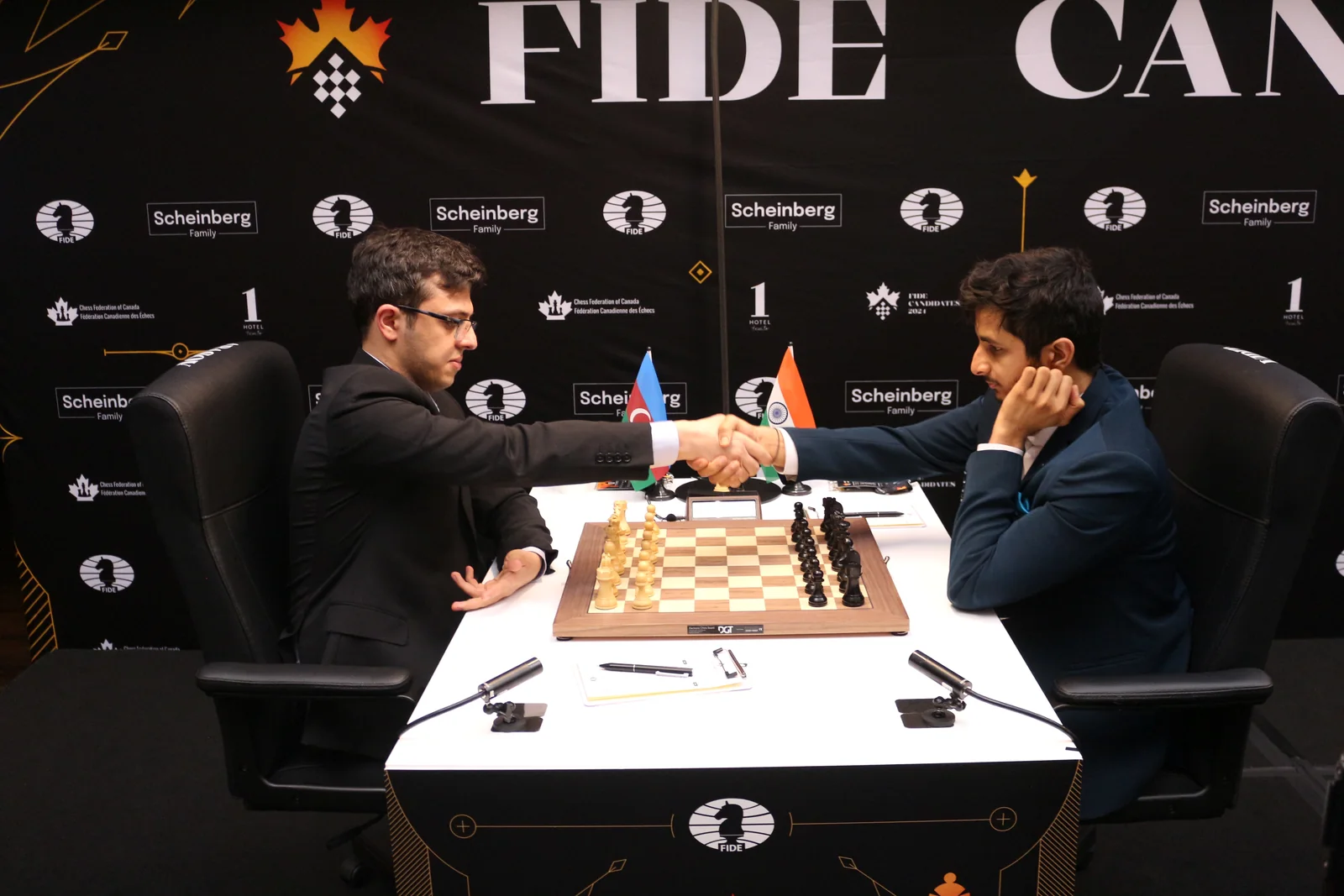
Why Chess Players Make Mistakes
Every chess player knows the sinking feeling of releasing a piece and noticing an opponent’s reply a second too late. You calculate three variations, evaluate a favorable endgame, and play your move with confidence. Then your opponent captures a loose bishop or delivers a checkmate that sat in plain view. Mistakes decide almost every chess game below master level, and they frequently decide world championships too.
Most players assume that mistakes happen because they lack tactical knowledge. Therefore, they spend hours memorizing opening lines or solving complex combinations. Yet tactical knowledge rarely stops the most common blunders. In tournament play, errors usually stem from cognitive habits, emotional tension, visual blind spots, and rushed decisions. Understanding these mental triggers allows you to build concrete habits that protect your pieces.
Follow live tournaments and browse available replays on ChessMars.
Chess errors fall into three main categories: tactical oversights, positional misjudgments, and time-trouble panics. Tactical oversights involve leaving pieces unprotected, missing forced checks, or falling for basic pins and forks. Positional misjudgments involve weakening your pawn structure, surrendering key squares, or misplacing your pieces. Time-trouble panics occur when the clock forces you to play without verification. You can review competitive guidelines through the official FIDE handbook, which outlines tournament time controls and conduct standards.
The Cognitive Roots of Chess Blunders
Why does a capable human mind overlook obvious moves? Cognitive psychologists and chess trainers have identified four specific mental patterns that generate the majority of blunders. Recognizing these patterns during a game is the first step toward preventing them.
First, players fall victim to confirmation bias. When you spot an attractive attacking idea, your mind seeks confirming evidence. You imagine your opponent fleeing, your pieces dominating, and the king falling into checkmate. Consequently, you stop looking for your opponent’s defensive resources. You assume your opponent will cooperate with your plan instead of calculating their most stubborn replies.
Second, players suffer from premature relaxation. When you gain a decisive material advantage or establish a crushing positional bind, your brain signals that the struggle has finished. Your concentration drops. Because you believe the win is guaranteed, you relax your tactical alertness. Historically, thousands of won games have ended in disaster because an attacking player assumed the opponent possessed no remaining threats.
Third, deep forward calculation often induces tunnel vision. When you calculate four or five moves ahead down a narrow line, your visual attention contracts. You focus entirely on the destination squares of your pieces. As a result, you miss simple sideways retreat moves, quiet intermezzos, or immediate threats on the starting square. You look far into the distance, yet miss what sits right under your nose.
Fourth, players react impulsively to their opponent’s clock. When your opponent runs low on time, you may feel an urge to play quickly to increase their stress. Rushing transfers time pressure directly onto yourself. You make unverified moves, hand back your advantage, and give your opponent an unexpected route back into the contest.
Case Study 1: Euphoria and Premature Relaxation (Chigorin vs. Steinitz, 1892)
The 1892 World Chess Championship match between Mikhail Chigorin and Wilhelm Steinitz in Havana produced one of the most famous blunders in chess history. The match stood on a knife-edge. Chigorin needed a victory to level the match score, and by move 31 of Game 23, he had achieved a completely winning endgame.
Chigorin possessed an extra piece, a dominant knight on e6, and an advanced passed pawn on d5. Black’s rooks had penetrated to the second rank, but White had everything covered. Any calm consolidating move, such as doubling rooks or securing the back rank, would have sealed victory. Archival match records at the World Chess Championship 1892 document the tense environment surrounding this encounter.
On move 32, Chigorin played 32.Bb4??. His bishop on d6 guarded the critical h2 pawn. By moving the bishop to b4 to attack Black’s rook, Chigorin removed the sole defender of his king’s shelter. The move walked straight into an immediate forced mate. Steinitz responded instantly, and the world championship ended on the spot.
Position before move 32... Black to move.
Show the candidate line and explanation
32...Rxh2+ 33. Kg1 Rdg2#
Steinitz delivers an inescapable mate in two after Chigorin's tragic blunder: 32...Rxh2+ forces 33.Kg1, allowing 33...Rdg2# with the black rooks doubled on the second rank.
This historic game demonstrates the danger of assuming a game is won. When you have an extra piece, your opponent has only one remaining plan: counterattack against your king. Therefore, your primary duty in a winning position is not attacking faster, but eliminating your opponent's counterplay. Before making any move, ask yourself which enemy pieces remain active and what threats they can create.
Case Study 2: The Opponent's Clock and Hasty Moves (Petrosian vs. Bronstein, 1956)
Tigran Petrosian earned the nickname "Iron Tigran" for his prophylactic mastery and defensive invulnerability. Yet even Petrosian fell victim to one of the most astonishing blunders in tournament history during Round 2 of the 1956 Candidates Tournament in Amsterdam.
Facing David Bronstein, Petrosian conducted a positional clinic. He clamped down on Bronstein's counterplay, occupied the d-file, and placed his queen on a dominating central outpost at d6. Meanwhile, Bronstein found himself in desperate time trouble. With only seconds remaining on his clock, Bronstein played 35...Nf5, desperately maneuvering to survive the time control.
Noticing Bronstein's clock running out, Petrosian rushed to play a move. He wanted to force Bronstein to make another immediate decision. Without checking the board, Petrosian pushed 36.Ng5??, envisioning an unstoppable kingside assault. However, he forgot that Bronstein's knight on f5 attacked the white queen on d6. Bronstein took the queen for free, and Petrosian resigned at once.
Position before move 36... Black to move.
Show the candidate line and explanation
36...Nxd6 37. Ne6 Qf7 38. Ng5 Qe8 39. Nc7 Qe7 40. Nd5 Qd8 41. Kg1 Nxc4 42. Ne6
Bronstein captures the unguarded white queen immediately with 36...Nxd6. Petrosian's 36.Ng5?? overlooked that the knight on f5 directly attacked d6, ending the game on the spot.
The lesson here is absolute: never play your opponent's clock. When your opponent has only thirty seconds left, you often have twenty or thirty minutes. Rushing a move robs you of your greatest asset, which is your time to think. When your opponent is in severe time pressure, slow down. Use your time to calculate a clear, safe continuation that gives them no tactical chances.
Case Study 3: Forward-Calculating Blindness (Deep Fritz vs. Kramnik, 2006)
In 2006, World Champion Vladimir Kramnik faced the chess engine Deep Fritz in Bonn. Kramnik was renowned for his granite calculation and endgame precision. In Game 2 of the match, Kramnik defended a complex Semi-Slav defense with Black, outplayed the computer in the middlegame, and reached an equal queen and bishop ending.
By move 34, Kramnik had navigated all tactical complications. He possessed an outside passed a-pawn, while White held a knight on f8 and queen on e4. Black could easily maintain complete equality with the natural move 34...Kg8, clearing the back rank and challenging the knight.
Instead, Kramnik played 34...Qe3??. He had calculated long variations where his queen centralized on e3, forced a queen trade, or supported his passed a-pawn. Because his mind was engaged in deep forward branches, he completely missed the simplest move on the board: 35.Qh7# checkmate. The engine played the mate instantly, leaving the world champion stunned.
Position before move 34... Black to move.
Show the candidate line and explanation
34...Kg8 35. Ng6 Qd7 36. Qc4+ Qf7 37. Ne7+ Kf8 38. Ng6+ Qxg6 39. Qxb4+ Kf7 40. Qb7+
Kramnik needed 34...Kg8 to evacuate the h8 corner and prevent the mate on h7. With the king on g8, Black holds a balanced endgame. Playing 34...Qe3?? instead suffered a tragic one-move checkmate.
This tragedy highlights the danger of selective attention. When calculating long lines, chess players visualize future positions in their imagination. While evaluating those future squares, you can easily erase existing threats from the actual board in front of you. To cure this blind spot, implement a mandatory pre-move sanity check. Before touching any piece, look at the actual board and ask what checks, captures, and threats your opponent has right now.
Case Study 4: Emotional Tilt and Impulsive Pawn Pushes (Nepomniachtchi vs. Carlsen, 2021)
Emotional resilience determines tournament success as much as calculation skill. When a player suffers a painful defeat, frustration can lead to tilt. Tilt causes impatience, careless moves, and a desire to escape the game quickly. The 2021 World Chess Championship match between Ian Nepomniachtchi and Magnus Carlsen in Dubai provided a textbook example of this breakdown.
After losing an epic 136-move battle in Game 6 and dropping another point in Game 8, Nepomniachtchi entered Game 9 under immense psychological pressure. Playing White, he achieved a comfortable position against Carlsen's English Opening. By move 26, the game was balanced and heading toward a normal draw.
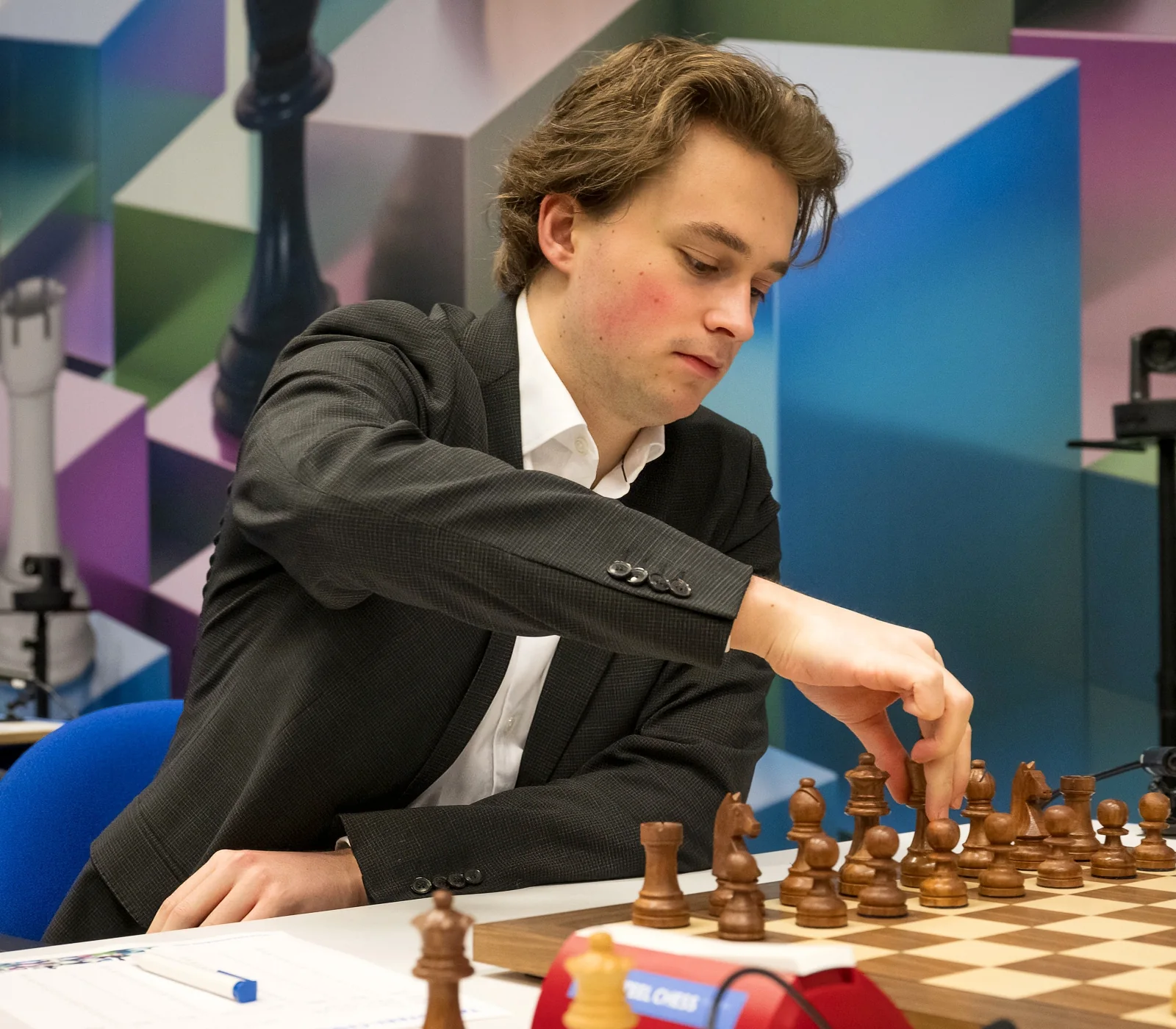
The Critical Flaw on Move 27
Then, after spending barely three minutes thinking, Nepomniachtchi played 27.c5??. He wanted to create active play on the queenside, but he failed to calculate Black's immediate defensive response. Official match archives at the World Chess Championship 2021 record the game details and clock times.
Carlsen responded with the quiet pawn move 27...c6!. Suddenly, White's bishop on b7 had no squares. The pawn on c5 blocked the bishop's retreat along the long diagonal, and Black's rooks trapped the piece on the a-file. Nepomniachtchi spent over eighteen minutes staring at the board before realizing his bishop was lost.
Position before move 27... Black to move.
Show the candidate line and explanation
27...c6 28. f3 Nh6 29. Re4 Ra7 30. Rb4 Rb8 31. Nd2 Raxb7 32. Rxb7 Rxb7 33. a4
Carlsen plays 27...c6! immediately boxing the white bishop on b7. Because White cannot create an escape square on the a6-f1 diagonal, the bishop is trapped and captured, giving Black a decisive advantage.
Pawn moves are permanent. Every piece on the board can move forward and backward, but a pawn can never retreat. When you push a pawn, you permanently surrender control of squares behind it. In moments of frustration, players frequently push pawns to create contact, hoping something positive will occur. Always treat pawn pushes with extreme care, especially when you feel unsettled or angry.
Case Study 5: The Time-Trouble Trap (Korchnoi vs. Karpov, 1978)
Time trouble is one of the most common catalysts for game-losing mistakes. When your clock shows less than two minutes, adrenaline floods your bloodstream. Calculation becomes erratic, and fear replaces logic. The 1978 World Championship match in Baguio City between Viktor Korchnoi and Anatoly Karpov showed how even legendary fighters crumble under severe time pressure.
In Game 17 of that match, Korchnoi played White and built a strong initiative out of a Nimzo-Indian Defense. However, Korchnoi consumed massive amounts of time on the clock during the opening and middlegame. By move 35, he had reached a playable ending, but had less than a minute remaining to reach the move 40 time control. Game records preserved in the World Chess Championship 1978 document the chaotic atmosphere of that game.
On move 39, with his flag ready to fall, Korchnoi panicked. Instead of playing 39.g3 or 39.g4 to give his king an escape square, he retreated his rook with 39.Ra1??. This blunder allowed Karpov to uncork a stunning mating combination.
Position before move 39... Black to move.
Show the candidate line and explanation
39...Nf3+ 40. gxf3 Rg6+ 41. Kh1 Nf2#
Karpov finishes the game with 39...Nf3+! followed by 40.gxf3 Rg6+ 41.Kh1 Nf2#, delivering a beautiful mating net. Korchnoi's 39.Ra1?? in severe time pressure fatally abandoned the defense of the f3 square.
Karpov played 39...Nf3+! and Korchnoi resigned immediately. If White takes the knight with 40.gxf3, Black plays 40...Rg6+ 41.Kh1 Nf2# checkmate. Time trouble caused Korchnoi to abandon basic tactical safety. Remember that time trouble is never bad luck. It is the natural consequence of poor time allocation earlier in the game.
The 5-Step Blunder Prevention System
Grandmasters do not avoid mistakes because they possess superhuman vision. They avoid mistakes because they follow a strict mental routine on every single move. Here is a proven five-step protocol you can apply in your own tournament games.
Step 1: The Opponent's Forcing Moves Scan
Whenever your opponent makes a move, do not immediately think about what you want to do. First, determine what your opponent just did. Every chess move changes the geometry of the board. A piece arrives on a new square, and it leaves an old square behind. Ask yourself three specific questions: Does this move give a check? Does it capture anything? Does it create a direct threat against one of my pieces?
Scan your opponent's checks, captures, and threats before considering your own ambitions. If your opponent created a direct threat, you must address it before pursuing your own attacking plans. Identifying threats first prevents you from blundering into one-move tactics.
Step 2: The Loose Piece Audit
Grandmaster John Nunn coined a famous chess acronym: LPDO, meaning "Loose Pieces Drop Off." An unprotected piece is an accident waiting to happen. More than eighty percent of club-level tactics involve a double attack or fork against an undefended piece.
Examine your camp and identify every piece and pawn that has no defender. If you have a loose knight on c6, an unprotected bishop on b7, or an exposed rook on the open file, mark those pieces as tactical liabilities. Your opponent will inevitably look for ways to target them. Protect your loose pieces or exchange them before tactical problems arise.
Step 3: Generating Candidate Moves
Amateur players usually spot one attractive move and immediately begin calculating it deeply. If they run into a problem three moves later, they feel frustrated and pick a random alternative without calculation. Grandmasters work differently. They generate two or three candidate moves before calculating any of them deeply.
Look broadly at the position and select multiple reasonable moves. Include pawn breaks, piece developments, and prophylactic defensive ideas. For deeper training on structured calculation and candidate trees, consult our comprehensive guide on how to improve chess calculation, which explains systematic calculation methods in detail.
Step 4: The Physical Blunder Check (The Sit-on-Your-Hands Rule)
This physical habit will instantly eliminate half of your blunders. Once you decide on your intended move, do not pick up the piece. Keep your hands on your lap. Take a deep breath and look at the board as if you were your opponent.
Ask yourself: "If I play this move right now, what is my opponent's strongest, most aggressive response?" Look specifically for checks, queen checks, knight forks, back-rank pins, and pawn captures. If your intended move leaves a piece hanging or permits an unexpected check, you will catch it while your hand is still in your lap. Only when the move passes this final safety inspection do you reach out and play it.
Step 5: Clock Allocation Benchmarks
Poor clock management causes blunders because panic destroys calculation. Establish clear time management rules before each tournament game. Divide your time into phases. In classical games, aim to complete the first fifteen opening moves in under twenty minutes. Spend the majority of your time navigating critical middlegame transitions between moves 16 and 30.
Never spend fifteen minutes on a routine recapture where you have only one sensible move. Conversely, never spend ten seconds on a complex pawn break that alters the pawn structure permanently. If you find yourself in time trouble, simplify the position. Trade queens, avoid open lines, and play solid developing moves that require minimal calculation.
Psychological Discipline: Managing Tilt and Fatigue
Eliminating mistakes requires emotional control as much as tactical awareness. Chess is an intense psychological struggle. When games do not go according to plan, human emotions threaten rational thinking.
Tilt is the most dangerous emotional state in competitive chess. When you miss a clear win or blunder away an advantage, your instinct is to feel angry and play faster to prove yourself. This emotional reaction almost always produces a second, even larger blunder. Grandmasters know that one mistake rarely loses a game; it is the emotional blunder that follows which seals defeat.
When you make an error and realize it, pause. Take your hands away from the board. Stand up from the table, walk away, and drink some water. Allow your heart rate to settle. Remind yourself that chess is a game of imperfect decisions. Your opponent must still prove the win, and defending stubbornly often forces the opponent to make errors of their own. Return to the board with a fresh mindset dedicated to presenting the toughest resistance possible.
Physical fatigue also degrades calculation speed and visual clarity. During long weekend tournaments with two rounds per day, your brain burns immense energy. Maintain your energy levels with hydration and light snacks. If you feel tired during a game, take an extra thirty seconds before every move to verify the safety of your pieces.
A Weekly Training Routine for Blunder Prevention
Knowing how to stop making mistakes is only effective if you practice the skill deliberately. Incorporate these three training habits into your weekly routine to build permanent blunder resistance.
First, practice slow puzzle solving. Many online players rush through tactical puzzles, guessing the first check that catches their eye. This habit trains your brain to play without verification. When practicing puzzles, treat each position like a tournament game. Do not touch your mouse until you have calculated the entire variation, including your opponent's best defenses. If you cannot see the full solution, do not guess. Force yourself to calculate cleanly.
Second, conduct an honest post-game analysis without an engine. When you finish a game, do not immediately turn on an evaluation bar. Review your moves independently. Write down where you made errors, what you were thinking at that moment, and which opponent threat you overlooked. Classify each mistake into its psychological category: rushed decision, premature relaxation, tunnel vision, or time panic. Tracking your personal blunder patterns reveals exactly which cognitive habits need work.
Third, play games with longer time controls. Rapid and blitz games encourage intuitive, fast moves without verification. While blitz can be entertaining, it reinforces impulsive decision-making. Play at least one or two classical games each week with an increment. A longer time control provides the mental space necessary to practice candidate move selection, threat scanning, and the final blunder check on every move.
Your Game-Day Checklist
Before your next competitive game, commit this simple four-point checklist to memory. Run through it on every turn:
1. Identify what your opponent's last move threatens against your king, pieces, and pawn structure.
2. Audit your own pieces for loose, undefended units or vulnerable back ranks.
3. Select two candidate moves and calculate their consequences with discipline.
4. Perform the final sanity check while keeping your hands in your lap before moving.
Chess mastery is not about playing brilliant moves on every turn. It is about avoiding careless mistakes while steadily applying sound principles. When you eliminate unforced errors from your play, your rating will rise consistently and your opponents will find you nearly impossible to defeat.
Download game 1 PGN · Download game 2 PGN · Download game 3 PGN · Download game 4 PGN · Download game 5 PGN

[…] Intermediate Improvers (Rating 1200 to 1800): Play two to four serious rapid games and one slow classical game per week. Focus heavily on candidate moves and opening fundamentals. Analyzing your losses at this stage will reveal whether your mistakes stem from tactical blindness, poor time management, or passive opening play. For deeper guidance on diagnosing these flaws, consult our guide on how to stop making mistakes in chess. […]
[…] Consequently, the golden rule of chess self-improvement is simple: analyze your game with your own mind first, record your unfiltered thoughts, and only then consult the engine to verify concrete tactical lines. If you want a structured foundation on avoiding recurring blunders, study our guide on how to stop making mistakes in chess. […]