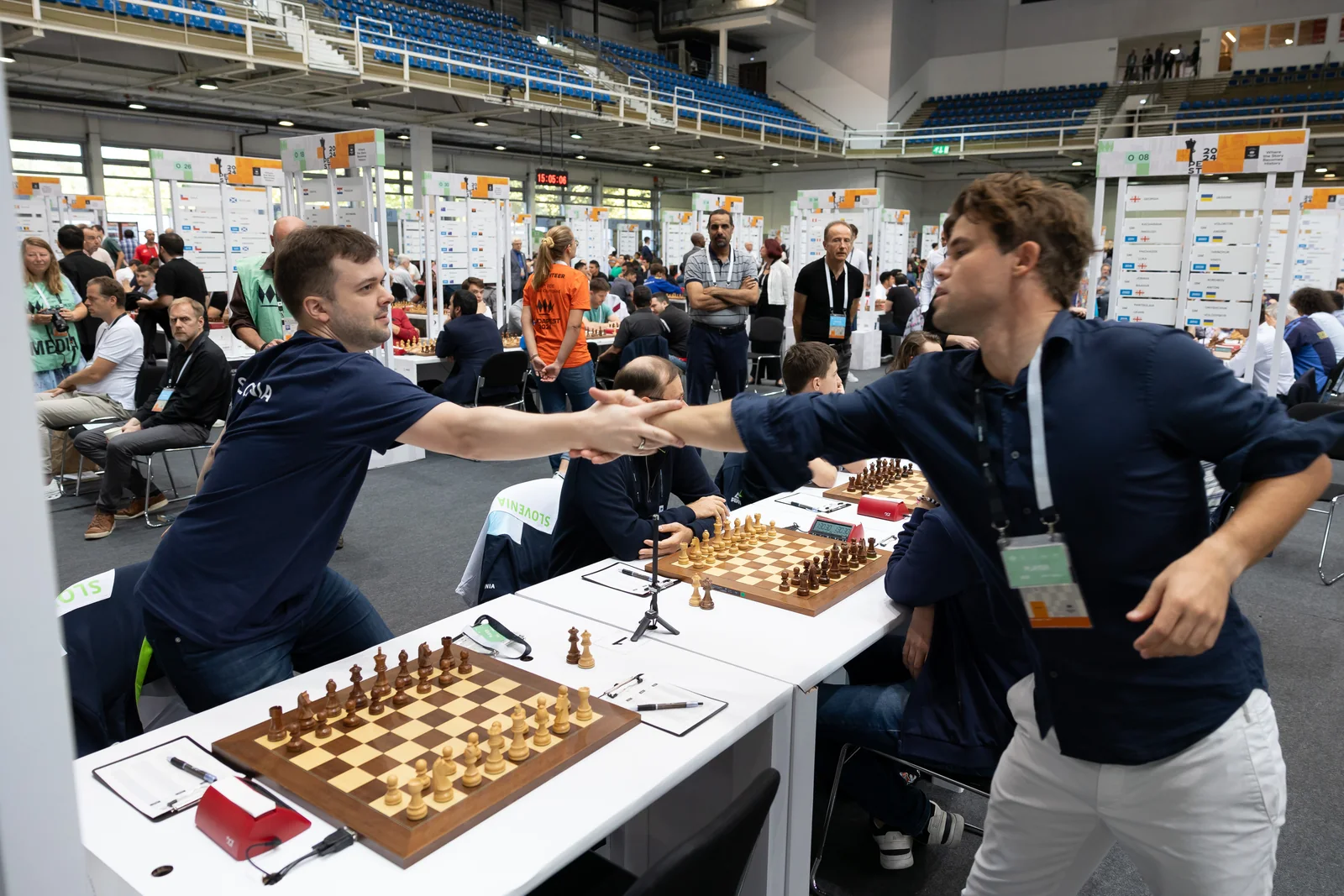
You glance at your opponent’s king, spot an inviting bishop check, and step your queen onto an open square. Two moves later, you lose a rook across the eighth rank because your eyes never left the kingside. Most club losses happen right there. Players spend hours calculating variations in one corner while missing an undefended piece or an open file three files away. Learning how to improve chess vision starts with changing what your eyes gather before calculation begins.
Board vision precedes deep calculation. In the first three seconds over a position, your scan decides which loose pieces, open diagonals, backward retreats, and empty squares reach your shortlist of candidate moves. Calculating variations then tests those candidates in concrete lines. If your opening scan misses a rook battery on the back rank, longer calculation only wastes clock time on the wrong corner of the board. Pairing wide board sight with steady calculation training and a quick pre-move checklist cuts out those sudden one-move drops.
What chess vision really is and what eye-tracking studies prove
Cognitive scientists have used high-speed eye trackers for more than two decades to measure what masters do differently over a chessboard. The gap shows up well before players start calculating five moves ahead.
How masters see groups of pieces and empty squares
In a 2001 study published in Psychological Science, Eyal Reingold, Neil Charness, Marc Pomplun, and David Stampe tested visual span during brief exposures to a board. Using a gaze-contingent window and change-blindness flicker tasks, they recorded much wider visual spans for experts on real chess positions, whereas random piece placements erased most of that gap. In a smaller three-by-three check-detection test in the same study, experts used fewer eye stops per position. Even more revealing, those players placed more of their gaze fixations between pieces instead of staring straight at single pawns or knights. Experienced players take in interacting clusters as single visual units.
A second 2001 paper by the same authors in Memory & Cognition tracked experts and intermediate players while both groups tried to pick the best move across five positions. Experts chose stronger moves faster and covered wider jumps with each eye movement, though their individual gaze pauses lasted about as long as intermediate players’ pauses. Look at their first five fixations on each board. Masters placed significantly more early glances onto empty squares and relevant pieces, because peripheral vision already flagged where the real action sat.
Two brain systems and the trap of tunnel vision
Follow-up work by Merim Bilalić and colleagues in a study of object and pattern recognition split chess perception into two cooperating systems. First, piece recognition in peripheral vision helps trained players spot what a knight or bishop hits even on scattered random layouts. Second, structural pattern recognition activates when pawns and pieces stand in realistic formations, letting familiar networks jump out quickly.
That pattern speed also creates a familiar trap called the Einstellung effect. In a 2008 Cognition experiment, Merim Bilalić, Peter McLeod, and Fernand Gobet gave experts positions that held both a standard five-move win and a cleaner three-move mate. Many experts spotted the five-move win first and told researchers they kept searching for a stronger move. Yet the eye trackers caught what happened next: their eyes kept drifting back to the exact squares of their first idea. Because the brain stayed anchored on a workable plan, better geometry sat right beside it unnoticed.
Research also confirms why knight tactics feel harder to see quickly. In a 2017 visual-search study in the Journal of Vision, Heather Sheridan and Eyal Reingold displayed four mini-boards side by side. Players had to pick the single board where a knight could reach a target square in three moves without hitting blocked squares. Experts answered over four times faster than novices and spent longer on their first look at the true target board. Their search speed also tracked closely with official tournament ratings and study hours.
Five everyday blind spots that shrink your board sight
Those lab findings show up cleanly in everyday rapid and classical games. Most practical blunders happen before calculation starts, because one of five visual habits cuts part of the board out of view.
First, players keep staring at the square of the last capture. After an exchange on the kingside, your gaze lingers on those six squares, so a loose pawn or an open back rank on the opposite wing goes unchecked.
Second, the first forcing idea creates Einstellung fixation. As soon as a player finds one check or pawn break that looks plausible, their eyes stop checking alternative squares for either side.
Third, backward retreats vanish from the mental picture. Forward queen sorties and bishop pins stand out right away, whereas long backward diagonal retreats or defensive rook drops behind pawns feel invisible.
Fourth, crowded target squares hide exact move order. When three pieces point at a castled king, club players notice the shared target without testing which piece should capture first to keep checks intact. Knowing these blind spots saves real time during variation calculation.
Fifth, locked pawns fool players into treating empty lines as closed. Instead of asking what opens once a pawn trades or pushes forward, weaker eyes treat the current blockade as permanent. Seeing how masters solve all five problems on the board makes the pattern concrete.
Five master games that train whole-board chess vision
Annotated complete games reveal what tactical puzzles often hide: the calm setup that made the defender miss a distant threat. Play through each game first, study how the winning player read the empty squares, and then solve the position immediately afterward.
1. Bernstein vs. Capablanca (1914): Overloading an apparent fortress across the board
Early in 1914, future world champion José Raúl Capablanca played master Ossip Bernstein in a Moscow exhibition mini-match. Bernstein steered the Queen’s Gambit Declined into a tense endgame along the c-file. Black held a dangerous passed c3 pawn, yet White seemed safe enough. White’s queen on e2 guarded d1 against back-rank checks and watched the second rank, while White’s remaining rook blockaded from c3.
At move 29, Capablanca’s queen stood on b6 without an obvious capture. A quick glance rejects moving the queen to b2 because both White’s e2 queen and White’s general kingside battery sit nearby. However, Capablanca noticed the exact relationship binding d1, c3, and e2 together. Only the e2 queen attacks b2, since the c3 rook slides orthogonally along the c-file and third rank. So after 29…Qb2, stepping onto the attacked b2 square forces an immediate traffic jam.
Why every White defense fails on move 30
If White grabs the queen with 30. Qxb2, Black replies 30…Rd1 checkmate because e2 left the d1 square undefended. If White tries 30. Rc2 to protect the second rank, Black lands 30…Qb1+ followed by 31. Qf1 Qxc2, or pushes 30…Qa1+ 31. Qf1 Rd1. Stepping off with 30. Qe1 runs straight into 30…Qxc3, since recapturing again walks into back-rank mate on d1. Because Capablanca tracked the empty d1 square behind White’s defenders, he spotted the deflection instantly.
Interactive puzzle 1: Find Capablanca’s overloading strike
Position before move 29... Black to move.
Show the candidate line and explanation
29...Qb2 30. g3 Qxe2 31. Kg2 Qd2 32. Rc5 Qd5+ 33. Rxd5 Rxd5 34. e4 Rc5 35. Kh3
Black plays 29...Qb2!! right onto an attacked square. Taking with 30. Qxb2 fails to 30...Rd1#, while moving the queen away or defending leaves the c3 rook hanging. Whole-board back-rank vision spots this deflection at a glance.
2. Fischer vs. Benko (1963): Beating Einstellung tunnel vision with empty-square awareness
At the 1963 United States Championship in New York, Bobby Fischer swept the tournament with an 11-0 score. His Round 10 game against Pal Benko shows how Einstellung tunnel vision blinds players who focus only on the piece under immediate attack.
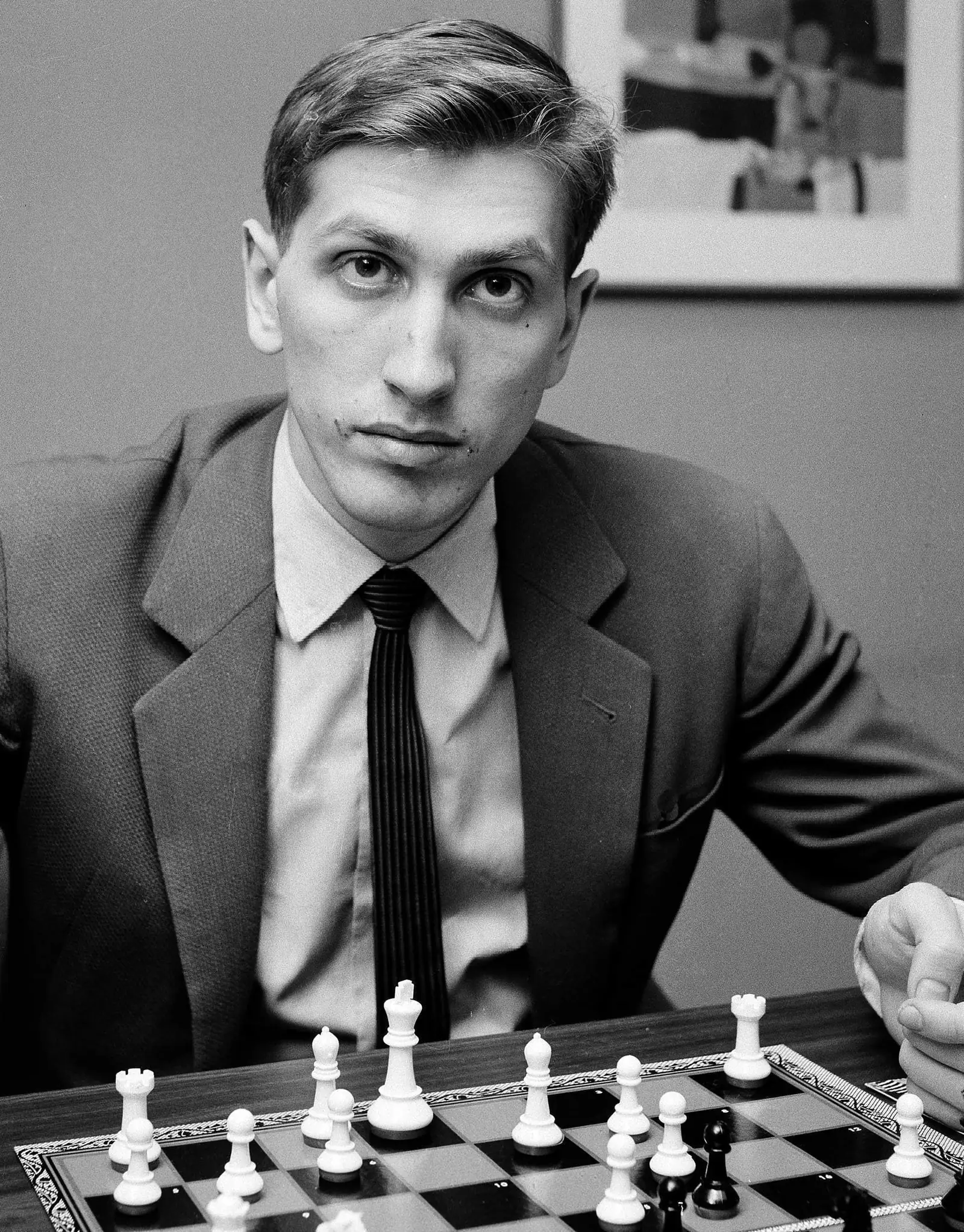
Facing the Pirc Defense, Fischer aimed his queen at h5 and lined up a light-squared bishop on d3 toward h7, waiting behind his e4 pawn. On move 18, White traded dark-squared bishops on d4, and Benko recaptured 18...exd4. That pawn capture hit White's c3 knight. Immediately, a narrow scan looks at c3 and starts weighing knight retreats such as Ne2 or Na4 so Black cannot take a free piece.
Meanwhile, pushing 19. e5 right away walks into Benko's hidden counter 19...f5. Once Black plays ...f5, the b1-h7 diagonal closes, White's queen attack slows down, and the c3 knight remains hanging. Instead of picking between knight retreats, Fischer noticed the empty square f6 sitting directly between Black's kingside defenders. He placed his rook right there with 19. Rf6, leaving the c3 knight en prise and stepping onto a square hit by the g7 bishop.
How one empty interference square breaks the defense
Capturing the intruder with 19...Bxf6 immediately clears e5 for 20. e5, opening the d3-h7 diagonal with unstoppable mate threats. Benko tried 19...Kg8 instead, yet 20. e5 h6 21. Ne2 let Fischer save the knight afterward while holding a crushing wedge on f6 and e5. Benko resigned at once. Looking at the empty f6 block square freed White from worrying about the attacked knight on c3.
Interactive puzzle 2: Spot Fischer's interference blow
Position before move 19. White to move.
Show the candidate line and explanation
19. Rf6 Kg8 20. e5 h6 21. Ne2 Qe7 22. Rxd6 Qg5 23. Qxg5 hxg5 24. Rd7 Bxe5
White plays the quiet interference 19. Rf6! instead of rescuing the attacked c3 knight. Capturing the rook with 19...Bxf6 fails to 20. e5 forcing checkmate or decisive loss, while 19...Kg8 allows 20. e5 opening the d3-h7 diagonal against Black's king.
3. Karpov vs. Unzicker (1974): Peripheral vision for opposite-wing prophylaxis
Good board vision helps just as much in quiet maneuvering games as in tactical attacks. At the 1974 Nice Chess Olympiad, Anatoly Karpov beat Wolfgang Unzicker in a Ruy Lopez battle decided by whole-board awareness long before the mating attack started.
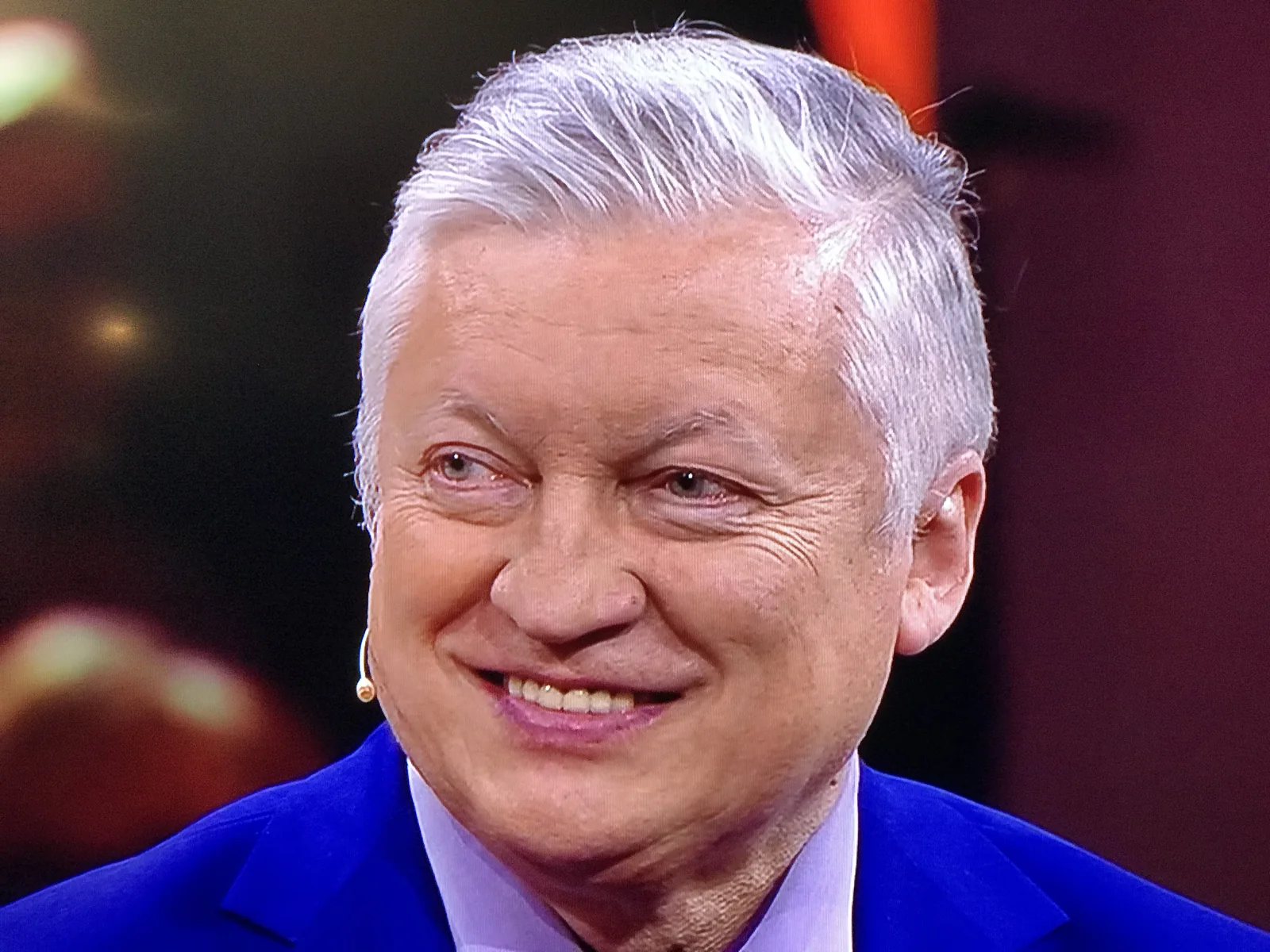
In the Chigorin structure, White held extra space on both sides of the board, yet the queenside contained the only open file. On move 22 White set a rook on a2 and tucked a bishop behind it on b1. Unzicker answered 23...Qd8, keeping White's queen on d2 tied to defending the a2 rook across the empty c2 and b2 squares while preparing to swap both pairs of rooks down the a-file. Many attackers would ignore the queenside and immediately shift knights toward f4 and the kingside.
Karpov checked the opposite flank first. Trading rooks on the a-file would ease Black's cramped game and create real counterplay. Therefore, he played 24. Ba7, dropping a bishop onto the rim right in front of his own rook. To an impatient eye, parking a bishop on a7 looks strange because it turns off the central diagonals and seems to bottle up the a2 rook.
In fact, 24. Ba7 locks down the entire queenside. Neither Black rook can contest the a-file, so Black stays stuck behind his pawns while White calmly doubles rooks behind the bishop, pulls knights back to better kingside squares, and builds 30. f4 and f5 in complete safety. Scanning the distant wing before attacking kept Unzicker passive until White broke through on move 44.
Interactive puzzle 3: Find Karpov's queenside blockade
Position before move 24. White to move.
Show the candidate line and explanation
24. Ba7 h5 25. Bc2 Kh7 26. Rea1 Bh6 27. Qe1 Qf8 28. Nf1 Kg7 29. Be3 Bxe3
White plays 24. Ba7 to shut down the a-file before Black can trade both pairs of rooks and free the queenside. Seeing the opponent's counterplay across the board early lets White switch safely to the kingside attack.
4. Carlsen vs. Ernst (2004): Visualizing exact move order in a crowded king zone
In January 2004 at Corus Group C in Wijk aan Zee, thirteen-year-old Magnus Carlsen showed crisp tactical sight against Dutch grandmaster Sipke Ernst. After castling queenside against the Caro-Kann Defense, White shoved his h-pawn up the flank and shattered Black's king shelter with 18. Ng6 fxg6 19. Qxe6+ Kh8 20. hxg6 Ng8.
Right after 20...Ng8, White can choose between two tempting captures on h6: 21. Rxh6+ and 21. Bxh6. Club players often snatch the forcing check 21. Rxh6+ on reflex without checking Black's reply carefully. After 21. Rxh6+ Nxh6 22. Bxh6, however, Black suddenly jumps out with 22...Bh4, hitting f2 and creating counterplay around White's own king.
Carlsen checked the alternative sequence before moving. Capturing with 21. Bxh6 first forces 21...gxh6, pulling the defender into a pin and keeping the h1 rook behind the open file. Then 22. Rxh6+ lands with check, forcing 22...Nxh6 so White picks up the e7 bishop on move 23 cleanly. Once White pushes 24. gxf7 and swings the rook via Rd3-g3+, Black gets mated on move 29. Knowing which piece delivers check second saves the whole attack.
Interactive puzzle 4: Keep the attacking move order exact
Position before move 21. White to move.
Show the candidate line and explanation
21. Bxh6 gxh6 22. Rxh6+ Nxh6 23. Qxe7 Nf7 24. gxf7 Kg7 25. Rd3 Qb6 26. Rg3+ Qg6
White captures with 21. Bxh6 first rather than taking immediately with the rook, keeping the h1 rook ready to deliver 22. Rxh6+ with check and win the e7 bishop cleanly while Black's king stays trapped.
5. Lasker vs. Capablanca (1914): Clearing empty squares for long-range coordination
In Round 7 of the St. Petersburg 1914 finals, world champion Emanuel Lasker trailed Capablanca in the standings and needed a win with White. Playing the Exchange Ruy Lopez, Lasker traded queens on move 6 and slowly pushed the endgame into a tense positional squeeze.
By move 34, White had doubled rooks on the h-file and planted a knight firmly on e6. Even so, White's own pawn on e4 locked the c3 knight out of the center while Black's dark-square pawns on c6, d6, and f6 kept the position solid. Static visual scanning counts White's e4 pawn as an asset defending f5 and leaves the center frozen. Instead, Lasker pictured what the board would look like once e4 stood empty.
By pushing 35. e5, Lasker sacrificed a central pawn solely to clear space for his pieces. After 35...dxe5, the c3 knight hops straight onto e4, attacking f6 and opening paths to c5 and d6. Soon after 38. Nxd7 Bxd7, White's rook breaks into 39. Rh7 while the back-rank rook races across to a1 and infiltrates with 41. Ra8+. By move 42, knights on c5 and e4 combined with rooks on h7 and a8 forced Capablanca's resignation.
Interactive puzzle 5: Spot Lasker's board-clearing sacrifice
Position before move 35. White to move.
Show the candidate line and explanation
35. e5 dxe5 36. Ne4 Nd5 37. Rh7 Bc8 38. Rh8 Rxh8 39. Rxh8+ Kf7 40. Rf8+ Ke7
White sacrifices the central e4 pawn with 35. e5! so the c3 knight can spring to e4 after 35...dxe5, coordinating both knights with the h-file rooks to overwhelm Black's dark squares.
A practical 20-minute daily routine for how to improve chess vision
Playing through master games builds your visual library. Still, chess sight sharpens fastest when you isolate board scanning in short daily drills instead of hoping bullet blitz fixes it. Twenty focused minutes across five specific exercises steadily expands what you catch on your first glance.
1. Run a five-second empty-square scan after every move
This habit costs zero extra study time. Right after your opponent plays a move, pause for five seconds before looking at your own plan. Trace the square the piece just vacated, check which rank or diagonal opened behind it, and ask whether any piece now guards two targets at once. That short pause copies the empty-square fixations found in master eye-tracking studies and catches back-rank deflections early.
2. Use a two-quadrant reset check to kill tunnel vision
Whenever a forcing tactical line grabs your attention on one side of the board, apply a ten-second reset from Bilalić's Einstellung findings. Move your eyes deliberately to the opposite flank and name one constructive move there for each side. You break local obsession long enough to notice Karpov-style quiet moves like 24. Ba7 or Fischer-style interference ideas like 19. Rf6.
3. Practice three-move knight and slider paths daily
Set up the simple visual-search drill tested by Sheridan and Reingold for five minutes before your games. Pick an empty board or four pieces, place a mental knight on c3 or f6, and trace a legal three-move path to a far target square without landing on two forbidden enemy-controlled squares. Next, trace diagonal retreats for a bishop or queen weaving between pawns. Training pure piece geometry makes odd knight jumps and backward bishop moves automatic under clock pressure.
4. Solve simple coordinates and small-board blindfold drills
Full blindfold games often exhaust beginners too quickly. Work up cleanly with four-piece and six-piece endgame setups instead. Read six square coordinates aloud, close your eyes for thirty seconds, picture every square attacked by both bishops and knights, and open your eyes to check where your mental lines drifted. Combining short blindfold coordinate checks with blunder-prevention habits locks in the full 64-square map reliably.
5. Tag every missed pattern during post-game review
Puzzle training alone rewards knowing a tactic is waiting on the board. After every rapid or classical game, inspect it during post-game analysis before turning on an engine and tag each slip by visual cause. Write down whether you missed a backward queen move, ignored an undefended piece on the other wing, reversed a check order, or overlooked an empty square like f6. Two weeks of honest tags usually point straight to your main visual leak.
A four-week visual training schedule and realistic expectations
Trying to fix every scanning habit on one afternoon slows your clock down and causes frustration during games. Spread the workload across short, repeatable twenty-minute sessions five days a week so visual checks stay relaxed.
- Week 1 focuses on awareness and knight paths. Spend ten minutes on three-move knight drills and ten minutes solving untimed puzzles only after listing every check, capture, and backward retreat on the board. Use the five-second vacated-square scan in rapid games of 15+10 or slower.
- Week 2 brings in opposite-wing checks. Spend ten minutes visualizing five-piece and six-piece endgames without moving pieces, followed by ten minutes reviewing games like Karpov vs. Unzicker where threats occur on both flanks simultaneously.
- Week 3 breaks tunnel vision directly. During puzzle sessions, refuse to enter your first candidate move until you spot one sensible alternative in a different board quadrant. Record blind-spot tags after two slow games.
- Week 4 integrates everything under moderate clock pressure. Play two rapid or classical games using your full pre-move visual scan, annotate both games without an engine first, and compare your Week 4 error tags against Week 1.
Players who stick to that four-week plan usually notice silly one-move drops fading first, followed by sharper recall for backward bishop retreats, back-rank deflections, and empty blocking squares across the board. Keeping a steady error log over two slow games a week makes those visual habits hold up under real clock pressure. Once your board sight feels steadier, pair these drills with our full guide to improving at chess so your calculation, openings, and endgames grow together.
Download game 1 PGN · Download game 2 PGN · Download game 3 PGN · Download game 4 PGN · Download game 5 PGN


[…] to look for before every chess move. Combine those checklists with threat recognition patterns and chess vision drills until scanning the whole board feels […]