Most new players learn chess backward. They watch a short video on an opening trap, drop a knight on move eight, and assume they need deeper opening memorization. That habit stalls progress because it skips basic board safety.
The best way to learn chess as a beginner starts at the opposite end: learn the rules, piece safety, and simple checkmates first, then build into opening principles, tactics, middlegame plans, and endgames.
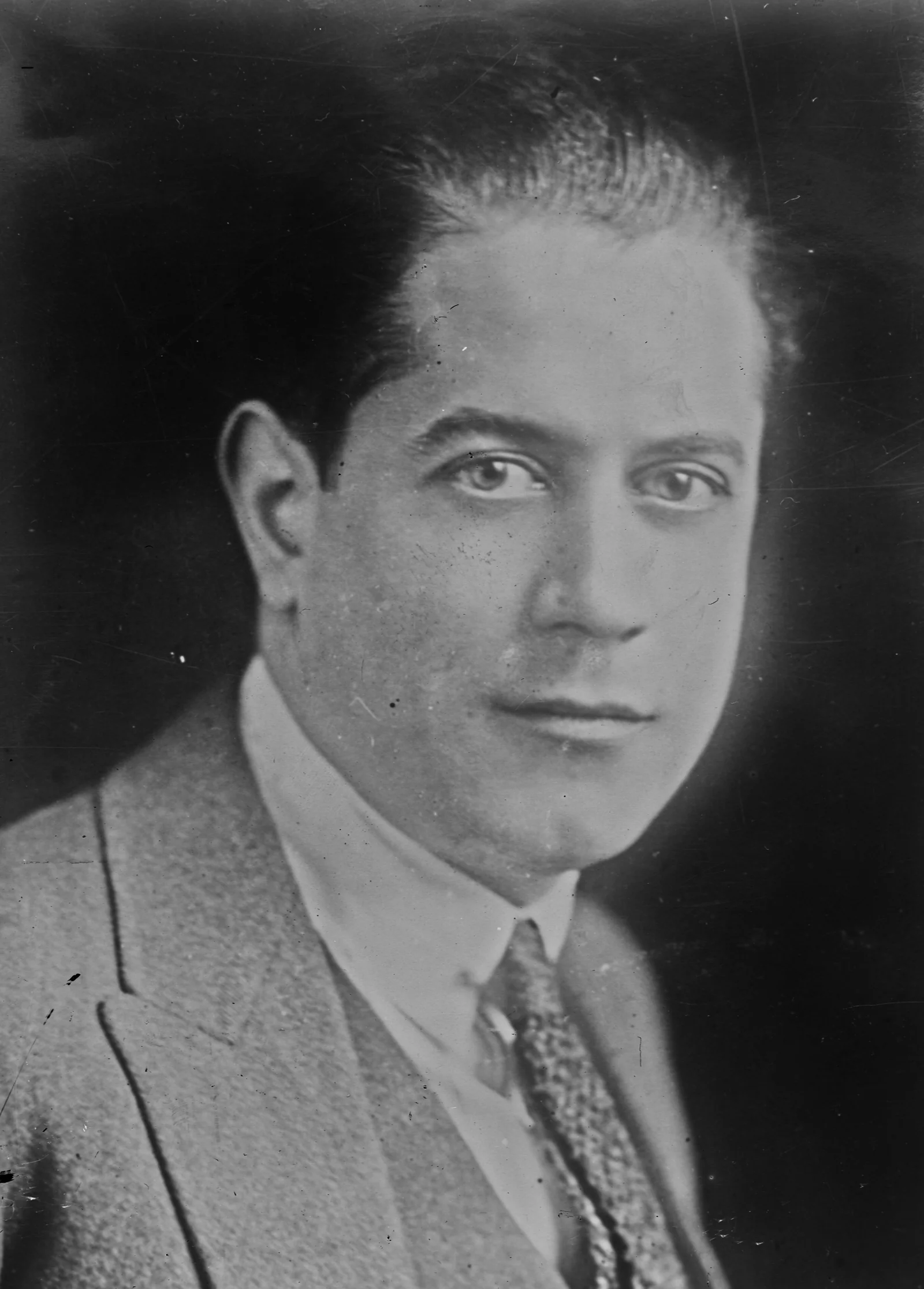
This bottom-up order goes back more than a century. World champion José Raúl Capablanca organized his 1921 manual Chess Fundamentals in reverse order of play.
Chapter I opens with simple mates, pawn promotion, and pawn endings. Only in section six does he introduce general opening strategy, after the reader sees how pieces operate on a sparse board.
In his 1934 preface, Capablanca wrote:
“In chess the tactics may change but the strategic fundamental principles are always the same.”
Below is a complete five-stage curriculum built on Capablanca’s sequence and cognitive memory research.
It includes five annotated master games and five interactive puzzles from turning points in those games. Each stage lays down the habits the next stage relies on, so you know what to practice now and what can wait.
Why learning chess from the endgame backward works
A 64-square board with 32 pieces overwhelms short-term memory when you are new to the game.
Dutch chess master and psychologist Adriaan de Groot studied this in his 1946 doctoral thesis, translated in 1965 as Thought and Choice in Chess.
He showed that masters do not simply calculate farther ahead on every move. Instead, they recognize familiar piece arrangements almost at a glance.
Later research on chunking in chess confirmed that skilled players recall real positions far better than novices because they store piece groupings as unified chunks in long-term memory.
Memorizing ten opening moves without grasping those chunks leaves you lost once an opponent deviates.
By contrast, studying two kings, one rook, and a pawn teaches piece geometry without visual noise. Once you understand how a rook cuts off a king or how a bishop controls a long diagonal, spotting those same shapes inside a busy middlegame becomes much simpler.
Lasting fundamentals over quick tricks
Jumping between disconnected tips rarely fixes recurring errors. Steady improvement works better when you progress through five connected stages in order. Stay on one stage until its habits show up in your games, then move forward:
- Master all legal rules, piece values, one-move blunder checks, and basic queen or rook checkmates.
- Play by opening principles such as center control, fast piece development, and early castling.
- Drill five recurring tactical motifs: forks, pins, skewers, discovered attacks, and removing the defender.
- Form straightforward middlegame plans around open files, weak pawns, and coordinated piece batteries.
- Convert advantages in king-and-pawn and rook endgames while avoiding stalemate and passive defense.
For daily training routines that reinforce these habits, read our guide on getting better at chess for beginners.
Stage 1: Rules, piece safety, and basic checkmates
Before studying any opening name, make every legal move automatic. Review the complete rules of chess, especially four rules that trip up beginners: castling restrictions (never out of, through, or into check), en passant pawn captures, underpromotion when a new queen causes stalemate, and the distinction between checkmate and stalemate. Free interactive lessons on Lichess Learn let you drill movement, captures, and basic mates in short browser exercises.
Piece values and the two-second safety check
Most beginner games turn on free pieces and lopsided trades. Use the standard point values as a starting scale: pawn (1), knight (3), bishop (3), rook (5), and queen (9). Two minor pieces (6 points) often outplay a rook and pawn (6 points) in an open middlegame. However, rooks gain strength once pawns disappear and files open up.
Before touching a piece or clicking a square online, pause for two seconds. First, ask what your opponent’s last move just attacked or threatened. Second, verify that your destination square has enough defenders and check that moving away does not leave another piece unguarded. If hanging pieces keep costing you games, our lesson on how to stop blundering pieces in chess covers practical anti-blunder habits.
Three checkmates to drill in week one
Drill three basic endings before touching opening theory: two rooks (the ladder mate), king and queen against a lone king, and king and rook against a lone king. Practicing these mates teaches you to shrink the enemy king’s box first and walk your own king forward to help. Always scan for checks, captures, and direct threats before choosing a quiet move, because forcing moves narrow your opponent’s legal replies and simplify calculation.
Game 1: Adolf Anderssen vs. Jean Dufresne (Berlin, 1852)
Known as the Evergreen Game, this 1852 encounter between German master Adolf Anderssen and Jean Dufresne demonstrates Stage 1 checkmate geometry and forcing-move calculation. Anderssen offered a pawn on move four (4. b4, the Evans Gambit) to accelerate development. Later, he turned a dangerous kingside position into a forced mating sequence because Black left his king in the center.
Black’s king safety shaped the outcome. On move 11, Dufresne played 11…b5 instead of castling, leaving his king stranded on e8 while White aimed bishops and rooks at the center. On move 17, Anderssen risked the knight sacrifice 17. Nf6+. Modern engines show that 17. Ng3 wins more cleanly, yet after 17…gxf6 18. exf6 Rg8, Anderssen stayed calm and played 19. Rad1. Dufresne then captured 19…Qxf3?, believing the pinned g2-pawn kept him safe while threatening mate on g2. Because every move from 20. Rxe7+ onward gave check, Black had zero time to land his counterattack, and 21. Qxd7+ forced checkmate.
Puzzle 1: Finish the Evergreen Game attack
In the position before White’s 21st move, Black threatens checkmate on g2. Find the four-move forcing sequence that pulls Black’s king onto open squares and finishes with mate.
Position before move 21. White to move.
Show the candidate line and explanation
21. Qxd7+ Kxd7 22. Bf5+ Ke8 23. Bd7+ Kd8 24. Bxe7#
White plays 21. Qxd7+ to drag Black's king off the back rank and into a double check with 22. Bf5+. After 22...Ke8, 23. Bd7+ forces the king to d8 (or f8, as played in the game), allowing 24. Bxe7# because the d1-rook controls the d-file.
Stage 2: Opening principles before memorized lines
Opening principles differ sharply from opening memorization. Memorizing twelve moves of a sharp gambit collapses the moment an amateur opponent plays an unusual third move. By contrast, sound opening principles guide you in every game regardless of what your opponent chooses. Focus on four priorities during your first ten moves:
- Claim the center early with 1. e4 or 1. d4 so your pawns open lines for your bishops and control central squares.
- Develop knights and bishops toward active squares, usually putting knights on f3 and c3 (or f6 and c6) where they cover the center.
- Castle early to move your king off the e-file and connect your rooks for middlegame play.
- Develop each piece once before chasing early pawn grabs or launching lone queen attacks.
Once those four habits feel natural, our guide on which chess openings you should learn first recommends simple, principled systems for both colors.
Game 2: Louis Paulsen vs. Paul Morphy (New York, 1857)
Paul Morphy showed in the mid-nineteenth century that superior development wins quickly when an opponent ignores king safety or pushes wing pawns too early. During the 1857 First American Chess Congress against Louis Paulsen, Morphy gave up a pawn on move six with 6...Re8 solely to seize the open e-file and halt White's central development.
Paulsen's mistakes show what happens when flank pawn pushes replace central development. After 12. c3?, Morphy planted his queen on d3, blocking White's d2-pawn so the c1-bishop and a1-rook stayed trapped for the rest of the game. While White pushed queenside pawns with 13. b4 and 14. a4, Morphy brought his second rook to e8 and sacrificed his queen with 17...Qxf3. Although engine analysis notes 17...Qxa6 also favored Black, 17...Qxf3 tore open the white king's pawn cover immediately. Every active black piece joined the final attack while White's c1-bishop never left its home square.
Puzzle 2: Improve on Morphy's finish
Morphy played 22...Bg2+ in the game and won White's queen to force resignation on move 28. However, German master Johannes Zukertort later found a faster four-move mate on move 22. Play Black's cleanest finishing line.
Position before move 22... Black to move.
Show the candidate line and explanation
22...Rg2 23. Qe2 Rxe2 24. d3 Rxh2 25. Re1 Rh1#
Sliding the rook to g2 with 22...Rg2 cuts off the g1-square and threatens mate on h2 and g1. White can only delay checkmate by giving up the queen with 23. Qe2. After 23...Rxe2 and 24...Rxh2, Black finishes with 25...Rh1#.
Stage 3: Tactical vision and five recurring motifs
Below roughly 1200 Elo, most games are decided by short tactical sequences that win material or deliver mate. Positional plans fall apart quickly if you miss a two-move fork or pin. Instead of solving random puzzles mechanically, drill five recurring motifs so you learn the exact board cues behind each one.
- A fork uses one piece to attack two unprotected or higher-value targets at the same time. Knights create forks often because they jump over blockers and strike squares other pieces cannot mirror.
- A pin freezes an enemy piece in front of a higher-value target. When a pin sits against the king, moving the pinned piece is illegal.
- A skewer reverses a pin by attacking a queen or king so it must step aside and expose a second piece behind it.
- A discovered attack opens a hidden line for a rook, bishop, or queen when another piece moves out of the way. Discovered checks are especially forcing because the opponent must answer the check first.
- Removing the defender captures or deflects the enemy piece guarding a vital square or mating threat.
Spend ten to fifteen minutes daily solving simple tactical puzzles accurately before checking any hint. Try to spot the opponent's strongest defensive reply in your head before playing your first move.
Game 3: Robert Byrne vs. Bobby Fischer (New York, 1963)
In round three of the 1963-64 U.S. Chess Championship, twenty-year-old Bobby Fischer beat International Master Robert Byrne in 21 moves. Byrne later wrote about the finish: "The culminating combination is of such depth that, even at the very moment at which I resigned, both grandmasters who were commenting on the play for the spectators in a separate room believed I had a won game!"
Each tactical blow in Fischer's attack sets up the next. After Black lands a knight on d3, Byrne drops back with 15. Qc2 to drive it away. Instead of retreating, Fischer plays 15...Nxf2, dragging White's king to f2 so 16...Ng4+ pushes it to g1. Then 17...Nxe3 forks the queen on c2 and bishop on g2, recovering the piece while clearing White's kingside light squares. After 18. Qd2 Nxg2 19. Kxg2, Black looks finished trading, yet 19...d4 clears the long diagonal for the bishop on a6. When Byrne captured 20. Nxd4, 20...Bb7+ hit the king on the open diagonal and led to resignation after 21...Qd7.
Puzzle 3: Unleash the long diagonal
Take Black's side right after 19. Kxg2. Find the four-move combination that opens the a8-h1 diagonal, regains material with check, and hits White's exposed king.
Position before move 19... Black to move.
Show the candidate line and explanation
19...d4 20. Nxd4 Bb7+ 21. Kg1 Bxd4+ 22. Qxd4 Re1+ 23. Kf2 Qxd4+ 24. Rxd4 Rxa1 25. Rd7
Advancing 19...d4 clears the long light-squared diagonal so 20...Bb7+ drives White's king back. After 21. Kg1 Bxd4+, capturing the bishop with 22. Qxd4 allows 22...Re1+, skewering the king and winning the queen on the next move.
Stage 4: Simple middlegame planning
Once you navigate the opening safely and catch two-move tactics, a new problem appears. Your minor pieces are developed, your king is castled, and you still do not know where to move next. Pushing flank pawns aimlessly weakens your own king shelter. Whenever the opening ends, answer three quick planning questions:
- Which piece is doing the least? Reroute your worst-placed knight, bishop, or rook toward an open file or active diagonal.
- Where are the open or half-open files? Place rooks on files without your own pawns so they can double up and enter the seventh rank.
- Where is the opponent's softest target? Point several pieces at a backward pawn, an uncastled king, or a square that few defenders can guard.
Answering those three questions turns guesswork into a clear plan. You improve your weakest piece, build pressure on one target, and keep your pawn structure intact.
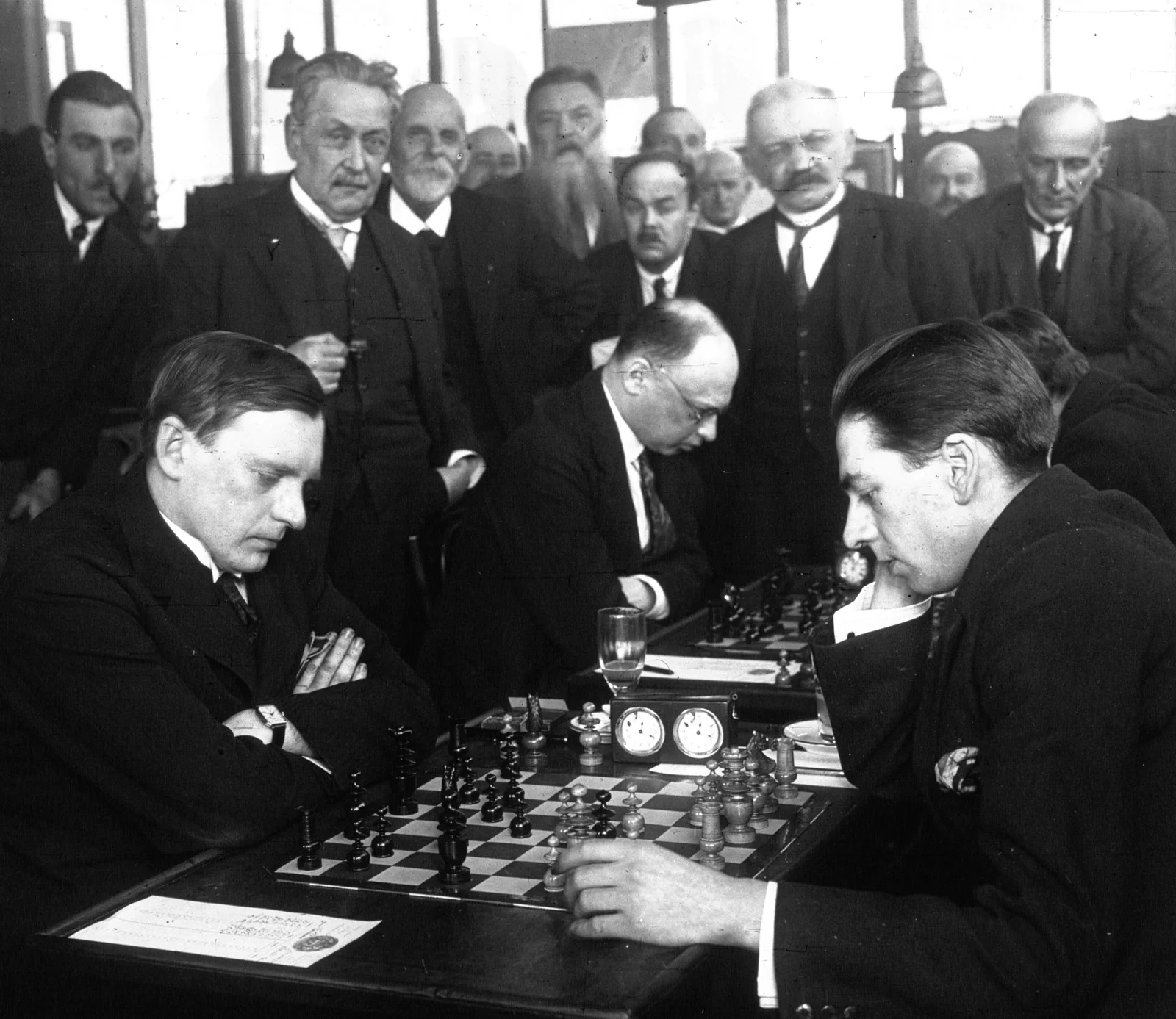
Game 4: Alexander Alekhine vs. Aron Nimzowitsch (San Remo, 1930)
World champion Alexander Alekhine gave one of the clearest lessons in single-file middlegame planning against Aron Nimzowitsch at San Remo in 1930. That victory coined the term Alekhine's gun for a battery of two rooks lined up ahead of the queen on one file.
Alekhine built his advantage step by step. First, he pushed a4-a5-a6 to lock down Black's queenside pawns and traded off Nimzowitsch's active bishop on b7. Next, instead of forcing a speculative kingside attack, Alekhine stacked both rooks along the semi-open c-file with 20. Rfc1, 22. Rac1, 24. Rc3, and 25. R1c2. Once Black lined up his own queen and rooks to defend c7 and c6, Alekhine dropped his queen behind both rooks via 26. Qc1. Playing 27. Ba4 and 28. Bxb5 pinned the c6-knight against the c8-rook, tying Black down completely. Finally, White advanced 30. h4, 31. Kh2, and 32. g3 until Nimzowitsch had no useful moves left and resigned in zugzwang.
Puzzle 4: Build Alekhine's gun and pin the knight
White stands on move 26 in Alekhine vs. Nimzowitsch. Play the three-move sequence that completes the c-file battery and pins Black's c6-knight.
Position before move 26. White to move.
Show the candidate line and explanation
26. Qc1 Rbc8 27. Ba4 Qe8 28. b5 Nb4 29. Rxc7 Nxc2 30. Rxc2 Rxc2 31. Qxc2 g6
Retreating with 26. Qc1 puts the queen behind both rooks on the c-file, aiming the battery at c7 and c6. Once Black answers 26...Rbc8, 27. Ba4 pins the c6-knight against the c8-rook so 28. b5 attacks a pinned piece.
Stage 5: Practical endgame skills for beginners
Beginners lose countless winning endgames because they keep hiding the king on the back rank. Once queens leave the board, the king shifts from a piece you hide to an active attacker. Three practical habits save points right away:
- Walk your king toward the center and toward remaining pawns as soon as queens come off. An active king attacks weak pawns and clears paths for your own pawns to promote.
- Push passed pawns promptly. A pawn with no enemy pawns blocking or guarding its path forces opponent pieces into passive defense.
- Place rooks behind passed pawns, whether those pawns belong to you or your opponent. A rook behind a pawn gains room as the pawn advances, while a rook in front loses squares.
Practicing basic king-and-pawn opposition (putting your king directly opposite the enemy king to claim space ahead of your pawn) alongside active rooks pays off faster than memorizing deep opening lines.
Game 5: Magnus Carlsen vs. Viswanathan Anand (Chennai, 2013 Game 5)
Top grandmasters win many games by nursing small endgame advantages until the defender makes a single slip. In Game 5 of the 2013 World Chess Championship in Chennai, Magnus Carlsen traded queens on move 15 against Viswanathan Anand and outlasted him in a demanding rook endgame.
The closing phase after move 45 shows practical conversion clearly. After Anand slipped with 45...Rc1+ (when 45...Ra1 attacking White's a3-pawn held better drawing chances), Carlsen entered a rook-and-pawn endgame with a passed a-pawn and an extra e-pawn. On move 52, a cautious player might try to guard the e5-pawn with 52. Kf4 or 52. Rh5. Instead, Carlsen pushed 52. a4 immediately, letting Black take on e5 so White could race ahead with 53. a5 and cut off Anand's king on the seventh rank with 54. Rh7. Giving up a secondary pawn for speed and rook activity brought home the point.
Puzzle 5: Push the passed pawn and cut off the king
Step into Carlsen's shoes on move 52. Find the four-move plan that trades passive pawn defense for passed-pawn speed and locks Black's king out of the queenside.
Position before move 52. White to move.
Show the candidate line and explanation
52. a4 Re2 53. a5 Kd7 54. Rh7+ Kc8 55. a6 Kb8 56. Re7 Rxh2 57. e6 Re2
Carlsen pushes his outside passed pawn immediately with 52. a4 and 53. a5 instead of guarding the e5-pawn passively. After 53...Kd7, 54. Rh7+ pushes Black's king away from the queenside, allowing 55. a6 to march toward promotion.
Time controls and manual game review
Even a sound curriculum stalls if your playing habits fight what you study. Bullet (one minute) and fast blitz (three minutes) reward muscle memory over thinking, which reinforces beginner mistakes. Play rapid time controls like 15+10 (fifteen minutes plus ten seconds per move) or 30+0 so you have time to run your blunder check and calculate checks and captures.
What you do after each game matters just as much. Before clicking an automated "Game Review" summary, spend five to ten minutes replaying the game on your own. Spot the exact turn where the position swung, ask why you overlooked a threat, and pick one habit to fix next time. Our guide on how to analyze your chess games outlines this human-first review process in full.
A 12-week beginner study roadmap
Steady daily work beats weekend cramming. Thirty to forty-five focused minutes four or five days a week gives a complete beginner a reliable foundation within three months. Use the schedule below as a flexible guide, repeating any block when a skill needs extra practice:
| Weeks | Primary Focus | Study Activity (40%) | Play & Review (60%) |
|---|---|---|---|
| Weeks 1 to 2 | Rules, Safety & Mates | Legal rules, ladder mate, K+Q vs K, K+R vs K, 1-move hang checks | Slow 15+10 rapid games; mark every hanging piece after each loss |
| Weeks 3 to 5 | Opening Principles & Forks/Pins | Center pawns, fast development, castling; 10 min/day basic tactical forks and pins | Two rapid games per session; check opening move 10 for undeveloped pieces |
| Weeks 6 to 8 | Tactical Combinations & Plans | Skewers, discovered checks, removing defenders; worst-piece middlegame planning | 15+10 or 30+0 games; analyze turning points manually before opening an engine |
| Weeks 9 to 12 | Endgame Technique & Integration | King activity, opposition, passed pawns, rook behind passed pawn; full-game review | Mix rapid games with master game replay (1 game/week from move 1 to finish) |
Keep each daily session straightforward: solve five to ten puzzles without guessing, play one unhurried 15+10 game, and review its turning point before closing the board. Over twelve weeks, those three habits replace random blunders with reliable calculation across every phase of chess. When you finish that foundation and want a broader training plan for club and intermediate play, move on to our guide on how to improve at chess.
Download game 1 PGN · Download game 2 PGN · Download game 3 PGN · Download game 4 PGN · Download game 5 PGN